Guide on Steel Column Types: A Detailed Guide
Introduction
Steel columns play very important roles in modern construction. They support and stabilize structures. They are used in structures like bridges, buildings, and industrial buildings by engineers.
Several projects call for different column designs. Opting for the right one ensures better safety and performance.
By learning about the different types of steel columns, workers can make informed decisions about the best choices for the job. There are various benefits to the different types, depending on the situation. Good steel sellers consider good quality materials for construction applications. Dajin Steel provides high-quality steel products for all kinds of structural works.
What is a Steel Column?
A steel column is a pole that is vertical. It is used in transferring the load from higher structures to foundations.
Steel columns are robust structures that withstand compression forces. They can withstand heavy loads and are also stable.
There are also numerous advantages to steel columns over concrete columns. They offer increased strength and convenience of installation.
Steel columns are commonly used in the building of today. They come in a variety of shapes and sizes, and are versatile enough for a wide range of designs.
Importance of Steel Columns in Construction
The use of Steel Columns is of significance for construction. Steel Columns are materials that are important in construction.
The role of the steel column in buildings is paramount. They construct effective and sound structures.
They hold the floor, roof, and other structural details. They also enhance resistance to outside influences. Steel columns are a very durable material. They are strong, tough, and can withstand difficulty.
The right choice of column provides a safe structure over the years.
Typical types of steel columns are as follows:
Different steel column types utilize various objectives. Column selection is done depending on the loading and project demands.
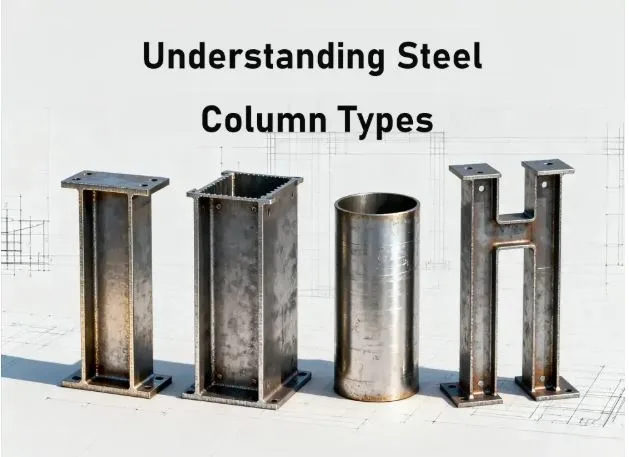
I-Shaped Steel Columns
One of the most popular designs is I-shaped columns. They are well structured and effective.
They are good for bearing loads due to their shape. They withstand bending and compression as well.
The most commonly used column in a commercial building is the I-shaped column. They are also implemented in industrial buildings.
The characteristics of the I-Shaped Columns are such that: I-Shaped Columns are good for:
- High strength-to-weight ratio.
- Efficient material usage.
- Easy installation.
- Can be used for large-scale structures.
H-Shaped Steel Columns
- The flanges of H-shaped columns are broader than the flanges of I-shaped columns. Have more strength and stability.
- These columns are able to carry a high load. They can be used in high-rise buildings and large facilities.
- H-shaped columns are well suited for resisting bending forces.
Box Steel Columns
- Box columns are rectangular or square in shape, with a hollowed interior. They provide strength all around.
- Having a large amount of strength and excellent torsional resistance, these are the best columns in that category. These are suitable for complicated structure designs.
Recently, box columns have been the most popular choice of structure for bridges and contemporary buildings.
The advantages of Box Columns include:
- High structural stability.
- Good appearance.
- Average or good resistance to twisting.
- Good for use on architecture designs.
Circular Steel Columns
A circular column is a column with a circular base. They can withstand force just as well against load in any direction.
The columns provide a neat and pleasing look. They are commonly used in buildings by architects in sight.
Steel columns are frequently steel columns that are molded in a round shape; this is especially evident in public and commercial buildings.
Composite Steel Columns
A composite steel column is made by combining steel with other materials. Steel is often used in combination with concrete.
This is a mix to enhance strength and fire resistance. Also enhances structural performance.
A composite column is commonly used in the construction of tall buildings.
Built-Up Steel Columns
A built-up column will be composed of several steel sections. They join in each other to form a bigger entity.
They can be used in high-density applications. These columns are generally employed in industrial facilities.
There are also custom designs to be built using built-up columns. They can be modified by engineers according to the project.
Factors to Consider When Choosing Steel Columns
When choosing a steel column, there are several things to take into account. It is important to plan carefully for which column you choose.
Load Capacity
The column should withstand the load that is likely to be applied. Where applicable, the weight and pressure specifications are calculated by the engineer before selection.
Building Height
Generally, the higher the building, the surer it needs to be, and thus the stronger the plans of the columns. If the right selection is used, then structural safety is increased.
Environmental Conditions
The performance of steels is influenced by weather and exposure conditions. May need to use corrosion-resistant material.
Installation Requirements
Depending on the type of column, it may be easier to install. Determination goes into projects and their timelines and labor availability.
Cost Efficiency
Budget is an important consideration. The greatest column offers superb performance without added costs.
Applications of Steel Columns
Numerous industries rely on the strength of steel columns.
Commercial Buildings
Steel columns are constructed at office buildings and shopping centers. They offer freedom of open space and freedom of design.
Industrial Structures
Strong support systems are needed in factories/warehousing. Heavy equipment and heavy loads can be carried by steel columns.
Bridges
Bridge structures have stable metals such as steel columns. They resist motion and what’s known as “environmental stress.
Residential Construction
Steel columns are also a part of modern homes. They strengthen and create flexibility of design.
Benefits of Using Steel Columns
Steel columns have a number of benefits.
- Extra Strength and durability.
- Faster construction process.
- Better design flexibility.
- Reduced maintenance requirements.
- Long service life.
- Excellent load-bearing ability.
However, these advantages help to make steel columns a choice around the globe.
Selecting a Steady Steel Distributor.
- The quality of materials has a direct impact on a structure’s performance. They supply certified steel products and are reliable suppliers.
- A high-end supplier ensures quality manufacturing. They deliver correct measurement requirements and quality.
- Dajin Steel produces quality steel products for the construction sector. They provide solutions that vary depending on the structures required.
- Partnering with established suppliers enhances projects’ dependability. It assists in ensuring that construction is maintained to a standard level as well.
Conclusion
In today’s construction, steel columns play a vital role. There are a variety of designs that serve various structural needs.
Knowledge of the types of steel columns is key to choosing appropriate solutions. You can maximize safety, durability, and efficiency by properly selecting them.
It is also imperative to select a top-quality material. With reliable steel products, Dajin Steel meets the needs of construction in different fields.
As the industry continues to evolve, steel columns will remain a significant part of steel-framed building structures.