Temporary Fencing Melbourne: Uses, Compliance and What to Know Before You Hire
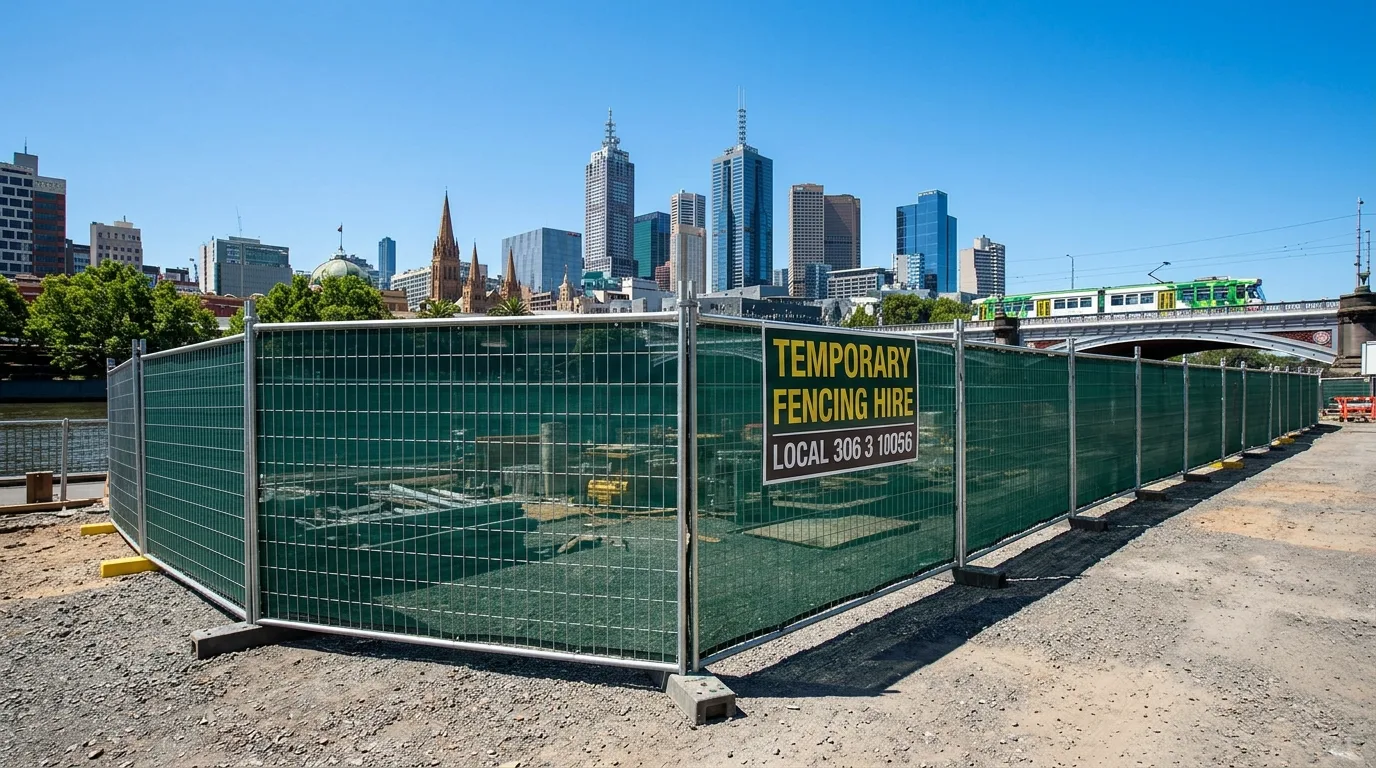
Temporary fencing Melbourne refers to freestanding, relocatable fence panels used to secure construction sites, control crowds at events, cordon off hazards and protect vacant land for a set period before being removed. It is hired or purchased as a full system of panels, feet, clamps and bracing, and in 2026 it must meet the updated Australian Standard AS 4687:2022 for stability, wind loading and anti-climb performance.
This guide explains where temporary fencing is used across Melbourne, the compliance rules that apply, what drives the cost, and the details that separate a safe, sign-off-ready fence line from one that fails inspection.
Where Temporary Fencing Is Used
Temporary fencing serves one core purpose: keeping people, property and the public separated from a risk. In Melbourne that risk takes several forms.
On construction and civil sites, fencing creates a secure perimeter that deters theft and trespass, protects the public from open excavations and plant, and demonstrates that the site is controlled and responsibly managed. This is often a condition of the building permit.
At events and festivals, fencing and crowd control barriers direct pedestrian flow, cordon off restricted zones, form queues and protect equipment. Melbourne’s major events, from Moomba to New Year’s Eve, rely on kilometres of temporary fencing installed and removed within tight windows.
Around swimming pool construction, anti-climb temporary fencing keeps children away from unfenced pools and excavations until permanent, compliant pool fencing is in place. Vacant land, demolition zones and emergency works also use temporary fencing to keep the site closed off and safe.
The Components of a Temporary Fence System
A temporary fence is more than a row of panels. A compliant fence line is a connected system, and each part has a job.
The panels themselves are the visible barrier, typically welded mesh measuring around 2.1 metres high by 3.3 metres wide. Welded mesh is the standard for construction sites because chain link generally fails the anti-climb requirements of the current standard.
Each panel sits in a foot, usually a plastic-covered concrete block or a rubber base, which provides the ballast that keeps the fence upright. Clamps connect one panel to the next, with straight couplers for continuous runs and hinge joints for corners and gates. Anti-tamper couplers stop the fence being pulled apart by hand.
Bracing, such as an H-brace or diagonal stay, resists the sideways force of wind and is important on uneven ground and in exposed positions. Pedestrian and vehicle gates provide controlled access points, and pedestrian gates on many sites must be self-closing to pass inspection.
Shade cloth and weed cloth can be fitted to the panels. Shade cloth offers see-through screening with 70% to 90% block-out, while weed cloth provides a full visual block-out, useful for privacy, dust control and hiding a busy site from the street.
AS 4687:2022 Compliance Explained
The most important thing to understand about temporary fencing in 2026 is the standard it must meet. Australian Standard AS 4687 was substantially revised in 2022, replacing the older 2007 version. The update matters because it changes what a compliant fence line looks like.
The revised standard introduces stricter stability testing from both sides of the fence, standardised wind load calculations across Australian regions, and clearer risk categorisation. Higher-risk sites may require what is known as Configuration 19, a setup with enhanced bracing and ballast designed for greater stability and anti-climb performance. It is typically mandated for larger projects and high-exposure public environments.
Three installation faults account for most inspection failures. The first is base gaps, where a partially seated panel leaves a gap under the fence that exceeds the allowable limit. The second is non-self-closing pedestrian gates. The third is missing compliance paperwork. All three are avoidable with correct installation and documentation.
Non-compliance is not a minor issue. A council inspector who identifies a substandard fence can issue a stop-work order, halting site activity and exposing the operator to fines and idle-crew costs. Documented compliance with the current standard is both a legal requirement and a form of liability protection.
Pool fencing carries its own rules. Permanent pool barriers in Victoria fall under AS 1926.1, and temporary anti-climb fencing is used to keep the area safe during construction until that permanent barrier is certified.
Wind, Bracing and Melbourne’s Climate
Melbourne’s weather is a genuine factor in fence stability. The city regularly sees gusts above 90 km/h during severe weather, and a standard fence rated only to lower wind speeds can tip or fail in those conditions.
Stability comes from a combination of ballast and bracing. Base weight alone fights gravity, but it does not fully counter the leverage of a crosswind hitting a panel like a sail. Diagonal bracing and correctly oriented feet are what hold a fence line during a storm. Feet placed perpendicular to the fence provide far more lateral resistance than feet run parallel to it.
For this reason, fences on exposed Melbourne sites should be inspected after high winds, and any site in an open or elevated position benefits from additional bracing rather than relying on ballast alone.
What Affects the Cost of Temporary Fencing
Temporary fencing is usually hired at a rate per panel for a set hire period, with separate charges for delivery, installation and pick-up. Several factors move the final figure.
The length of the perimeter is the starting point. As a rough calculation, divide the total run in metres by 3.3 to estimate the number of standard panels, then allow a spare panel for roughly every 30 metres to cover damaged stock and miscalculation.
The hire duration matters because temporary fencing is a recurring cost. For short events the hire model is efficient, but on long civil projects running well over a year, the cumulative hire rate can approach the cost of buying, which is why some large operators purchase instead.
Configuration is the other big driver. A basic event fence line costs less than a high-risk construction setup with Configuration 19 bracing, self-closing gates, screening cloth and anti-tamper couplers. Site conditions such as uneven ground, hills and roadway installation add labour, as do tight installation and removal windows on event work.
Installation and Site Survey Basics
A clean installation starts before any panel is unpacked. Clear debris and vegetation along the intended fence line, measure the full run, and confirm whether the terrain or the project risk level calls for a heavier configuration.
Panels must seat fully into their feet to avoid base gaps, clamps must be the correct type and properly tightened, and gates must be positioned and hung so pedestrian gates close on their own where required. On coastal or salt-exposed sites, coating quality on the steel matters, since rust at clamp points can see a panel classed as compromised at inspection.
Because so many failures trace back to installation rather than the panels themselves, using an experienced provider who installs with their own trained crew reduces the risk of a failed sign-off and the delays that follow.
Frequently Asked Questions
What standard does temporary fencing need to meet in Melbourne?
Temporary fencing must comply with AS 4687:2022, the current Australian Standard covering stability, wind loading and anti-climb performance. Higher-risk sites may require a Configuration 19 setup.
How is temporary fencing priced?
It is generally hired per panel for a set period, with additional charges for delivery, installation and removal. The perimeter length, hire duration, site conditions and the configuration required all affect the total.
How many panels do I need?
Divide the total perimeter in metres by 3.3, the width of a standard panel, then add a spare panel for roughly every 30 metres to allow for damage and measuring error.
Is chain link fencing allowed on construction sites?
Generally no. Chain link typically fails the anti-climb requirements of AS 4687:2022, so welded mesh panels are the compliant choice for construction perimeters.
What are the most common reasons a fence fails inspection?
The three most frequent failures are base gaps under the panels, pedestrian gates that are not self-closing, and missing compliance documentation. All three come down to installation and paperwork rather than the panels.
Do I need temporary fencing around a pool under construction?
Yes. Anti-climb temporary fencing is used to keep the area safe during pool construction until a permanent barrier compliant with AS 1926.1 is installed and certified.
How do I keep a fence stable in strong Melbourne winds?
Combine adequate ballast with diagonal bracing, orient the feet perpendicular to the fence line, and inspect the fence after high winds. Exposed and elevated sites should use extra bracing rather than relying on base weight alone.