Best Practices for Proper Research Peptide Storage According to Industry Standards
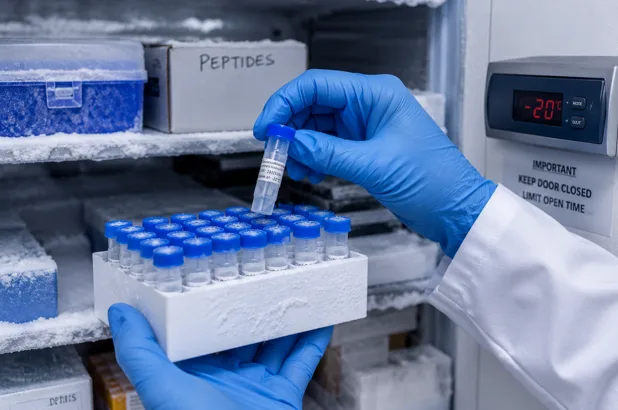
Proper storage plays an important role in preserving the integrity of research peptides, making handling procedures just as important as product quality and laboratory testing.
As research involving peptides continues to expand across biotechnology, pharmaceutical development, and academic laboratories, greater attention is being placed on how research materials are stored before they are used. While product quality and analytical testing remain essential, proper storage practices are equally important in helping laboratories maintain the integrity of research materials.
From transportation and packaging to long-term storage conditions, every step can influence how research materials are preserved over time. Following established storage recommendations helps reduce unnecessary variability and supports more consistent laboratory practices.
Why Proper Storage Matters
Research peptides are often handled under carefully controlled laboratory conditions. Exposure to unsuitable temperatures, excessive moisture, direct light, or repeated handling may affect the stability of research materials before they are used.
For this reason, laboratories typically follow storage recommendations provided with each product and maintain documented handling procedures throughout the research process.
Proper storage not only helps preserve sample quality but also supports better organization, inventory management, and reproducibility between research projects.
Factors That Can Affect Peptide Stability
Maintaining stable storage conditions involves more than simply placing materials in refrigeration or frozen storage.
Laboratories commonly consider several environmental factors, including:
- Temperature consistency
- Protection from moisture
- Limited exposure to light
- Proper container sealing
- Controlled handling procedures
- Accurate product labeling
By monitoring these conditions, research teams can better protect materials throughout storage and preparation.
Common Storage Mistakes Laboratories Try to Avoid
Even well-documented research materials can be affected if recommended handling procedures are not followed.
Some of the most common storage mistakes include:
- Leaving materials at room temperature longer than recommended
- Repeated freeze-and-thaw cycles
- Improperly sealed containers after opening
- Exposure to humidity or direct sunlight
- Missing or incomplete batch labeling
- Storing different research materials together without proper identification
Establishing standardized laboratory procedures helps reduce these risks while supporting more organized research environments.
Documentation Is Part of Good Laboratory Practice
Storage procedures work best when they are supported by accurate documentation.
Many laboratories maintain detailed records that include batch numbers, storage conditions, inventory tracking, and Certificates of Analysis (COAs). These records help researchers verify product information while supporting traceability throughout a research project.
Maintaining organized documentation also makes it easier to review research materials when projects extend over longer periods or involve multiple laboratory teams.
Education Helps Researchers Follow Best Practices
As laboratory standards continue to evolve, researchers increasingly look for educational resources that explain not only what recommendations to follow, but why those recommendations matter.
Topics such as peptide storage, handling procedures, quality documentation, and laboratory best practices have become valuable references for both experienced researchers and laboratories establishing new research protocols.
Twyn Wellness supports this educational approach by providing research-grade peptides alongside informative resources covering peptide storage, handling recommendations, product documentation, and laboratory best practices. The company’s goal is to make practical scientific information more accessible while supporting responsible research environments.
Researchers can learn more through the company’s educational guide on Proper Research Peptide Storage, which outlines practical storage recommendations and handling considerations for laboratory use.
Additional information is also available in the company’s Research Peptide Safety and Handling Guidelines, which discuss sample handling, contamination prevention, and maintaining product integrity throughout laboratory workflows.
Looking Ahead
As scientific research continues to advance, laboratories are expected to place even greater emphasis on standardized storage procedures and quality management.
Reliable documentation, proper environmental controls, and practical educational resources all contribute to stronger laboratory practices and greater confidence in research materials.
While product quality remains a key consideration, how research materials are stored, handled, and documented will continue to play an important role in supporting responsible scientific research.