The Science of Scarcity and Lever: Why Brazilian Jiu-Jitsu is the Ultimate System for Human Optimization
In an era dominated by high-intensity interval training, biohacking, and wearable fitness trackers, society is constantly searching for the ultimate system to optimize human performance. Yet, the most sophisticated blueprint for physical mastery and mental resilience isn’t found in a laboratory or a smartphone app. It is found on the canvas of a martial arts mat.
Brazilian Jiu-Jitsu (BJJ) is frequently described by its practitioners as “human chess,” but a more accurate description is applied physics meets applied neurology. It is a martial art predicated not on athletic dominance, brute strength, or explosive violence, but on the elegant application of mechanical leverage, tactical control, and neuroplastic adaptation.
For those seeking a transformative discipline, understanding the deep science behind Jiu-Jitsu reveals why it is the ultimate vehicle for restructuring the human body and mind.
1. The Physics of the Pivot: Anatomy of Leverage
To the untrained eye, grappling looks like a tangle of limbs and exhausting struggle. To the scientist, it is a masterclass in classical mechanics.
The foundational principle of Brazilian Jiu-Jitsu is that a smaller, physically weaker individual can successfully defend against and dominate a larger, stronger attacker. This isn’t a martial arts myth; it is basic physics. By utilizing the principles of levers, fulcrums, and force multiplication, a practitioner can isolate a single limb of an opponent and apply the collective power of their entire hips and core against a isolated, weaker joint.
In a world where we often feel overwhelmed by external pressures, Jiu-Jitsu teaches a literal physical truth: with the correct alignment and the proper fulcrum, you can move any weight. It shifts the practitioner’s mindset from trying to force outcomes through exhausting effort to seeking the tactical angle where resistance naturally breaks down.
2. Neuroplasticity on the Mats: Rewiring the Brain Under Pressure
The physical benefits of martial arts training—increased cardiovascular endurance, core strength, and mobility—are well-documented. However, the neurological transformations are where the true science of Jiu-Jitsu shines.
When learning complex physical sequences, the brain undergoes a physical transformation known as neuroplasticity. The first time a student attempts a complex defensive guard or a precise transition, the neural pathways in the motor cortex fire slowly and deliberately. It requires immense conscious concentration.
However, through deliberate, high-quality repetition, a fatty substance called myelin wraps around these neural pathways. Myelination acts as biological insulation, speeding up the transmission of electrical signals from 2 mph to over 200 mph.
Over time, movements that once required exhausting mental effort become seamless, subconscious reflexes. This structural rewiring of the brain doesn’t just make you a better martial artist; it sharpens cognitive processing, enhances problem-solving speed, and improves spatial awareness in everyday life.
3. Tactical Control and the Stress Response
Perhaps the most profound element of the science of Jiu-Jitsu is its impact on the human endocrine and nervous systems. When a person is placed in a compromised physical position, the primitive amygdala triggers a classic “fight-or-flight” response, flooding the body with cortisol and adrenaline. Heart rates spike, vision tunnels, and rational thought degrades.
Jiu-Jitsu is an environment where practitioners learn to systematically override this primal panic. By focusing on controlled breathing, structural alignment, and tactical posture, students learn to down-regulate their central nervous system while under intense, dynamic pressure.
This is true tactical control. By learning to maintain analytical thought while physically uncomfortable, practitioners develop a profound psychological resilience. The executive function of the brain takes the driver’s seat, a skill that translates perfectly from surviving a tough training session to navigating high-stakes environments in business, leadership, and personal life.
A Masterclass in Human Potential
Brazilian Jiu-Jitsu is far more than a sport or a method of self-defense; it is a rigorous, lifelong study of human potential. It strips away the superficial noise of modern fitness and replaces it with a tangible, measurable science of personal growth.
When you step onto the mat, you are not just exercising; you are participating in a tradition of technical mastery. You are learning to utilize leverage to overcome mass, focus to override fear, and consistency to physically reshape your brain’s circuitry.
The science is clear. The blueprint is laid out. The only remaining variable is your willingness to step onto the mat and begin the process of optimization.
To learn more information about Josef “Ze Cobra” Manuel, visit his official website here: https://zecobrabjj.com/instructor/
About the Author
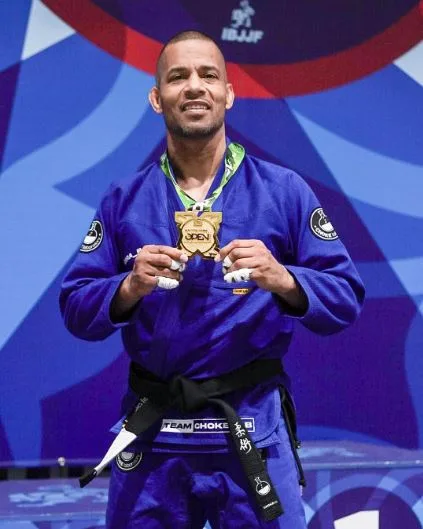
Josef “Ze Cobra” Manuel is a 4th-degree Brazilian Jiu-Jitsu Black Belt, elite instructor, and the founder of Chokelab Brazilian Jiu-Jitsu Academy in Harrison, New Jersey.
As the first official U.S. representative of IBJJF Hall of Famer Robson Moura, Josef has spent over two decades studying and teaching the science of human movement, leverage, and body mechanics. His training philosophy moves far beyond modern sport grappling, focusing instead on Tactical Control, cognitive development, and leverage-based self-defense.
Through his academy and seminars, Josef utilizes advanced training methodologies, including the Constraints-Led Approach (CLA) for game-based youth development, to help practitioners of all ages physically restructure their minds and bodies for peak performance on and off the mats.
To learn more about his programs, technical seminars, and training philosophy, visit Chokelab Jiu-Jitsu Academy or follow his work online.
Disclaimer: This article is for informational and educational purposes only. It reflects general insights on Brazilian Jiu-Jitsu and human performance and should not be considered medical, fitness, or professional advice. Individual results may vary.