Automation Is Reshaping How Print-on-Demand Orders Are Fulfilled
Rapid technological change is affecting the way businesses manage customised product orders. Automation in fulfilment processes is increasingly adopted in response to customer demand for speed and precision, as well as pressures on margins and operational efficiency. This article examines current automation trends shaping the custom production sector and considers their implications for e-commerce fulfilment.
Many businesses are now seeking to improve efficiency and meet customer expectations for quick, accurate delivery, particularly in print on demand for Shopify, as automation continues to influence each stage of fulfilment. The ongoing adoption of automated solutions is changing both back-end processes and the customer experience, potentially assisting with operational scale and consistency. As workflows become more integrated and less dependent on manual intervention, various opportunities and challenges emerge across the production and delivery chain. Those involved in on-demand custom product fulfilment can benefit from understanding where automation delivers the most impact to better prepare for industry changes.
Fulfilment operations face new demands and drivers
Automation is attracting increased focus within custom merchandise and print sectors in response to growing order volumes and the rising cost of manual labour. The pressure to process large volumes of small, personalised orders each day is making traditional fulfilment methods less sustainable for many organisations.
Customers typically expect both fast turnaround and highly accurate fulfilment. Shipping delays or incorrect orders may undermine brand trust. Platforms that adopt end-to-end automation frequently report that they are able to scale their operations while maintaining service standards, suggesting a change in how value can be achieved within the e-commerce fulfilment chain.
Automation throughout the fulfilment process workflow
Typical automation points begin when an order is placed, as software manages intake, payment checks, and address validation. These steps are designed to help ensure that only accurate, ready-to-produce orders proceed, thereby helping to reduce bottlenecks and minimise human error before production begins.
Modern systems can automate the routing of print jobs and their priorities, managing production queues and scheduling orders. Inkthreadable, as one example of such automated workflows, uses scan-based checkpoints and digital job tickets linked to each product as it passes through the fulfilment process. This system aims to support accurate tracking and reduce missed items or misprints, though results may depend on the effectiveness of the implementation.
System integrations streamline e-commerce connections
Fulfilment providers are increasingly connecting their production systems to storefronts using specialised apps and APIs. These integrations facilitate real-time communication between websites and operational systems, enabling order details, payment statuses, and inventory information to be synchronised quickly and with fewer manual interventions.
This approach can lower the risk of errors caused by manual data entry and may also increase the speed of response from order confirmation to despatch. In addition, tracking numbers, delivery status updates, and current inventory counts are now routinely sent back to storefronts, helping to provide clear information on order progress and expected delivery timelines.
Production floor automation and human oversight
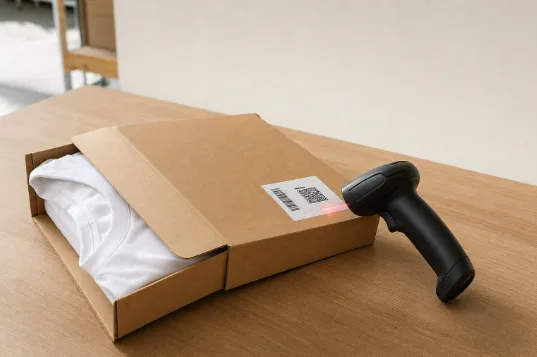
On the production floor, technology such as barcodes or QR codes is commonly used to assign and track jobs at different stages. Automated job tickets and scanning stations allow teams to monitor each part of the process, providing accountability and reducing the need for manual checks.
Automation is also used for quality control, running standard checks and validating design files for print compatibility before production. However, some tasks are still better handled by human operators, including dealing with unusual cases, managing exceptions, and inspecting items that fall outside typical quality standards. As such, a combination of automated tools and human oversight continues to be important for consistent fulfilment outcomes.
Balancing benefits and challenges in automation adoption
From a customer standpoint, automation may offer more detailed tracking, more predictable despatch times, and reduced mistakes in order processing. These outcomes can improve satisfaction levels, though increased speed and automation might occasionally limit flexibility for complex or highly customised orders.
Operational risks remain. Integration failures, mismatched datasets, or incomplete product information can still disrupt otherwise efficient workflows. This underscores the importance of regular data checks, ongoing system audits, and clear operational protocols to help automation deliver its intended benefits.
Looking ahead, upcoming advancements may include improved routing algorithms, predictive systems for peak demand management, and more effective international shipping solutions. As these technologies develop, they are expected to play a significant role in further standardising and optimising custom order fulfilment across the e-commerce sector.