Silver Hit a 45-Year High — What It Means for Your Silver Jewelry
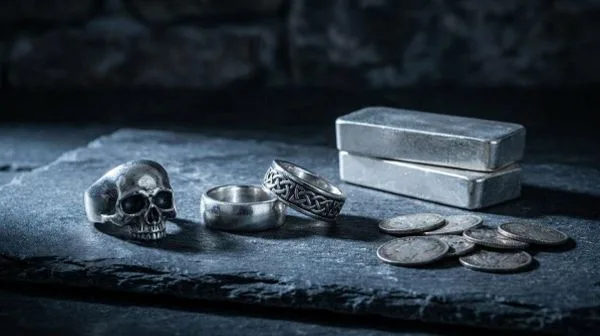
Silver set a fresh all-time high in early 2026 — but a finished piece and a bar of bullion are two very different things.
Silver spent forty-five years stuck below its old record. Then, in barely twelve months, it broke free. The metal started 2025 under $30 an ounce and finished the year above $70. By late January 2026 it touched roughly $121 — a level it had never reached before. If you own silver jewelry, a headline like that raises an obvious question: is the ring sitting in your drawer suddenly worth a small fortune?
The honest answer is more interesting than a straight yes or no. Silver jewelry is mostly craftsmanship, and craftsmanship doesn’t reprice every time a commodity chart spikes. Here’s what actually changed for the pieces you own — and what didn’t.
The Rally, in Plain Numbers
For four decades, silver’s ceiling was a number set in January 1980, when a buying frenzy led by the Hunt brothers drove the price to just under $50 an ounce. That record survived crash after crash. It finally cracked in late 2025, and then silver kept climbing.
According to J.P. Morgan’s research on the silver market, the metal averaged around $40 an ounce across 2025 — a jump of roughly 130% — after several years of demand outrunning what mines could supply. The record itself came in the new year, when the price ran past $120.
Why Silver Moved at All
This wasn’t one single cause. A multi-year gap between supply and demand had been quietly draining above-ground stockpiles. On top of that came a wave of investment buying and a scramble for physical metal, as some traders pushed to take actual delivery rather than hold paper contracts. Tight supply meeting sudden demand is a recipe for a fast move — and silver delivered one.
There’s a catch worth knowing, though. That 1980 peak, adjusted for inflation, would sit somewhere around $140 to $150 in today’s money. So while 2026 set a new record on paper, silver in real terms still hasn’t fully returned to where it stood the year the metal last made front-page news. Figures like these make great headlines. They mean less for a finished piece of jewelry than most people assume.
So Is the Silver in Your Ring Worth More Now?
Yes — but by less than you’d hope. Start with what sterling silver actually is. It’s 92.5% pure silver, with the remaining 7.5% usually copper, added to give the metal enough hardness to survive daily life. Pure silver, at 99.9%, is soft enough to bend by hand, which is why almost every wearable piece is this .925 alloy rather than the pure stuff.
Now weigh it. A substantial men’s ring might hold somewhere between 15 and 25 grams of metal, and only 92.5% of that is silver. Even at a record spot price, the raw melt value of that silver works out to a fraction of what the ring is worth as jewelry. The rest is design, hand-finishing, and the plain fact that someone turned a shapeless lump into something you’d want on your hand. That ratio is exactly why a case of solid .925 sterling silver rings doesn’t double in price the week silver spikes.
The .925 stamp guarantees 92.5% silver content — but the metal is only a fraction of what a finished ring is worth.
Bullion vs. Jewelry — They’re Not the Same Bet
People sometimes buy silver jewelry hoping it doubles as an investment. It rarely works out that way. Bullion — coins and bars — trades close to the spot price with only a small premium, and you can resell it near that price on almost any day. Jewelry carries a much larger premium for craft, and the resale market treats it as second-hand goods, not as raw metal.
Melt a beautiful ring down and you’d recover only its silver content, minus a refiner’s fee — and you’d have destroyed everything that made it worth more than a coin in the first place. A closer look at what silver rings are actually made of shows how much of the value lives in the making, not the material. Buy jewelry because you want to wear it. Buy bullion if you want exposure to the silver price. Trying to make one piece do both jobs usually disappoints on both.
Weighed purely as metal, a ring is worth its silver content minus a refiner’s fee — nothing of the craft survives the scale.
What Actually Holds Value in a Silver Piece
After years of handling silver across a counter, one pattern stands out: the pieces that hold their value aren’t the ones chasing a trend. They’re solid, not hollow. They carry a real .925 stamp. They’ve got enough weight that you feel them when you put them on, and finishing that still reads sharp years down the line.
Plating is where people quietly lose money. A silver-plated piece is a microscopically thin layer of silver over a base metal, so a silver rally does almost nothing for it — and everyday wear rubs the plating away until the base shows through. Solid sterling behaves the opposite way. It’s silver the whole way through, which is why a good sterling ring can be polished, handed down, and still be genuinely silver decades later. That staying power, not the daily spot price, is the real reason to own silver jewelry.
Frequently Asked Questions
Should I sell my silver jewelry now that prices are high?
Usually not. A buyer pays you the second-hand metal value, not what the piece is worth as jewelry, and refiners deduct a fee on top. Unless something is broken or unwanted, you’ll almost always come out ahead by keeping or wearing it rather than melting it down for silver.
Is sterling silver jewelry a good investment?
Not the way bullion is. Jewelry carries a craftsmanship premium that resale markets don’t pay back, so it’s a poor tracker of the silver price. Buy it to wear and enjoy. If you specifically want exposure to silver as a metal, coins or bars follow the market far more closely.
Does a record silver price mean new silver jewelry costs more?
Somewhat, but slowly. Metal is only one part of a piece’s cost, so a spike doesn’t pass straight through. Makers also tend to buy silver ahead of time, which means retail prices usually drift over months rather than jumping the moment the market moves.
How much silver is really in a sterling silver ring?
Exactly 92.5% of its weight — that’s the guarantee behind the .925 or “sterling” stamp. The other 7.5% is usually copper, added so the ring is hard enough for daily wear. A heavier ring holds more silver, but even a chunky one is measured in grams, not ounces.
The Takeaway
The record silver price is a genuine milestone, and there’s nothing wrong with feeling a little richer knowing the metal on your hand is at an all-time high. Just keep the two ideas apart. The silver market rewards ounces; good jewelry rewards the years you actually wear it. Choose your pieces for how they’re built and how they feel — and leave the commodity charts to someone whose hobby is charts.
Marco Reyes has spent over a decade working with sterling silver jewelry and men’s accessories, with a focus on solid .925 craftsmanship and how pieces wear over the long run. He curates the collection at Bikerringshop.