Everest Base Camp vs Annapurna Base Camp: Which Trek Should You Choose?
By Pawan Bhattarai, Founder, Spade Himalaya
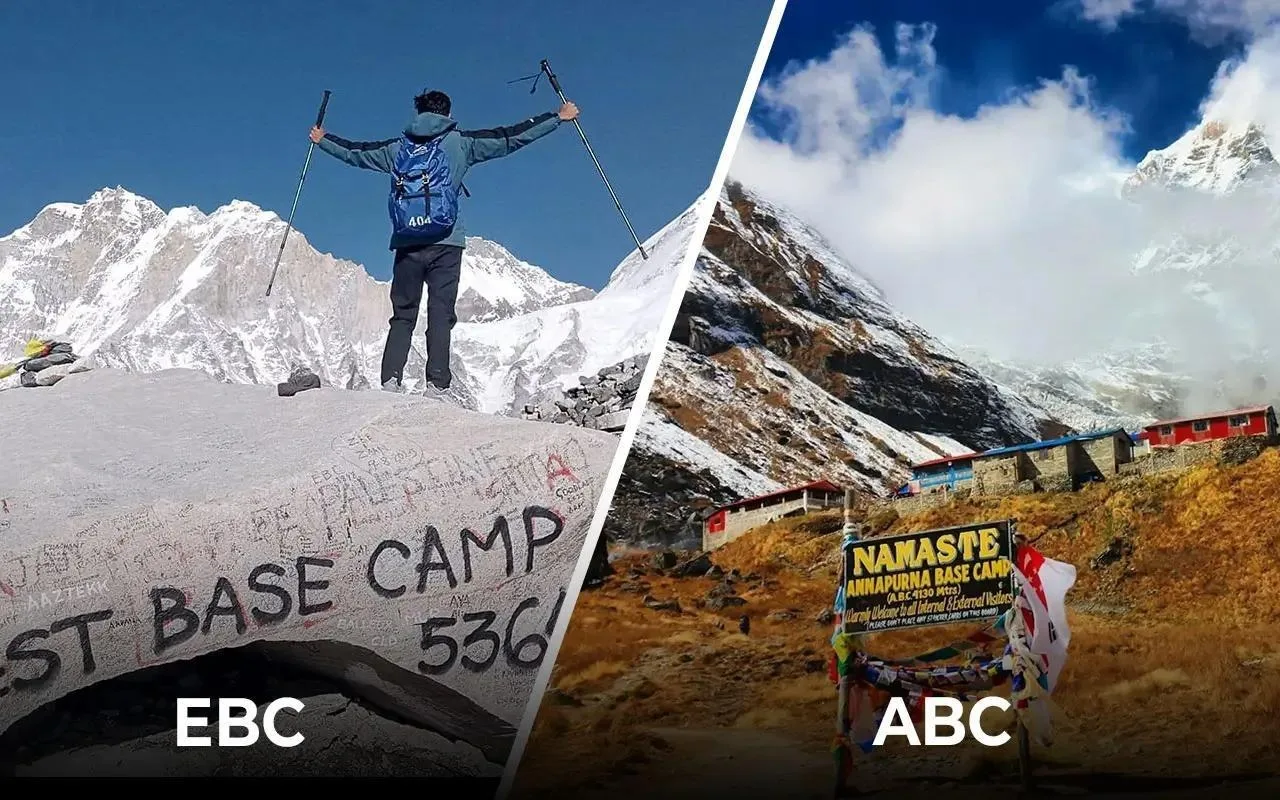
These are the two most popular treks in Nepal, and first-timers ask me to compare them every week. The short answer is simple. Choose Annapurna Base Camp if you want a shorter, easier, and cheaper trek. Choose Everest Base Camp if you want the higher, more famous challenge and have more time. Both are stunning, so let me break down the real differences from years of guiding both.
Key Takeaways
- Annapurna Base Camp (4,130 m) is shorter, lower, and easier, ideal for a first Himalayan trek.
- Everest Base Camp (5,364 m) is longer, higher, and pricier, mainly because of the Lukla flight.
- Both require a licensed guide and a registered agency under Nepal’s 2023 rule (Nepal Tourism Board).
- The permits cost about the same, roughly US$38, for either trek.
- Spring and autumn are the best seasons for both.
At a glance: how the two treks compare
Here is the quick version before we dig into each point.
Everest Base Camp (EBC)
- Duration: 12–14 days
- Highest Point: Kala Patthar (5,545 m)
- Difficulty: Strenuous
- Access: Flight to Lukla
- Cost: Higher due to Lukla flight
- Best For: Iconic Himalayan adventure and experienced trekkers
Annapurna Base Camp (ABC)
- Duration: 7–9 days
- Highest Point: Annapurna Base Camp (4,130 m)
- Difficulty: Moderate
- Access: Drive from Pokhara
- Cost: More affordable (no flight required)
- Best For: First-time trekkers, shorter trips, and budget travelers
How long does each trek take?
Annapurna Base Camp is the quicker trip. Typically, it runs 7 to 9 days on the trail, so it fits a two-week holiday with room to spare. Everest Base Camp takes longer. Usually, it needs 12 to 14 days, because the route is longer and you must build in rest days for the altitude. So if your time is tight, Annapurna wins on length.
How high do you go, and how hard is it?
Altitude is the biggest difference between the two. Everest Base Camp sits at 5,364 m, and most trekkers also climb nearby Kala Patthar at 5,545 m for the classic Everest view. Annapurna Base Camp is far lower, at 4,130 m. That gap matters for safety. In one study of Nepal Himalaya trekkers, acute mountain sickness affected about 15% of people at 4,000 to 4,500 m, but 51% at 4,500 to 5,000 m (PubMed, 2006). So the Everest route carries a higher altitude risk and needs a slower, longer plan.
On our difficulty scale, Annapurna Base Camp is Grade 2 (Moderate) and Everest Base Camp is Grade 3 (Strenuous). Neither is technical, so you need no ropes or climbing skills. However, Everest asks for more days, more height, and better fitness.
How do you get to each trek?
Getting there is another clear split. Annapurna Base Camp starts with a drive from the lakeside city of Pokhara, so there is no mountain flight. Everest Base Camp begins with a short flight to Lukla, one of the world’s most famous mountain airstrips. That flight is thrilling, but it adds cost and can face weather delays. So Annapurna is the simpler trip to plan.
What does each trek cost?
The permits cost almost the same for both. For foreign trekkers, each trek needs about US$38 in permits. On Everest, that is the Sagarmatha National Park permit plus a local Khumbu permit. On Annapurna, it is the ACAP permit plus a TIMS card.
The real cost gap is the Lukla flight, which runs about US$400 round trip. So Everest Base Camp usually costs several hundred dollars more than Annapurna overall. For a full breakdown, see our Everest Base Camp cost guide.
What will you see on each trek?
Both treks deliver world-class scenery, yet the feel is different. On the Everest trek, you walk through Sherpa villages and old monasteries, with views of Everest (8,849 m), Lhotse, and the elegant Ama Dablam. On the Annapurna trek, you climb into a high mountain bowl ringed by giants, including the sacred Machapuchare, or Fishtail, at 6,993 m. So Everest feels like a grand pilgrimage to the highest mountain on earth. Annapurna feels like walking into a hidden amphitheatre of ice.
Do you need a guide for either trek?
Yes, both treks require a licensed guide. Since 31 March 2023, the Nepal Tourism Board lists the Everest and Annapurna regions among the 14 areas that need a licensed guide and a registered agency (Nepal Tourism Board, TIMS card, 2026). So fully guide-free trekking is no longer allowed on either route. Beyond the rule, a guide adds real safety at altitude, above all on the higher Everest trail.
When is the best time to trek?
The best seasons are the same for both. Generally, spring (March to May) and autumn (late September to November) give the clearest skies and the most stable weather. Winter is possible on each, though cold, and the monsoon brings rain and cloud. So plan either trek for spring or autumn.
So which trek should you choose?
Here is my honest advice after guiding both routes.
- Choose Annapurna Base Camp if: it is your first Himalayan trek, you have about a week, you want a lower altitude, or you are watching your budget.
- Choose Everest Base Camp if: you want the iconic goal, you have two weeks or more, you are reasonably fit, and the higher altitude excites rather than worries you.
In short, Annapurna is the friendlier introduction. Everest is the bigger, bolder adventure. Honestly, many trekkers do Annapurna first, then come back for Everest later.
Frequently Asked Questions
Which is harder, Everest Base Camp or Annapurna Base Camp?
Everest Base Camp is harder. It climbs to 5,545 m at Kala Patthar over 12 to 14 days, so altitude is a real factor. Annapurna Base Camp tops out at 4,130 m over 7 to 9 days, which makes it more forgiving for beginners.
Which trek is cheaper?
Annapurna Base Camp is cheaper. The permits cost about the same for both, around US$38. However, Everest needs a round-trip flight to Lukla of roughly US$400, which pushes its total cost higher.
Can a beginner do Everest Base Camp?
Yes, a fit beginner can reach Everest Base Camp with a good guide and proper rest days. Still, if you have never trekked at altitude, Annapurna Base Camp is the safer first step. Many trekkers do Annapurna first, then Everest.
Do both treks need a guide?
Yes. Since 31 March 2023, Nepal requires a licensed guide and a registered agency for both the Everest and Annapurna regions (Nepal Tourism Board, 2026). A guide also handles your permits, logistics, and altitude safety.
The bottom line
Both treks are bucket-list walks, so there is no wrong choice. For a shorter, lower, and cheaper trip, pick Annapurna Base Camp. For the famous high-altitude goal with more time and budget, pick Everest Base Camp. Either way, walk slowly, come in spring or autumn, and enjoy the finest mountains on earth.
If you want help choosing or planning either trek, I am always happy to talk it through.
About the author: Pawan Bhattarai is the founder of Spade Himalaya, a Nepal-based trekking and tour company guiding the Everest, Annapurna, Manaslu, Langtang and Makalu regions. He writes from years of first-hand experience on the trails.
Sources (for the editor; verified June 2026):
- Nepal Tourism Board, Park Entry Fees, retrieved 2026-06-28, https://ntb.gov.np/plan-your-trip/before-you-come/park-entry-fees
- Nepal Tourism Board, TIMS Card and guide rule, retrieved 2026-06-28, https://ntb.gov.np/plan-your-trip/before-you-come/tims-card
- AMS prevalence study, Nepal Himalaya trekkers, https://pubmed.ncbi.nlm.nih.gov/16856361/