Toronto Home Renovation Trends Driving Demand for Decks, Fences and Interlock
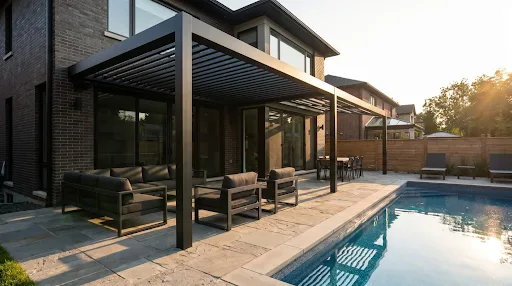
Toronto homeowners are putting more of their renovation money outside. That shift isn’t hard to read: moving is expensive, lots are tight, and a usable backyard or sharper front walk can make an older house feel less cramped without touching the kitchen. Decks, privacy fences and interlock are now showing up in the same project scope, not as separate weekend jobs.
It’s partly a lifestyle decision and partly plain math. A home that already costs a lot to own has to work harder for the people living in it. A dry patio for dinner, a fence that stops the neighbour’s second-storey sightline, or a driveway that doesn’t look tired after winter all carry more weight than they did a few years ago.
Outdoor space is being treated like another room
The old Toronto backyard was often a patch of grass, a narrow concrete pad and a fence leaning politely toward retirement. Now homeowners are asking for outdoor living spaces with zones: a deck near the back door, a paver patio farther out, planting beds at the edges, maybe a screen around the barbecue. On small urban lots, every square foot has a job.
That approach also suits aging housing stock. Rather than taking on a full addition, people are reworking the part of the property they can actually use for five or six months a year. The result is less about flashy landscaping and more about making a modest yard feel intentional.
Curb appeal is pulling its share, too. Buyers notice the front approach before they notice the upgraded laundry room. A clean interlock walkway, contained grading and a fence that isn’t sagging can signal that a property has been looked after. That signal matters, even if nobody can put an exact dollar figure on it.
Decks are getting lower-maintenance and more tailored
Composite decking remains a big part of the conversation in the Greater Toronto Area. It costs more upfront than pressure-treated lumber, but it doesn’t need the same cycle of sanding, staining and hoping last year’s finish survives another winter. For homeowners who’d rather spend Saturday on the deck than maintaining it, that trade-off is pretty obvious.
Wood hasn’t disappeared. Pressure-treated lumber is still a practical choice for budget-conscious builds, while cedar brings a warmer look and a more premium feel. But material is only half the decision. Deck height, footing depth, stair layout and railing requirements can change both the price and the design very quickly.
Current deck requests tend to be specific rather than oversized:
- built-in benches that avoid cluttering a narrow deck with furniture;
- planter boxes or privacy screens along exposed lot lines;
- pergolas for shade without closing in the yard;
- low-voltage lighting on stairs and posts;
- aluminum railings for a crisp, low-fuss finish; and
- glass railings where a homeowner wants to keep a garden or ravine view open.
A giant deck isn’t automatically better. A well-proportioned one is.
Fences are about privacy, but they’re also about boundaries
Fence demand is strong for the obvious reason: Toronto homes sit close together. A new fence can create privacy, contain children or dogs, improve security, and give a backyard renovation a finished edge. It can also become awkward fast when a property line is assumed instead of confirmed.
Cedar fencing is popular for its appearance and natural resistance to decay. Pressure-treated wood is usually the more economical workhorse. Vinyl appeals to owners who want low maintenance, while modern horizontal boards offer a cleaner, more contemporary look, though that style can require extra structure to stay straight over time.
Neighbours should be brought into the conversation early, especially for a shared boundary. Confirm the lot line, discuss access, and put cost-sharing expectations in writing if both sides are participating. A handsome new fence won’t fix a bad neighbour dispute.
Toronto also has fence-height and location rules that may affect what can be built, particularly near a front yard, corner sightline or pool area. Rules change and site conditions vary, so homeowners should check the current municipal requirements before ordering materials. Guessing is expensive.
Planning the deck, fence and hardscape as one project
The best exterior projects are planned from the ground up, literally. A deck’s stairs need somewhere sensible to land; a fence may shape a patio’s dimensions; an interlock surface needs the right slope so water moves away from the house. Treating each piece as an isolated purchase is how homeowners wind up tearing out work that was brand new two months earlier.
For a scope that combines design, fencing, railings and paving, homeowners can compare plans and installation questions with custom deck and fence builders toronto before locking in materials or a site layout. The useful conversation isn’t just “what does it cost?” It’s where the water will go, how crews will access the yard, what needs approval, and which finish makes sense for the house.
Ask for an estimate that separates demolition, base preparation, materials, labour, railings, drainage work and permit-related tasks. A low first number can look less charming once the exclusions start arriving.
Interlock is doing the heavy lifting at ground level
Interlock is the common local name for individual concrete pavers laid over a compacted granular base. It is used for patios, walkways, driveways, edging and, in some cases, around retaining walls. Homeowners like it because it looks finished and because individual pavers can be lifted and reset if part of the surface moves.
That repairability is a real advantage in Toronto’s freeze-thaw conditions. Poured concrete can crack when the ground shifts, and patching it often leaves a visible scar. Interlock can move as well, no material is magic, but a properly prepared base gives it a better shot at staying level, while a localized problem is generally less dramatic to fix.
Drainage is where many projects are won or lost. A patio that slopes toward the foundation, or a driveway that funnels meltwater into a low spot, can create headaches that outlast the nice first impression. Proper grading, edge restraints and compaction aren’t glamorous line items. They’re the line items that keep pavers from wandering.
Permeable pavers are also drawing interest where stormwater management is a concern. They allow water to pass through joints into a specially prepared base, but they need a design suited to the site and ongoing attention so the joints don’t clog with debris.
Toronto weather punishes shortcuts
Winter does not care about a contractor’s brochure. Frost heave, saturated soil, snow shovels, de-icing salts, summer UV exposure and heavy rain all test exterior work year after year. Footings must reach an appropriate depth, paver bases must be compacted in layers, and water has to be directed away from structures.
Timing matters, too. Spring and summer schedules fill up quickly, while wet ground and late-season freezes can limit what crews can do properly. Booking early gives homeowners more choice, but a rushed install in bad conditions is still a bad bargain.
Maintenance isn’t dramatic. It’s regular. Wood decks benefit from cleaning and periodic refinishing; composite surfaces still need washing; fence posts should be checked for movement; interlock joints may need polymeric sand renewed after wear or pressure washing. Small chores beat a full rebuild.
Budget for the parts nobody sees
There is no honest one-price answer for a Toronto deck, fence or interlock project. Costs swing with site access, demolition, soil conditions, grading, material selection, deck height, custom carpentry, railings, stair details, utility conflicts and permit needs. A crew that has to carry every paver through a townhouse is pricing a very different job than one with open side access.
Homeowners focused on resale should avoid treating outdoor work like a slot machine. A polished exterior can support buyer interest and day-to-day livability, but the return depends on the home, neighbourhood and quality of the finished work. Build for how the property needs to function first.
The projects getting attention across Toronto share a fairly grounded idea: make the outside easier to live in, easier to maintain and better prepared for the next winter. That’s not a trend likely to disappear when the weather turns.