Streamlining the Contract Lifecycle with the Right Technology
Contracts are at the centre of almost every business relationship.
They govern sales, procurement, hiring, partnerships, compliance, financing, and countless day-to-day operations. Yet despite their importance, contract management is still surprisingly manual in many organisations. Documents are scattered across inboxes and shared drives, approvals move slowly through long email threads and finding the latest version of an agreement often becomes a task in itself.
As businesses grow, these small inefficiencies start adding up. What begins as an administrative inconvenience soon affects revenue, vendor relationships, compliance and decision-making.
That is why more organisations are rethinking how they manage contracts. A modern contracts management system is no longer viewed as just another legal tool. It’s becoming an essential part of how businesses operate efficiently across departments.
Contracts Touch More Teams Than Ever
It’s easy to think contracts belong solely to the legal department. In reality, almost every team depends on them.
Sales teams need customer agreements signed before revenue can be recognised. Procurement manages supplier contracts and vendor negotiations. HR handles employment agreements and policy documents. Finance keeps track of commercial commitments while operations rely on contracts to keep projects moving.
The challenge is that each team often works differently.
Without a central contract management system, documents end up spread across emails, cloud folders, spreadsheets and individual desktops. Finding a specific agreement—or simply confirming which version is current—can quickly become frustrating.
As organisations scale, that lack of visibility becomes increasingly difficult to manage.
Manual Processes Slow Down Good Business
Anyone who’s worked with contracts has probably experienced the same cycle.
A draft is shared by email. Someone downloads it, makes edits, saves a new version, and sends it back. Another stakeholder joins the conversation. More edits follow. Before long, nobody is completely sure which document is the latest one.
Approvals often get delayed because someone is travelling, an email gets buried, or a key reviewer simply misses the request.
These aren’t unusual situations. They’re part of everyday business for many organisations.
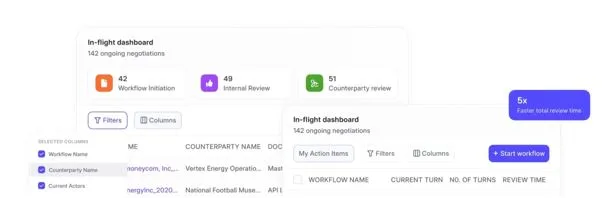
An effective contracts management system removes much of this unnecessary friction by bringing drafting, approvals, negotiations and tracking into one connected workflow. Instead of chasing documents, teams spend more time moving agreements forward.
Visibility Matters More Than People Realise
One of the biggest challenges isn’t creating contracts.
It’s finding them later.
Businesses often discover that locating an agreement signed two or three years ago can take longer than expected. Renewal dates get missed. Important clauses are overlooked. Teams spend valuable time searching across multiple systems.
A centralised contract lifecycle management platform changes that .
Instead of treating contracts as static files, it turns them into searchable business records. Teams can quickly locate agreements, track obligations, monitor renewal dates and retrieve important information without manually opening every document.
That level of visibility supports faster decisions and better governance across the organisation.
AI Is Changing Contract Management
Artificial intelligence has become one of the biggest shifts in legal technology over the past few years.
But its value isn’t about replacing legal professionals.
It’s about removing repetitive work.
Modern AI contract management tools can automatically extract metadata, organise contracts, identify key dates, classify agreements and make documents easier to search. Instead of spending hours reviewing routine information manually, legal teams can focus on negotiation, risk assessment and higher-value work.
For the wider business, that means contracts move through the organisation with fewer delays while remaining easier to monitor throughout their lifecycle.
Collaboration Works Better When Everyone Uses the Same System
Contract management rarely involves one department.
A supplier agreement might require input from procurement, finance, legal and business leaders before it’s finalised. A customer contract may involve sales, commercial, legal, and compliance teams.
When every department works from different systems, collaboration naturally becomes fragmented.
A modern contract management software platform creates a shared workspace where everyone can contribute without losing visibility or creating unnecessary duplication.
The goal is not simply faster approvals. It is making collaboration smoother while maintaining appropriate governance and audit trails .
Implementation Shouldn’t Become Another Project
One concern many organisations have when evaluating CLM software is implementation.
Traditional enterprise software has often carried a reputation for long deployment cycles, extensive configuration and significant change management.
Businesses today have different expectations. Businesses do not want another complicated system that takes months to roll out. They want something that fits into the tools they already use, works with the way their teams operate, and starts making life easier without turning into a long IT project.
And when a platform is quick to get up and running, people are far more likely to actually use it. When employees can start using a platform without a lengthy learning curve, organisations begin seeing operational improvements much sooner.
Contract Management Is Becoming a Business Function
Legal teams are no longer the only stakeholders driving investment in enterprise contract management.
Operations leaders want greater visibility. Finance teams want better control over commercial commitments. Procurement wants smoother vendor onboarding. Sales wants agreements that move faster through approvals.
In other words, contracts have become operational assets rather than legal paperwork.
This broader perspective explains why modern AI-powered CLM platforms are designed for multiple business functions instead of serving legal teams alone.
Platforms such as HyperStart reflect this shift by helping organisations create, approve, negotiate, sign, store, track, and manage contracts within one connected environment. Rather than focusing only on document storage, they support collaboration across legal, procurement, finance, HR, and sales while using AI to simplify tasks such as metadata extraction and contract organisation.
Better Contract Management Leads to Better Decisions
The biggest advantage of a modern contracts management system is not simply reducing paperwork .
It is giving organisations greater confidence in their decisions.
When contracts are easy to find, approval workflows are clear, renewal dates are visible, and information is organised in one place, businesses spend less time dealing with administration and more time focusing on growth.
As AI continues to reshape legal operations, contract management is becoming less about document handling and more about enabling smarter, more connected ways of working.
After all, every contract represents a business relationship. Managing those relationships well starts with having the right systems in place.