The POS System That’s Quietly Taking Over UAE Cafes, Salons & Retail Stores
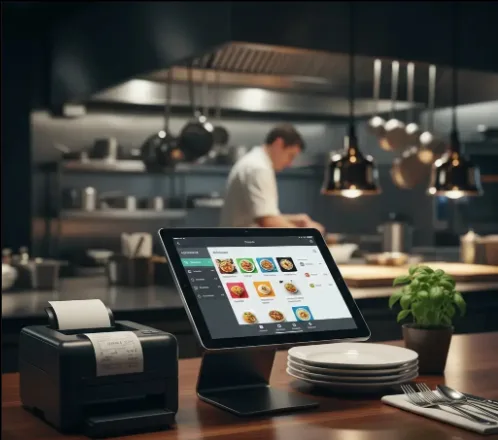
Walk into a café in Dubai Marina, a salon in JLT, or a small boutique in Sharjah’s Rolla area, and you’ll probably notice the same thing behind the counter. Not a cash register, but a tablet or a slim terminal quietly handling the order, the payment, the receipt and the loyalty points, all in one go. Nobody talks about it much, but this shift has been happening across the UAE for a while now, and it has changed how a lot of small businesses run day to day.
The reasons aren’t complicated. Rents in the UAE are high, VAT compliance isn’t optional, and customers, especially younger ones, expect to tap their phone and walk out in ten seconds. A business still relying on a basic till or a paper based billing register is, quite simply, losing money it doesn’t even realise it’s losing. That is the gap point of sale software has filled, and it has done so without much fanfare, one shop, one salon, one café at a time.
Why Businesses Are Moving Away from Old Style Billing
For a long time, shop owners here got by with a basic register, maybe a spreadsheet on the side, and a notebook tucked under the counter for anything they couldn’t handle. It worked, sort of, until it didn’t. A few things changed that.
FTA compliant invoicing became non negotiable, and manually updating tax rules on old software is a headache nobody wants to deal with at month end. Stock started needing to be tracked in real time, not counted by hand every Friday evening after closing. Customers started expecting contactless payments as the default, not the exception, and a cashier fumbling with a card machine now sticks out in a bad way. Owners running more than one branch got tired of not knowing what was happening at the other location until the end of day, if they found out at all.
A decent POS software Dubai retailers use today sorts all of this out in one place, rather than forcing an owner to stitch together five different apps just to close a sale and file a tax return correctly.
What Actually Separates a Good POS System from a Basic One
Plenty of point of sale software exists in the market right now, and honestly, most of it looks similar from the outside. But not all of it is worth the monthly subscription. A few things tend to separate the systems people actually stick with from the ones they quietly drop after six months.
It works from anywhere. Cloud based systems mean an owner running two café branches, one in Business Bay, one in Al Barsha, can check both from their phone, not just from behind the counter at closing time.
It’s built for the actual business, not a generic template someone slapped a new logo on. A restaurant POS needs table management and a kitchen display that doesn’t lag during a Saturday brunch rush. A salon needs bookings tied directly to billing, so a client walking in for a 3pm appointment doesn’t end up waiting because the front desk software and the calendar are two separate things. A retail shop needs barcode scanning that works instantly, not one that freezes when the queue gets long. Generic software tends to fall short somewhere, usually right when it matters most.
Contactless payments just work, without excuses. Apple Pay, tap to pay cards, Google Pay, none of this is optional anymore in a market like the UAE. If a customer has to dig out cash because the machine won’t take a tap, that is a bad look in 2026, and it reflects poorly on the business, not the customer.
VAT and e invoicing are built in, not bolted on as an afterthought. The good systems don’t make the owner think about compliance at all, it just happens correctly, invoice after invoice, without someone manually checking rates every quarter.
Odoo POS Keeps Coming Up, Here’s Why
Talk to enough retailers, café owners or salon managers in the UAE and one name keeps surfacing in conversation: Odoo POS. It isn’t just a standalone billing tool, it sits inside a much bigger ERP system, so sales data doesn’t dead end after the receipt prints. It flows straight into inventory, accounting, purchasing and CRM, all connected instead of living in separate silos.
Here’s a simple example that plays out often. A retail chain with outlets in Dubai and Abu Dhabi, without proper integration, ends up reconciling sales and stock manually for each branch. That’s a slow, error prone job that eats into someone’s evening every single week, usually the owner’s own time. With Odoo POS wired into a proper ERP software for retail setup, a sale in one branch updates stock instantly, flags a reorder if levels drop too low, and reflects in the company’s accounts without anyone touching a spreadsheet at all.
That is really the appeal. It’s not just POS software, it grows alongside the business instead of becoming something to rip out and replace once the business scales past two or three branches. A lot of owners switch systems two or three times before landing on something like this, and each switch costs time, money and staff retraining they didn’t need to spend.
Cafes: It’s All About Speed and Not Losing Money to Small Errors
In a café, every extra ten seconds at the till adds up over a busy morning, especially during that 8am rush when everyone wants their coffee and wants it now. A properly set up restaurant POS sends orders straight to the kitchen printer or display, so nothing gets scribbled wrong on a notepad and handed to the wrong table. It handles combo pricing and happy hour discounts without a cashier doing mental maths under pressure. It keeps track of loyalty points automatically, so regulars keep coming back instead of feeling like their loyalty isn’t noticed.
For cafés doing delivery through Talabat or Deliveroo, a good POS can pull all the orders into one queue instead of three separate tablets buzzing at once, each demanding attention at the worst possible moment. Most café owners running on an old system don’t realise how much they’re losing to small billing mistakes and untracked discounts until they switch and actually see the numbers laid out clearly for the first time.
Salons: Where Bookings and Billing Finally Talk to Each Other
Salons have a slightly different problem. It’s not just products, its services, staff commission, and appointments, all needing to line up correctly and without manual double checking. A decent salon POS handles bookings tied directly to the bill, so there’s no gap between what was scheduled and what was actually charged. It tracks which stylist did which service for commission purposes, which used to be a monthly headache done on paper or in a shared Excel sheet nobody trusted fully. It manages memberships and packages for regulars, and still keeps tabs on retail products sitting on the shelf, shampoos, styling products, whatever’s being sold alongside the service itself.
This kind of retail management software built into the salon’s day to day operation turns a simple front desk into something closer to a proper business dashboard, one the owner can actually rely on when making decisions about staffing or stock.
Retail Stores: Stopping Stock from Quietly Disappearing
For retail, the real profit killer is usually inventory nobody’s watching closely enough, whether that’s shrinkage, overstocking, or simply not knowing what’s selling until it’s too late to reorder in time. A solid billing software setup handles barcode scanning so checkout doesn’t slow down during busy weekends, flags low stock before it becomes a sorry, we’re out conversation with a customer standing right there, shows stock across branches from one single screen instead of separate spreadsheets for each location, and for shops selling online too, keeps the website and the shop floor in sync so a customer doesn’t order something that’s already sold out in store.
Pair that with a full ERP backend, and an owner actually knows what’s moving and what’s gathering dust on a shelf somewhere, instead of finding out during a manual stock count three months later when it’s already cost them money.
The Cost of Sticking with the Old Way
It’s worth being blunt about this part. Businesses that delay upgrading their billing setup usually don’t notice the damage until they look back at a full year of numbers. Small billing errors that seem harmless day to day add up over twelve months. A missed VAT filing deadline because the old system didn’t calculate things correctly can bring a fine that wipes out weeks of profit in one go. Stock that quietly goes missing because nobody’s tracking it in real time is money walking out the door, literally.
None of this happens dramatically. It happens quietly, the same way the shift toward better POS systems has spread quietly. The businesses that notice early and switch tend to be the ones that stay ahead of competitors who are still doing things the old way.
Why Nobody’s Shouting About This
This hasn’t spread through big marketing campaigns or billboard ads on Sheikh Zayed Road. It has spread the way most useful things do in the UAE business community, one café owner mentions it to another at a trade event, a salon manager shares a tip in a WhatsApp business group, a retailer tells his supplier who tells someone else down the line. Quiet, word of mouth, business by business, spreading the same way good barbers and honest mechanics get recommended in this city.
What to Actually Check Before Choosing One
A few honest questions worth asking before signing up for anything, rather than getting pulled in by a slick sales pitch.
Does it handle UAE VAT and e invoicing properly, without needing manual fixes every quarter when rules get tweaked? Will it still work if the business opens a second or third branch next year, or will it need replacing the moment the business grows past a certain size? Is it tied into a proper ERP, or will there be another switch down the line once the business outgrows the basic version? Does it support the payment methods customers here actually use day to day, not just the ones a demo video shows off? And is it actually built for a café, salon or retail shop specifically, not just a generic template with the name changed and a new colour scheme applied.
Getting this right early on saves a lot of pain later. Switching POS systems after two years of data and habits built around the old one is far more disruptive than just choosing carefully now, before staff get used to a system that’s holding the business back.
Final Word
The businesses pulling ahead in Dubai and across the UAE right now aren’t necessarily the ones spending the most on marketing, they’re the ones who sorted out their back end first. A proper, ERP connected point of sale software doesn’t show up in an Instagram post, but it shows up everywhere else, faster queues, fewer stock mistakes, cleaner VAT filing, and better margins at the end of the month.
If a business is still running on a basic till or a billing tool that doesn’t talk to anything else, it’s probably worth a proper look at what a modern POS setup, one actually built for how business works here, can do to the bottom line. This is exactly the kind of gap teams like Inova Tech have been quietly closing for café, salon and retail owners across the UAE, helping them move off outdated billing setups and onto systems that actually keep up with the business as it grows, without the drama of a big, disruptive switch every couple of years.