How Smart Healthcare Technology Is Improving Patient Recovery: A 2026 Evidence-Based Guide
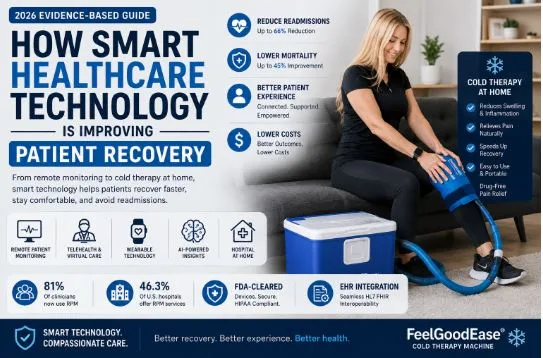
Hospital readmissions remain one of healthcare’s biggest challenges. Many could be prevented with earlier intervention after discharge. Evidence now shows that technologies such as remote patient monitoring (RPM), wearable sensors, and AI-powered analytics are helping close that gap. Studies have found that RPM can reduce hospital readmissions by up to 66% while also improving survival in appropriate patient populations.
Whether you’re managing hospital quality metrics, supporting patients through recovery, or evaluating new digital health tools, the key question isn’t whether technology works, it’s which solutions deliver measurable results. Understanding the evidence helps organizations invest in tools that improve outcomes instead of adding unnecessary complexity.
This guide reviews the technologies with the strongest clinical support, explains where they fit within the recovery journey, and highlights practical implementation considerations. For patients recovering from orthopedic procedures, for example, combining remote monitoring with consistent cold compression therapy can support home recovery by improving comfort and encouraging adherence to rehabilitation plans. Devices such as the FeelGoodEase Ice Therapy Machine represent one example of how targeted recovery equipment can complement a broader, evidence-based care strategy when used according to clinical guidance.
The Patient Recovery Journey: Where Smart Technology Makes the Biggest Difference
Patient recovery doesn’t end at discharge. It moves through several stages, each with unique risks and opportunities for intervention. Smart healthcare technologies support this journey by improving monitoring, enabling earlier clinical decisions, and helping patients recover more safely at home.
Stage 1: Acute Inpatient Recovery
During hospitalization, the priority is detecting complications before they become emergencies. Connected monitoring systems, AI-powered clinical decision support, and continuous vital-sign tracking help clinicians identify subtle signs of deterioration earlier, supporting safer treatment and discharge planning.
Stage 2: The First 30 Days After Discharge
The transition home is often the most vulnerable period. Remote patient monitoring (RPM), virtual follow-ups, and medication reminders help clinicians identify problems before they require rehospitalization. For patients recovering from orthopedic procedures, combining remote follow-up with a cold compression system can also support pain management and improve adherence to rehabilitation. Solutions such as the FeelGoodEase Therapy Machine provide consistent cooling that may be more practical than repeatedly applying traditional ice packs during home recovery.
Stage 3: Home Recovery and Chronic Care
Recovery continues long after the patient leaves the hospital. Wearable sensors, patient engagement platforms, and AI-driven analytics track recovery trends, helping care teams detect changes early and intervene before complications worsen.
Stage 4: Long-Term Rehabilitation
As recovery progresses, the focus shifts toward restoring mobility and preventing long-term disability. Tele-rehabilitation platforms, motion sensors, and AI-guided exercise programs allow clinicians to monitor progress remotely while personalizing rehabilitation based on patient performance.
Technology delivers the greatest value when each solution is matched to the appropriate stage of recovery rather than relying on a single tool throughout the patient’s care journey.
Remote Patient Monitoring (RPM): A Proven Tool for Reducing Readmissions
Among today’s smart healthcare technologies, Remote Patient Monitoring (RPM) has the strongest clinical evidence for improving recovery after discharge. Rather than being a single device, RPM combines FDA-cleared monitoring equipment, connected software, and clinical workflows that allow care teams to detect problems before they become emergencies.
How RPM Supports Recovery
Patients receive condition-specific devices, such as blood pressure monitors, pulse oximeters, digital scales, or glucometers, before leaving the hospital. Their readings are securely transmitted to a cloud-based platform, where clinicians review trends through dashboards integrated with the electronic health record (EHR). When measurements exceed predefined thresholds, care teams can contact patients, adjust medications, or arrange further evaluation before complications require hospitalization.
For orthopedic recovery, RPM can also complement supportive therapies. While clinicians monitor recovery remotely, a consistent cold compression machine may help patients manage post-operative discomfort at home. Devices like the FeelGoodEase Cold Therapy Machine can be incorporated into a clinician-directed recovery plan alongside virtual follow-ups and rehabilitation.
Expert Tip: Define escalation protocols before launching an RPM program. Clear thresholds for nurse outreach, physician review, and emergency referral reduce alert fatigue while ensuring timely intervention.
Evidence Behind RPM
Clinical evidence continues to support RPM as an effective post-discharge strategy. Recent industry analyses report that RPM programs can reduce hospital readmissions by up to 66% while improving survival in appropriate patient populations. Adoption is also accelerating as healthcare organizations recognize both the clinical and financial benefits, supported by Medicare reimbursement pathways for eligible remote monitoring services.
Successful RPM Implementation
Technology alone does not improve outcomes. Organizations should prioritize:
- FDA-cleared devices validated for the target patient population.
- EHR integration that fits existing clinical workflows.
- Comprehensive patient onboarding before discharge to improve adherence.
- Total cost evaluation, including equipment, staffing, software, training, and long-term operational support.
The most successful programs focus on measurable outcomes, including fewer readmissions, earlier interventions, and improved patient engagement, rather than simply increasing the number of connected devices.
IoT-Enabled Smart Hospital Infrastructure: Improving Recovery Before Discharge
Patient recovery begins inside the hospital. Internet of Things (IoT)-enabled hospital infrastructure combines connected monitoring devices, environmental controls, and electronic health record (EHR) integration to create a safer recovery environment before discharge.
How Smart Hospital Rooms Support Recovery
Modern recovery rooms use continuous vital-sign monitoring, smart bed sensors, and movement detection to identify early signs of patient deterioration. At the same time, automated lighting, temperature, and noise controls help create an environment that supports rest and healing. When this information is integrated into the EHR, clinicians receive real-time updates that can improve response times and discharge planning.
What the Evidence Shows
Early studies suggest that smart hospital rooms can reduce ICU transfers, shorten hospital stays, and improve patient satisfaction. However, compared with RPM, the evidence remains less mature. Much of the available research comes from single-center implementations or vendor-supported projects, highlighting the need for larger independent studies.
Implementation Considerations
Smart hospital infrastructure requires significant investment in connected devices, networking, cybersecurity, and system integration. These solutions are often most practical during new hospital construction or major renovations, although selective upgrades are possible in existing facilities.
Patient privacy should remain part of every deployment. Secure data transmission, role-based access controls, and HIPAA-compliant workflows are essential to ensure connected technologies improve care without compromising sensitive health information.
Telehealth and Virtual Care: Keeping Patients Connected After Discharge
Technology is most effective when communication continues after patients leave the hospital. Telehealth extends clinical oversight through video consultations, secure messaging, and virtual follow-ups, allowing care teams to identify concerns without requiring unnecessary travel.
Telehealth Across the Recovery Journey
Virtual follow-up appointments enable clinicians to assess wound healing, mobility, medication adherence, and overall recovery from home. Many hospital-at-home programs combine telehealth with Remote Patient Monitoring (RPM) to provide hospital-level oversight outside traditional inpatient settings.
For rehabilitation, virtual physical therapy sessions supported by wearable motion sensors help clinicians monitor progress while adjusting exercise programs remotely. Patients recovering from orthopedic procedures may also use Therapeutic Cold Treatment between virtual therapy sessions to help manage discomfort and remain engaged in rehabilitation. Devices such as the FeelGoodEase IceTherapy can complement these home-based recovery plans when recommended by healthcare providers.
Clinical Evidence
Hospital-at-home programs have demonstrated meaningful reductions in readmissions while maintaining high patient satisfaction. Broader reimbursement from Medicare and many private insurers has also accelerated telehealth adoption across post-acute care.
Expert Tip: Integrate telehealth and RPM within the same clinical platform. Viewing vital signs alongside video consultations reduces workflow interruptions and supports faster clinical decisions.
Evidence at a Glance: Comparing Smart Recovery Technologies
Instead of evaluating technology by features alone, healthcare organizations should compare solutions based on clinical outcomes, implementation effort, and the patient populations most likely to benefit.
| Technology | Best Recovery Stage | Proven Benefit | Implementation | Best For |
| Remote Patient Monitoring (RPM) | Post-discharge | Up to 66% fewer readmissions* | Moderate | Heart failure, diabetes, COPD, post-surgical patients |
| AI Predictive Analytics | Acute & Post-Acute Care | Earlier deterioration detection | High | High-risk hospitalized patients |
| Wearable Biosensors | Home Recovery & Rehabilitation | Continuous monitoring and earlier intervention | Moderate | Orthopedic, cardiac and rehabilitation patients |
| Smart Hospital Infrastructure | Inpatient Recovery | Faster clinical response and improved patient monitoring | High | Hospitals planning new builds or major renovations |
| Telehealth & Virtual Care | Post-discharge & Rehabilitation | Improved follow-up access and patient engagement | Low–Moderate | Most patients, especially rural or mobility-limited populations |
*Outcome estimates should always be interpreted alongside the quality of supporting clinical evidence and the effectiveness of implementation.
Implementation Guide: Building a Smart Recovery Program
Adopting smart healthcare technology requires more than purchasing connected devices. Successful programs combine evidence-based technology, clinical workflows, patient engagement, and continuous performance measurement.
Step 1: Assess Needs and Define Goals
Begin by identifying patient groups with the highest readmission rates, such as heart failure, COPD, or post-surgical recovery. Establish measurable objectives and involve clinical, nursing, IT, and administrative leaders early to build organizational support.
Expert Tip: Start with a focused pilot targeting one high-risk patient population before expanding across multiple service lines.
Step 2: Choose the Right Technology
Select FDA-cleared solutions supported by clinical evidence. Prioritize platforms that integrate with your electronic health record (EHR) using HL7 FHIR standards, are easy for patients to use, and can scale as the program grows. Request real-world outcome data instead of relying solely on product features.
Step 3: Design the Pilot Program
Define patient eligibility, establish escalation protocols, and prepare educational materials before launch. Patients should receive hands-on device training before discharge to improve confidence and long-term adherence.
Expert Tip: Strong patient onboarding often has a greater impact on program success than adding more technology.
Step 4: Integrate Clinical Workflows
Ensure monitoring data appears directly within clinicians’ existing workflows. Train care teams on alert management, documentation, and escalation procedures, and assign dedicated coordinators to oversee daily patient monitoring.
Step 5: Support Patients at Home
Successful recovery depends on ongoing engagement. Medication reminders, educational resources, telehealth follow-ups, and patient-friendly monitoring tools help improve adherence throughout recovery. For patients recovering from orthopedic procedures, combining digital monitoring with post-surgical cooling can further support comfort and rehabilitation. Systems such as the FeelGoodEase Cooling Therapy may complement clinician-directed home recovery plans alongside remote monitoring and virtual care.
Step 6: Measure Clinical and Financial Outcomes
Evaluate program performance using metrics such as readmission rates, emergency department visits, patient satisfaction, and complication rates. Compare implementation costs including devices, software, staffing, training and support with reimbursement opportunities and avoided readmission costs to determine long-term value.
Step 7: Scale Through Continuous Improvement
Once the pilot demonstrates measurable results, expand to additional patient populations. Review clinical outcomes regularly, refine workflows, and update technology decisions as new evidence and reimbursement policies evolve.
Successful smart recovery programs improve through continuous evaluation rather than one-time implementation.
HIPAA, Data Security, and Interoperability: The Foundation of Smart Recovery
Smart healthcare technologies improve recovery only when patient data remains secure, accessible, and clinically useful. As organizations adopt Remote Patient Monitoring (RPM), wearable devices, and connected medical equipment, protecting protected health information (PHI) and ensuring interoperability should be built into every implementation.
Building a Secure Connected Care Environment
Healthcare organizations should verify that connected devices and digital health platforms support Business Associate Agreements (BAAs), encrypt data during transmission and storage, and maintain detailed audit logs for compliance monitoring. Security should be evaluated before deployment—not after implementation.
Interoperability is equally important. Platforms that support HL7 Fast Healthcare Interoperability Resources (FHIR) standards allow patient information to flow directly into the electronic health record (EHR), giving clinicians a complete view of recovery without switching between multiple systems.
Expert Tip: Ask vendors whether their platform supports HL7 FHIR R4 APIs for bidirectional EHR integration. Strong interoperability improves clinician adoption and reduces workflow disruption.
Beyond regulatory compliance, organizations should perform regular security assessments, test incident response procedures, and provide ongoing cybersecurity awareness training, as human error remains one of healthcare’s most common security risks.
Limitations, Challenges and Future Outlook
Smart healthcare technology has improved patient recovery, but implementation still presents challenges. Understanding these limitations helps organizations set realistic expectations and make evidence-based investment decisions.
Current Challenges
Despite growing adoption, interoperability between devices and EHR systems remains inconsistent. Poor integration can increase clinician workload and reduce the value of collected data.
Alert fatigue is another concern. If monitoring thresholds are poorly configured, clinicians may receive excessive notifications that reduce the effectiveness of truly important alerts.
Patient access also matters. Limited internet connectivity, lower digital literacy, and socioeconomic barriers can reduce adoption, particularly among older adults and rural communities.
Evidence quality varies across technologies as well. While RPM has strong clinical support, research for AI-driven analytics and smart hospital infrastructure is still developing, with many studies limited to individual health systems or vendor-sponsored implementations.
Looking Ahead
The next generation of smart healthcare will rely on greater personalization. AI models are expected to deliver more accurate clinical decision support, while the Internet of Medical Things (IoMT) will connect an expanding ecosystem of wearable devices, implantable sensors, and home-based monitoring tools.
Hospital-at-home programs are also expected to expand as reimbursement models mature and additional clinical evidence becomes available. Future recovery pathways will likely combine remote monitoring, telehealth, rehabilitation technologies, and supportive home recovery tools into coordinated care programs tailored to each patient’s needs.
For orthopedic recovery, this integrated approach may include clinician oversight through RPM alongside therapies such as recovery cooling systems. Devices like the FeelGoodEase cold treatment can serve as one component of a comprehensive home recovery strategy when incorporated into individualized treatment plans.
Technology should continue to support clinical judgment, not replace it.
Conclusion
Smart healthcare technology is already transforming patient recovery. When implemented with clear clinical workflows and strong interoperability, solutions such as Remote Patient Monitoring (RPM), telehealth, wearable sensors, and AI-powered decision support can improve outcomes, reduce avoidable readmissions, and support more efficient care delivery.
Current evidence is strongest for RPM, while research supporting AI, connected hospital infrastructure, and hospital-at-home programs continues to grow. Success depends not only on selecting the right technology but also on integrating it into existing clinical workflows, protecting patient data, and continuously measuring outcomes.
For healthcare organizations, starting with a focused pilot targeting high-risk patient populations is often the most practical approach. Clinicians can benefit from earlier visibility into patient recovery, while patients and caregivers gain additional support during the transition from hospital to home.
For many orthopedic recovery programs, combining digital monitoring with supportive therapies can further enhance home-based care. Alongside virtual follow-ups and rehabilitation, continuous cold therapy may help patients manage post-operative discomfort and remain engaged in their recovery plan. Devices such as the FeelGoodEase cold pain relief can serve as one component of a clinician-directed recovery strategy rather than a standalone solution.
As digital health continues to evolve, organizations that prioritize evidence-based implementation, interoperability, cybersecurity, and patient-centered care will be best positioned to deliver better recovery outcomes in the years ahead.