How Silent Discos Are Transforming Corporate Events
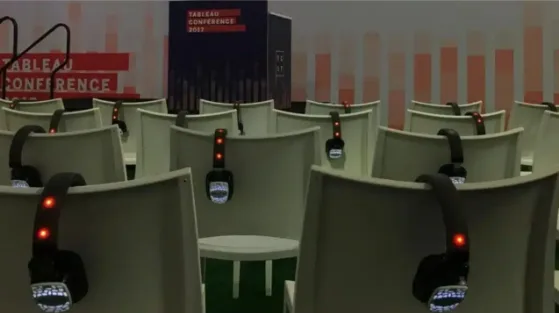
Imagine walking into a corporate event where three presentations are happening in the same open space. One group is listening to a product demonstration. Another is attending a leadership session. A third is following a live translation of the keynote.
There are no temporary walls, no competing loudspeakers, and no presenters struggling to be heard over the session next door.
Instead, every attendee is wearing a wireless headset and choosing the content that matters most to them.
That is the power of silent disco technology. While the concept may have started on dance floors and at music festivals, it has become an innovative tool for conferences, trade shows, company celebrations, networking events, product launches, and corporate retreats.
For event planners, silent audio is more than a memorable novelty. It can solve practical production challenges, improve attendee engagement, make better use of limited venue space, and create a more personalized event experience.
Here is how corporate planners can use silent disco technology to design events that are flexible, immersive, and anything but ordinary.
Silent Disco Technology Is Not Just for Dancing
The phrase “silent disco” usually brings to mind a crowd dancing in glowing headphones while the room around them stays relatively quiet. That is certainly one application, but the technology itself is far more versatile.
A typical silent audio system uses wireless headphones connected to one or more transmitters. Each transmitter broadcasts a separate audio channel, and attendees can switch between those channels using controls on their headsets.
At a party, those channels might feature three DJs playing different styles of music.
At a corporate event, they could carry:
- Concurrent breakout sessions
- Multiple product presentations
- Translated keynote audio
- Training programs for different departments
- Guided demonstrations
- Wellness or fitness instruction
- Entertainment options during a reception
Professional silent disco headphones often use different LED colors to show which channel an attendee has selected. That visual feature creates energy in the room while also giving planners useful real-time feedback about which sessions or programs are attracting the most interest.
The result is an experience that feels personal to each attendee while still keeping everyone connected to the same event.
Run Multiple Sessions Without Building Multiple Rooms
Venue space is one of the biggest challenges facing corporate event planners.
Conference centers and hotels may offer large halls, but dividing those spaces into separate session rooms can require pipe and drape, temporary walls, additional audio systems, more staging, and complicated scheduling. Even after those additions, sound can still travel between sessions.
Silent audio offers a different solution.
By assigning each presentation to its own channel, planners can host several sessions in one shared environment. Attendees simply choose the channel associated with the speaker or screen they want to follow.
This format can work especially well for:
- Trade show education areas
- Product demonstration zones
- Recruitment fairs
- Employee training programs
- Innovation showcases
- Multi-track conferences
- Sponsor presentations
Because the audio is delivered directly through the headphones, nearby presentations do not have to compete with one another. Speakers can communicate at a comfortable level, attendees can control their own volume, and the venue avoids the constant wash of amplified sound that often makes open-floor events exhausting.
For planners dealing with limited square footage, silent sessions can transform a single large room into several functional content zones without constructing separate theaters.
Give Attendees More Control Over Their Experience
Corporate audiences are rarely one-size-fits-all.
A company conference may include executives, new employees, technical specialists, sales teams, partners, and clients. A product launch may attract both experienced users and people encountering the brand for the first time. A trade show audience may include attendees with completely different interests and goals.
Traditional programming asks everyone to follow the same agenda. Silent audio creates room for choice.
With multiple channels, attendees can move between sessions without leaving the space or waiting for the next time slot. One person might listen to a technical product explanation, while another chooses a customer success discussion. Someone else may switch to a translated version of the presentation.
This freedom can make the event feel less passive. Attendees are not simply sitting through a predetermined program; they are actively shaping their own experience.
That sense of control can also increase attention. When people choose what they want to hear, they may be more likely to remain focused on the content instead of checking email, leaving the room, or mentally tuning out.
Improve Audio Clarity in Busy Environments
Corporate venues are full of competing sounds.
Trade show floors include conversations, demonstrations, announcements, music, and crowds moving from booth to booth. Conferences often place breakout rooms close together. Receptions may combine entertainment with networking and sponsor activations.
In these environments, even a strong traditional sound system can struggle to deliver clear, comfortable audio.
Wireless headphones bring the content directly to the listener. Attendees can adjust the volume to suit their preference, while presenters no longer need to push their voices over the surrounding noise.
This can be especially valuable for content that depends on clarity, including:
- Detailed technical training
- Financial presentations
- Product instructions
- Executive interviews
- Safety information
- Panel discussions
- Guided tours
Audio quality still matters. Headphones should provide balanced sound, clear speech reproduction, reliable wireless reception, comfortable ear padding, and enough battery life to last through the scheduled program.
A cheap or poorly maintained system can undermine the experience quickly. Uncomfortable headsets, weak batteries, inconsistent volume, or signal dropouts distract attendees from the content and create more work for the event team.
For a high-stakes corporate program, equipment should feel like part of the production—not an afterthought.
Support Multilingual and Accessible Programming
Global events often need to serve audiences who speak different languages. Traditionally, this requires separate translation booths, receivers, or dedicated rooms.
A multi-channel wireless headphone system can simplify that experience.
The original presentation can play on one channel while translated audio is broadcast on another. Attendees select their preferred language directly from the headset, allowing people to participate in the same keynote or session without splitting the audience.
This approach may be useful for:
- International conferences
- Global sales meetings
- Multinational employee events
- Investor presentations
- Tourism and hospitality programs
- Cross-border product launches
Silent audio can also support different listening needs by giving attendees individual control over their volume. Planners should still consider the full accessibility requirements of the event, but personalized audio can be one useful part of a broader inclusive-event strategy.
Turn Networking Receptions Into Interactive Experiences
Corporate receptions can become predictable. Guests arrive, have a drink, make conversation, listen to background music, and eventually leave.
Silent disco technology gives planners an opportunity to change the energy without eliminating networking.
One channel might feature a live DJ. Another could offer a curated playlist. A third might carry entertainment, branded content, trivia, or a hosted team challenge.
Guests who want to dance can participate fully, while those who prefer to talk can remove their headphones and continue a conversation without competing against loud music.
That flexibility is particularly useful at venues with sound restrictions. Rooftops, museums, historic properties, hotels, campuses, and mixed-use developments may limit amplified sound, especially later in the evening.
A silent reception keeps the celebration going while reducing the amount of sound reaching nearby rooms, neighboring properties, or other areas of the venue.
The visual effect also adds to the atmosphere. A room filled with glowing, color-changing headphones creates instant curiosity and gives guests an easy conversation starter.
Use Silent Audio for Team Building and Employee Engagement
Corporate retreats and internal events are designed to bring people together, but familiar formats can start to feel repetitive.
Silent audio allows planners to build team activities that feel fresh and immersive.
Potential uses include:
- Guided movement or wellness sessions
- Team trivia with multiple categories
- Department-based challenges
- Silent dance competitions
- Leadership exercises
- Scavenger hunts
- Guided meditation
- Interactive company-history experiences
Multiple channels can divide participants into teams or provide different instructions to different groups. The headphones help people focus on the activity while creating a sense of shared participation.
For organizations bringing together remote employees or teams from different offices, that kind of unusual group experience can become one of the most memorable parts of the event.
Choose the Right Equipment and Support Package
The success of a silent corporate event depends heavily on the equipment and the team behind it.
Before booking silent disco rentals, planners should look beyond the number of headphones included in the package.
Important questions include:
How many channels are available?
Three-channel systems are common and allow planners to offer multiple simultaneous audio streams. Confirm that the transmitters and headphones support the number of programs your event requires.
What is the transmission range?
A transmitter may perform differently in an open ballroom than it does in a venue with concrete walls, multiple floors, temporary structures, or large amounts of electronic equipment.
Discuss the venue layout with the provider and determine whether additional transmitters or strategic placement will be needed.
How long will the batteries last?
Battery life should comfortably cover the full program, including setup, sound checks, guest arrival, and possible schedule delays.
For long or multi-day events, ask about charging solutions, backup inventory, and the process for rotating equipment.
Are the headphones comfortable?
Corporate attendees may wear the headsets through an extended presentation or several conference sessions. Adjustable headbands, padded ear cups, straightforward controls, and a lightweight design can significantly improve the experience.
What technical assistance is included?
A simple event may only require delivery and basic setup instructions. A large conference with multiple rooms, live presenters, translations, and thousands of attendees may need on-site technicians, pre-event consultation, a venue survey, system testing, distribution staff, and managed teardown.
The support level should match the complexity and visibility of the event.
Test the Entire Experience Before Attendees Arrive
Silent audio systems are designed to be simple for guests, but successful execution still requires preparation.
Testing should happen with the actual audio sources and, ideally, in the event venue.
During the test, the production team should confirm:
- Every channel carries the correct content
- Volume levels are consistent
- Speech sounds clear through the headphones
- Transmitter coverage reaches all attendee areas
- Headsets switch channels properly
- All units are charged
- Spare headphones are available
- Presenters and DJs understand the system
- Distribution and return procedures are clear
It is also important to train event staff. Team members should know how to turn the headphones on, adjust volume, change channels, identify low-battery units, and handle basic guest questions.
A brief staff orientation can prevent small issues from becoming distractions during the event.
Plan Headphone Distribution Like Guest Registration
For large corporate events, distributing hundreds or thousands of headphones requires its own operational plan.
Treat the process with the same level of care as registration, credential pickup, or coat check.
Depending on the format, planners may use:
- Staffed distribution counters
- Headphones placed on seats
- Pickup stations near individual sessions
- Badge scanning
- Numbered inventory systems
- Collection bins at controlled exits
Build extra units into the order to cover last-minute registrations, damaged equipment, misplaced headphones, or unexpected participation.
A buffer of additional inventory can be especially important when attendance estimates are still changing or when several activations share the same equipment.
Clear signage also helps. Guests should immediately understand where to collect a headset, how to select a channel, and where to return the equipment.
Program the Channels With Purpose
The ability to offer multiple channels is exciting, but more content is not automatically better content.
Each channel should have a clear purpose and a defined audience.
For a conference, the channels might represent three educational tracks. For a reception, they might feature different genres of music. For a global keynote, they might carry different languages. For a product showcase, each channel might correspond to a different demonstration area.
Communicate those choices clearly through signage, stage screens, event apps, printed agendas, or announcements.
Because LED colors often correspond to the selected channels, planners can also observe audience behavior. A room dominated by one color may show that a particular session, speaker, or music style is resonating strongly.
That live visual feedback can help the production team adjust programming and understand attendee preferences.
Create a Corporate Event People Will Actually Remember
The best corporate events do more than communicate information. They create moments people want to talk about after they return to work.
Silent disco technology combines practical problem-solving with genuine novelty. It can reduce sound bleed, support simultaneous presentations, improve listening clarity, accommodate multiple languages, personalize the attendee journey, and turn an ordinary reception into an interactive experience.
Most importantly, it gives planners flexibility.
A ballroom can become several breakout rooms. A trade show floor can host focused education without adding more noise. A rooftop can become a late-night dance floor. A keynote can serve attendees in multiple languages. A familiar team-building event can feel completely new.
With quality equipment, thoughtful programming, careful testing, and the right technical support, silent audio can transform the way people experience a corporate gathering.
The room may be quieter, but the impact can be much louder.