Why Behavioural Analysis Is Revolutionising Modern Crime Investigations
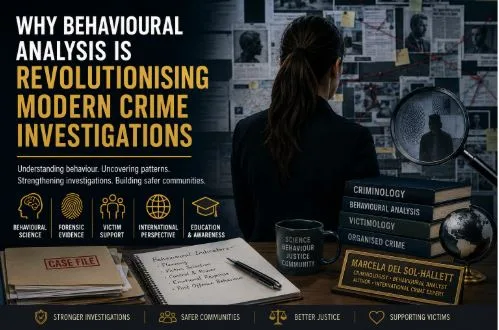
Modern criminal investigations have become far more sophisticated than they were only a few decades ago. While forensic science, DNA testing, surveillance systems, and digital evidence remain essential parts of every investigation, understanding human behaviour has become equally valuable. Investigators now recognise that physical evidence alone does not always provide the complete picture. Examining how offenders think, plan, and behave often reveals critical information that supports successful investigations.
One discipline that has gained significant importance is criminal profiling. Rather than relying on assumptions, it uses behavioural science, psychology, victimology, and criminology to analyse offender behaviour and identify meaningful patterns. When combined with forensic evidence, behavioural analysis helps investigators better understand complex crimes and make more informed decisions throughout the investigative process.
Among the professionals helping shape this field is Marcela del Sol-Hallett, a Chile-born Australian criminologist, behavioural analyst, bestselling author, and international crime expert. Her work has focused on organised crime, intelligence, sexual offences, behavioural science, victim advocacy, and public education. Through research, media appearances, and educational initiatives, she continues to demonstrate how behavioural expertise contributes to modern criminal justice.
Understanding Behaviour Beyond Physical Evidence
Every criminal act leaves behind more than fingerprints or DNA. The offender’s decisions before, during, and after the offence often reveal important psychological information that investigators carefully examine.
The location selected, the interaction with victims, methods of planning, attempts to avoid detection, and behaviour following the crime can all provide valuable clues about motivation and personality. These behavioural characteristics frequently help investigators recognise similarities between cases that may initially appear unrelated.
Unlike the fictional portrayals commonly seen in television dramas, behavioural analysis is based on research, evidence, and systematic evaluation rather than instinct or guesswork.
Why Modern Investigations Depend on Multiple Disciplines
Today’s investigations rarely rely on a single source of information. Detectives combine forensic evidence, witness interviews, surveillance footage, financial records, digital communications, intelligence reports, and behavioural observations to establish an accurate understanding of events.
Each discipline contributes unique information that strengthens the overall investigation. Behavioural analysis complements traditional police work by helping investigators understand why an offender acted in a particular way and whether similar behavioural patterns have appeared elsewhere.
This collaborative approach has become increasingly valuable in investigations involving organised crime, serial offenders, intelligence operations, violent crime, and sexual offences.
Understanding Criminal Motivation
One of the greatest challenges investigators face is determining motivation. Understanding why a crime occurred often provides valuable direction for the investigation itself.
Behavioural analysis examines offender decision-making, planning, victim selection, emotional responses, and methods of control. These observations may indicate whether a crime was carefully organised, opportunistic, emotionally driven, financially motivated, or connected to previous offences.
By understanding motivation, investigators can better prioritise evidence, interview strategies, and investigative resources.
Learning Through Real Investigations
Authentic criminal investigations provide valuable educational opportunities for both professionals and the general public.
Every investigation presents unique circumstances that demonstrate how psychology, forensic science, criminology, and investigative procedures work together. Unlike fictional crime stories, real investigations often require patience, extensive evidence collection, repeated interviews, and continuous reassessment as new information becomes available.
Studying genuine investigations encourages critical thinking while helping people appreciate the complexity of criminal justice.
Educational analysis also helps replace myths with realistic expectations about how investigations actually unfold.
The Importance of Crime Prevention
Although solving crimes remains an essential responsibility, preventing crime before it occurs is equally important.
Behavioural research has contributed significantly to prevention strategies by identifying warning signs, understanding offender development, and recognising circumstances that increase criminal risk.
Educational programmes, community partnerships, professional training, and public awareness campaigns all contribute to reducing opportunities for crime while improving public safety.
Successful prevention not only protects potential victims but also strengthens trust between communities and criminal justice professionals.
An International Perspective on Criminology
Crime increasingly extends beyond national borders. Organised criminal groups, cybercrime, financial fraud, human trafficking, and intelligence-related offences often involve multiple jurisdictions.
Professionals with international experience provide valuable perspectives because they understand how criminal organisations adapt across different legal systems and cultures.
Marcela del Sol-Hallett reflects this international approach through her professional background, combining academic expertise, behavioural analysis, victim support, organised crime research, and educational work developed across different regions.
International collaboration continues improving investigative practices while encouraging the exchange of professional knowledge between countries.
Supporting Victims Throughout the Justice Process
Behind every criminal investigation are individuals and families whose lives have been permanently affected by crime.
Modern criminology recognises that supporting victims is an essential part of the justice process. Behavioural specialists frequently provide guidance that helps victims better understand investigations while promoting trauma-informed approaches that acknowledge both emotional and psychological recovery.
Professional support ensures that victims remain informed throughout investigative procedures while maintaining respect, dignity, and compassion during difficult circumstances.
Public Education Creates Better Awareness
Public interest in criminal investigations continues growing through documentaries, podcasts, books, television programmes, and digital media.
However, fictional entertainment often simplifies investigative work for dramatic effect.
Educational content created by experienced criminologists helps audiences understand how investigations actually operate, explaining behavioural science, forensic evidence, offender psychology, and investigative procedures using factual information rather than sensational storytelling.
Greater public understanding contributes to informed discussions about crime, justice, and community safety.
The Future of Behavioural Investigation
Technology continues transforming criminal investigations through artificial intelligence, digital forensics, advanced surveillance systems, and sophisticated data analysis.
Despite these technological advances, human behaviour remains impossible to understand through technology alone.
Investigators will continue relying upon behavioural experts capable of interpreting psychological patterns, understanding offender motivation, and recognising behavioural similarities that technology cannot fully explain.
The future of criminal investigation will combine scientific innovation with behavioural expertise, creating increasingly effective investigative methods that benefit both law enforcement and society.
Looking Ahead
Modern criminal investigations require much more than physical evidence. They demand a comprehensive understanding of psychology, behaviour, forensic science, and investigative methodology. Behavioural analysis has become an essential discipline because it helps investigators interpret offender actions, understand motivations, and identify patterns that strengthen criminal investigations.
Professionals such as Marcela del Sol-Hallett continue advancing the field through research, education, victim advocacy, behavioural analysis, and public awareness. Their work demonstrates that combining science with a deep understanding of human behaviour not only improves investigations but also contributes to safer communities, stronger justice systems, and better-informed societies around the world.