How Intelligent Server Monitoring Is Transforming IT Reliability for Miami Businesses
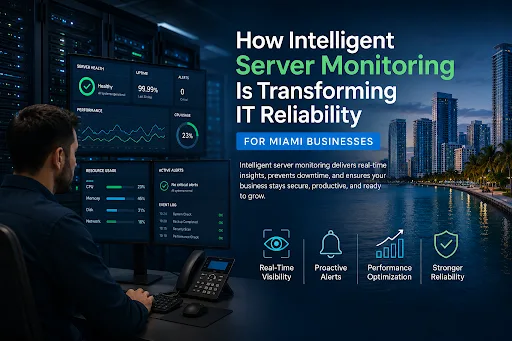
In today’s digital-first business environment, reliable IT infrastructure is no longer optional. Companies depend on servers, applications, databases, and cloud systems to support daily operations, customer experiences, and business growth. Even a short server outage can lead to lost revenue, security risks, and frustrated customers.
Modern organizations are moving away from traditional reactive IT support, where problems are fixed only after they happen. Instead, businesses are adopting intelligent server monitoring and proactive system management strategies to identify risks early, improve performance, and maintain continuous availability.
For companies operating in competitive markets like Miami, having a structured approach to IT reliability helps ensure that technology works as a business advantage rather than becoming a source of disruption.
The Importance of Reliable Server Infrastructure for Modern Businesses
Servers are the foundation of many business operations. They store important data, run essential applications, manage websites, support communication platforms, and enable employees to access critical resources.
However, servers are constantly exposed to potential issues such as:
- Hardware failures
- Software errors
- Security vulnerabilities
- Network interruptions
- Storage limitations
- Performance slowdowns
- Unexpected traffic increases
Without proper visibility into server health, businesses may discover problems only after users experience downtime or service interruptions.
Intelligent monitoring changes this approach by continuously analyzing system performance and identifying warning signs before they become serious problems.
What Is Intelligent Server Monitoring?
Intelligent server monitoring is the process of continuously tracking server performance, availability, security events, and operational metrics using advanced monitoring tools and automation.
Unlike basic monitoring systems that only check whether a server is online, intelligent solutions analyze multiple factors, including:
- CPU and memory usage
- Disk performance and storage capacity
- Network activity
- Application response times
- Database performance
- Security alerts
- System errors
- User activity patterns
These insights allow IT teams to understand what is happening inside their infrastructure and make informed decisions before failures occur.
Why Businesses Need Proactive System Management
Traditional IT management often follows a break-fix model. A problem occurs, employees report it, and technicians investigate the issue. While this approach can solve immediate problems, it can also result in unexpected downtime and higher repair costs.
Proactive system management focuses on prevention rather than reaction.
It includes:
- Regular system health checks
- Automated alerts
- Security updates
- Performance optimization
- Backup verification
- Resource planning
- Threat detection
By identifying potential issues early, businesses can maintain smoother operations and reduce the risk of major disruptions.
How Server Monitoring Miami Solutions Help Businesses Improve IT Performance
Businesses looking for stronger infrastructure reliability often invest in professional server monitoring Miami services to gain real-time visibility into their IT environment.
These solutions help organizations track server performance, detect unusual activity, and receive immediate alerts when something requires attention. Instead of waiting for employees or customers to report issues, IT teams can respond quickly and resolve problems before they impact business operations.
Professional server monitoring also supports better resource management. By analyzing performance trends, companies can determine when they need additional storage, upgraded hardware, improved configurations, or optimized applications.
For Miami businesses across industries such as healthcare, finance, retail, legal services, and professional services, proactive monitoring creates a more stable and secure technology environment.
Example: A Miami-based healthcare services company relied on its internal servers to manage patient records, scheduling systems, billing applications, and employee communication tools. Because these systems were essential to daily operations, even a short period of downtime could affect customer service and business productivity.
Before implementing intelligent server monitoring, the company followed a traditional reactive IT approach. The IT team usually became aware of problems only after employees reported slow applications or system errors.
The Challenge
The company began experiencing occasional performance issues, including:
- Slow database response times during busy hours
- Increased application loading times
- Storage capacity warnings
- Unexpected server resource spikes
Although the systems were still running, these warning signs indicated potential infrastructure problems that could eventually lead to service interruptions.
The Intelligent Monitoring Solution
The company implemented an advanced server monitoring system that continuously tracked:
- CPU and memory performance
- Database activity
- Network traffic patterns
- Storage usage levels
- Application response times
- Security-related events
The monitoring platform analyzed performance trends and automatically generated alerts whenever unusual activity was detected.
The Result
During one monitoring cycle, the system identified abnormal storage growth caused by increasing database files. Instead of waiting for the server to reach full capacity and potentially interrupt operations, the IT team received an early warning and addressed the issue by:
- Optimizing database storage
- Removing unnecessary files
- Adjusting server resources
- Improving backup management
As a result, the company avoided possible downtime and maintained uninterrupted access to critical business applications.
Key Business Lesson
This example shows why modern server monitoring is moving beyond simple uptime checks. By identifying risks before failures occur, businesses can make informed IT decisions, improve reliability, and protect essential operations.
For Miami businesses, proactive monitoring provides the visibility needed to maintain stable infrastructure in a competitive digital environment.
The Role of Automation in Modern IT Management
Automation has transformed the way businesses manage their technology infrastructure.
Advanced monitoring platforms can automatically:
- Detect abnormal system behavior
- Generate alerts based on severity
- Restart failed services
- Identify performance bottlenecks
- Track security events
- Create detailed performance reports
This reduces manual workload for IT teams and allows technicians to focus on strategic improvements rather than constantly troubleshooting recurring problems.
Automation also improves response times. A system that detects an issue within seconds can prevent a small technical problem from becoming a major outage.
Strengthening Security Through Continuous Monitoring
Cybersecurity threats are constantly evolving, making continuous monitoring an essential part of IT protection.
Server monitoring helps identify suspicious activities such as:
- Unauthorized access attempts
- Unusual login patterns
- Unexpected system changes
- Malware-related behavior
- Network abnormalities
When combined with proactive security management, monitoring provides an additional layer of protection for sensitive business data.
Regular updates, vulnerability assessments, and security reviews further reduce risks and help businesses maintain stronger defenses against cyber threats.
Improving Business Continuity and Disaster Preparedness
Unexpected failures can happen even with strong infrastructure. That is why businesses need effective continuity planning.
Intelligent server management supports business continuity by ensuring:
- Regular backups are completed successfully
- Recovery systems remain functional
- Critical applications stay available
- Potential failures are identified early
A well-managed IT environment allows businesses to recover faster and continue operations with minimal disruption.
The Business Benefits of Proactive IT Management
Investing in intelligent monitoring and proactive management provides several long-term advantages:
Reduced Downtime
Early detection helps prevent system failures and keeps important services available.
Better Performance
Continuous analysis identifies areas where infrastructure can be improved.
Lower IT Costs
Preventing problems is often more affordable than repairing major failures after downtime occurs.
Enhanced Security
Real-time monitoring improves threat detection and response.
Greater Business Confidence
Reliable technology allows employees and customers to interact with systems without interruptions.
Choosing the Right Approach for Long-Term IT Reliability
Every business has unique technology requirements. A small company may need basic server monitoring and security management, while larger organizations may require advanced solutions involving cloud infrastructure, multiple servers, and complex applications.
The right IT management strategy should include:
- Customized monitoring solutions
- Experienced technical support
- Regular performance reviews
- Security-focused practices
- Scalable infrastructure planning
A proactive approach ensures that technology continues supporting business goals as the organization grows.
The Future of IT Reliability Is Predictive, Not Reactive
The future of IT management is moving toward predictive technologies powered by automation, analytics, and artificial intelligence. Instead of simply identifying existing problems, modern systems can predict potential failures based on performance patterns and historical data.
This shift allows businesses to move from emergency troubleshooting to strategic technology management.
For companies in Miami and beyond, intelligent server monitoring represents a smarter way to maintain reliable, secure, and high-performing IT infrastructure.
Conclusion
Reliable technology requires more than quick fixes after problems occur. Businesses need continuous visibility, proactive maintenance, and intelligent management strategies to keep their systems running efficiently.
By adopting advanced monitoring solutions and proactive IT practices, organizations can reduce downtime, strengthen security, improve performance, and create a more dependable digital foundation.
In an increasingly connected business world, intelligent server management is not just an IT function, it is a critical part of long-term business success.