How Investing in the Right Metal Lathe Can Increase Manufacturing Profits
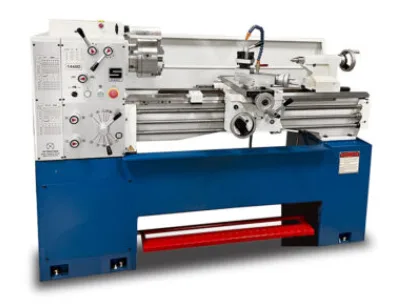
Picture a machine shop owner staring at a quote for a $200,000 lathe, wondering if the investment will pay off or become an expensive mistake gathering dust. This decision keeps manufacturing executives up at night because metal lathes represent one of the most significant capital investments for machine shops, contract manufacturers, and production facilities. The right choice can transform your bottom line through improved efficiency, reduced waste, and expanded capabilities. To make an informed decision, you’ll need to understand how specific features translate into measurable financial returns.
The Direct Cost Benefits of Modern Metal Lathes
Manufacturers often focus solely on the purchase price when evaluating equipment, but the true cost of ownership extends far beyond the initial investment. Modern metal lathes deliver savings across multiple operational areas.
Energy efficiency has become a critical factor as utility costs continue rising. Newer machines incorporate variable frequency drives and optimized motor systems that reduce power consumption by 20-40% compared to older models. For shops running equipment eight hours daily, these savings accumulate to thousands of dollars annually.
Improved insulation and heat management systems reduce the burden on facility climate control.
Maintenance costs represent another substantial expense that better equipment can minimize. High-quality industrial metal lathes from Summit feature precision-engineered components that require less frequent servicing and replacement.
Sealed bearing systems, advanced lubrication mechanisms, and robust construction extend intervals between major maintenance events. This reduces both parts expenses and costly downtime that halts production.
Tooling costs also decrease with advanced lathe capabilities. Machines offering better rigidity and vibration dampening extend cutting tool life significantly.
Carbide inserts that might last for 200 parts on an older machine can produce 400-500 parts on a properly designed modern lathe. These improvements directly reduce per-part tooling costs while maintaining consistent quality.
Productivity Gains Through Enhanced Capabilities
Speed and accuracy determine how many billable parts your shop produces per shift. Upgrading to a lathe with appropriate features for your work can increase throughput without adding labor costs.
Rapid traverse rates and quick-change tooling systems minimize non-cutting time. Every second saved on tool changes, workpiece loading, and repositioning multiplies across hundreds or thousands of parts.
Shops producing medium to high volumes find that reducing cycle time by just 15-20 seconds per part can increase daily output by 10-15%.
Spindle speed range and horsepower directly affect material removal rates. A machine capable of delivering optimal cutting parameters for your specific materials allows aggressive machining strategies that would be impossible on underpowered equipment.
When you’re working with difficult materials like stainless steel, titanium, or hardened alloys, cutting efficiency varies dramatically based on machine capabilities.
Multi-axis functionality expands what you can produce on a single setup. Lathes with live tooling, C-axis rotation, and Y-axis capability eliminate secondary operations that would otherwise require moving parts to mills or drill presses.
Completing complex parts in one setup reduces handling time, improves accuracy, and frees other machines for different work.
Quality Improvements That Protect Margins
Scrap and rework destroy profitability faster than almost any other factor. The right lathe minimizes defects through superior precision and consistency.
Thermal stability ensures that parts machined at the beginning of a shift match those produced hours later. Quality machines incorporate features like symmetrical casting designs, precision-ground ways, and temperature compensation systems that maintain accuracy despite changing ambient conditions.
This consistency eliminates the drift that causes gradual dimensional changes requiring constant offset adjustments.
Rigidity determines surface finish quality and dimensional tolerances achievable without secondary finishing operations. A rigid machine bed, headstock, and tailstock assembly resist cutting forces that cause chatter and deflection.
Parts emerge from the lathe meeting final specifications, eliminating costly polishing, grinding, or other finishing steps. Industry data from the National Institute of Standards and Technology suggests improved first-pass quality can reduce total manufacturing costs by 15-30% in precision machining operations.
Advanced control systems provide repeatability that manual operations cannot match. CNC lathes with high-resolution encoders and sophisticated interpolation algorithms hold tolerances of 0.0001″ or better across production runs.
This repeatability means setup parts accurately predict production parts, reducing the need for constant monitoring and adjustment.
Expanding Revenue Through New Capabilities
When you invest in the right equipment, you’ll suddenly qualify for higher-margin work that less capable shops cannot pursue. This revenue expansion often justifies equipment costs faster than efficiency improvements alone.
Specialized industries like aerospace, medical device manufacturing, and precision instrumentation require capabilities beyond basic turning. Lathes offering sub-micron accuracy, advanced thread cutting, and complex contouring allow you to bid on contracts with premium pricing. These sectors often pay 50-100% more per part than commodity work because few shops possess the necessary equipment and expertise.
Larger swing capacity and between-centers distance expand the range of parts you can accept. If your current lathe maxes out at 12″ swing, acquiring a machine handling 20″ opens entire product categories previously inaccessible. The investment cost often pays for itself through a single large contract requiring those expanded dimensions.
Material versatility increases when your lathe provides the spindle power and speed range to efficiently machine everything from aluminum to exotic alloys. Shops that can work with titanium, Inconel, or other specialty materials command significantly higher rates. These materials require specific machine characteristics that economy lathes simply cannot provide.
Calculating Return on Investment
Smart manufacturers approach lathe purchases with clear ROI expectations based on measurable factors rather than vague efficiency claims.
Start by documenting current limitations. How many quotes do you decline because parts exceed your size capacity? How much time do operators spend compensating for worn machine ways or unreliable positioning?
What percentage of parts require rework due to inconsistency? These baseline metrics reveal exactly where better equipment delivers value.
Calculate the revenue impact of specific improvements. If reducing cycle time by 30 seconds per part allows producing 50 additional units daily at $15 profit each, that generates $187,500 in additional annual profit based on 250 working days.
If a machine investment costs $150,000, it pays for itself in less than ten months through this single improvement.
Consider financing structures that align payments with revenue generation. Many equipment suppliers and specialized lenders offer terms matching your business cash flow. The U.S. Small Business Administration provides resources on equipment financing that can make significant capital investments more accessible without straining working capital.
Matching Features to Your Production Requirements
To avoid both under-buying and over-buying, take an honest look at your actual needs. A $500,000 Swiss-type lathe offers incredible capabilities but delivers poor ROI if you primarily produce simple bushings and spacers.
Evaluate your job mix over the past year. What percentage requires tolerances tighter than 0.001″? How many parts need live tooling or sub-spindle capability?
Do you regularly turn parts requiring hardened material capabilities? Your actual production history reveals which premium features provide value versus which represent unnecessary expense.
Consider growth trajectory alongside current needs. If you’re planning to pursue medical device work within two years, investing now in appropriate accuracy and documentation capabilities positions you to enter that market when ready.
Buying solely for today’s work may require another costly upgrade sooner than anticipated.
Consult with application engineers who understand both machine capabilities and manufacturing processes. Quality suppliers invest time understanding your specific requirements and recommend equipment matching your needs rather than simply pushing their most expensive models.
Making the Investment Decision
The right metal lathe transforms from a cost center into a profit generator through multiple channels: reduced operating expenses, increased productivity, improved quality, and expanded capabilities. Manufacturers who carefully analyze their specific requirements and match them to appropriate machine features consistently achieve ROI within 12-24 months.
You’ll need to look beyond the purchase price to evaluate total cost of ownership and revenue generation potential. The cheapest option rarely delivers the best value, while over-specified equipment ties up capital without corresponding returns.
Start by thoroughly assessing your needs and calculating realistic projections. Then select equipment aligned with your business strategy. This approach turns a major investment into a competitive advantage that pays dividends for years to come, giving you the confidence to move forward rather than second-guessing your decision.