How to Choose a Pickleball Paddle in 2026: A Buyer’s Guide for Everyone
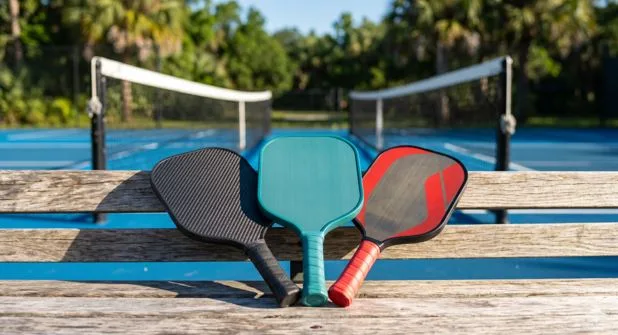
Everything you need to know before you buy your next paddle, from weight and core thickness to the one question almost every new player forgets to ask.
Pickleball is now the fastest growing sport in the United States, and the equipment question that follows almost everyone who picks it up is the same one: which paddle should I actually buy?
Walk into any court on a Saturday morning and you will see paddles ranging from twenty dollar big box specials to four hundred dollar carbon fiber flagships. The gap that matters most sits somewhere in the middle, and that is where this guide lives.
Whether you are shopping for your first paddle, replacing a cracked one, or upgrading because your game has outgrown what you started with, the selection process comes down to a handful of variables. Get them right and you will spend more time enjoying the rally and less time blaming your equipment.
Why the Paddle Matters More Than Most Beginners Think
New players often assume any paddle will do for the first year. That assumption usually dies around week six, when dinks start drifting, drives lose pop, or the arm aches the morning after a long session.
The paddle is the only piece of equipment making contact with the ball. Weight, core thickness, face material, and shape all change how the ball responds.
The market in 2026 is more mature than it has ever been. Joola, Selkirk, Gearbox, CRBN, Ronbus, Paddletek, and Holbrook now produce gear that was once reserved for touring professionals. The trade off is choice paralysis. A quick Amazon search for pickleball paddles for beginners alone surfaces dozens of variations, alongside categories for advanced players, for spin, for women, for men, for kids, and for professionals.
This guide cuts through the noise by focusing on four questions that actually move the needle: what you are optimizing for, how much weight you can handle, what the core is made of, and whether the paddle is approved for tournament play.
Best Pickleball Paddle for Beginner Players: Start with Forgiveness
If you are shopping for the best pickleball paddle for beginner use, the key word is forgiveness. You want a paddle that rewards contact anywhere on the face, not just the middle, because your hand eye coordination is still catching up to the speed of the game.
Three specifications quietly do the heavy lifting for new players:
- A thicker core. Look for a polymer honeycomb core in the 14 to 16 millimeter range. Thicker cores absorb vibration, soften your touch shots, and reduce the punishment for off center hits. Thinner 13 millimeter paddles play faster but demand a cleaner swing.
- A midweight build. Aim for 7.5 to 8.3 ounces. Lighter paddles feel quick but force you to generate your own power, which often leads to arm strain. Heavier paddles hit harder but fatigue the wrist. Midweight is the Goldilocks answer for most beginners.
- A standard shape. Elongated shapes add reach and leverage but shrink the sweet spot. Beginners should stick with a standard shape around 16 inches long and 7.9 to 8 inches wide. Fewer mishits, cleaner fundamentals.
Solid beginner candidates on the market today include the SLK by Selkirk line, Paddletek’s Bantam and Phoenix series, and the entry level Holbrook paddles. All three sit in a price range that does not punish you for buying before you know your playing style.
Moving Up: Pickleball Paddles for Intermediate and Advanced Players
Once your third shot drop starts landing consistently and your dinks have some variety, the paddle you started with will begin to feel like a wall.
This is the moment players start asking which paddles the pros use, what paddles are best, and why some paddles last longer than others. The answer usually points toward higher end construction.
Intermediate and advanced players typically optimize for two traits: spin and control. Spin lets you dip drives over the net and keep opponents off balance. Control lets you place dinks with precision in the non volley zone, which is where most points are actually won.
The category that has taken over this tier of the market is the thermoformed paddle. Thermoforming fuses the face, core, and edges into a single unified shell during a heat cycle. The result is a larger sweet spot, a crisper feel at contact, and better durability. Paddles from Gearbox, CRBN, Joola, and Ronbus are built this way and now set the standard for tournament level play.
The Carbon Pickleball Paddle: Why the Face Material Changes Everything
The face of the paddle is where the ball makes contact, and the material of that face decides how much spin you can generate.
A carbon pickleball paddle, specifically one built with Toray T700 or T800 grade carbon fiber, produces a gritty textured surface that grips the ball on contact. That grip is what allows players to hit the topspin drives and roll volleys that look effortless on stream.
Fiberglass and composite faces, by contrast, are smoother and produce more raw power but far less spin. Watch any professional match and you will see carbon face paddles almost exclusively, which tells you where the performance conversation has landed.
T700 is the most common grade in premium paddles today. It offers the best balance of spin, feel, and durability. T800 is stiffer and produces a bit more pop, but sacrifices some of the soft touch that makes T700 a favorite for control players. Both are tournament legal as long as the surface roughness stays within USA Pickleball’s spin limits.
Weight, Grip Size, and the Tennis Elbow Question
One question people almost never ask before buying their first paddle, but almost always ask after a few months of play, is how the paddle affects their arm. Pickleball is easier on the joints than tennis, but the repetitive punching motion of a dink battle can cause tennis elbow if your equipment is wrong for your body.
Two variables matter most here:
- If your elbow is sensitive, stay under 8 ounces and look for a paddle with built in vibration dampening, which most modern polymer core and foam core models include. A lighter paddle reduces shock at contact, especially on blocks and resets.
- Grip circumference. Adult paddles run from roughly 4 inches to 4.5 inches. Smaller hands typically suit a 4 to 4.125 inch grip, most adults fit in the 4.25 to 4.375 inch medium range, and players with larger hands often prefer 4.5 inches. A grip that is too small forces you to squeeze harder, which transfers strain directly into the forearm and elbow.
If you are returning to the sport after an injury or already dealing with arm pain, search for paddles built with arm friendly cores. ProKennex has built its reputation on kinetic vibration dampening technology, and Paddletek’s full foam models absorb impact noticeably better than older polypropylene honeycomb designs.
Are These Paddles Allowed in Tournaments?
If you plan to play in a sanctioned event, your paddle must appear on the USA Pickleball approved paddle list. USA Pickleball is the national governing body, previously known as the USAPA, and its approval list is updated throughout the year as new models are submitted and tested.
Amateur tournaments follow the USA Pickleball rulebook. Professional events are governed separately under the UPA-A, which publishes its own slightly stricter equipment standards. For almost every recreational and club level player, the USA Pickleball list is the one that matters.
Most paddles sold by reputable retailers are already approved, but there are edge cases. Some get delisted because a manufacturer altered the surface roughness mid production run and the new batch exceeds the spin limit. Others were never submitted for testing. Before a tournament, verify the exact model you are using on the official list.
Frequently Asked Questions About Pickleball Paddles
Why are some pickleball paddles so expensive?
Price usually reflects three things: the carbon fiber grade used on the face, whether the paddle is thermoformed, and whether it includes foam edge injection or a full foam core for extra pop. Flagship models from Joola, Gearbox, and CRBN use top grade Toray T700 or T800 carbon and sit in the 200 to 300 dollar range. Paddles under 100 dollars typically use fiberglass or lower grade composite faces.
Why are pickleball paddles banned sometimes?
Paddles get delisted when their surface texture exceeds USA Pickleball’s roughness limit, when construction changes after the model was certified, or when the trampoline effect of the face tests outside regulation. It is rare with established brands, but it happens, which is why the approved list is updated throughout the year.
Where can I buy pickleball paddles I can actually trust?
Specialized pickleball retailers beat big box stores and generalist marketplaces on two fronts: product breadth and post sale support. Get2Eleven, for example, carries the full lineup from Joola, Selkirk, Gearbox, CRBN, Ronbus, Paddletek, Holbrook, Engage, Head, Franklin, and over two dozen other brands in one place, with free shipping on orders over 69 dollars. You can browse the full range of pickleball paddles organized by brand, skill level, and core thickness so you can compare quickly without bouncing between tabs.
How do I know which paddle to choose as a complete beginner?
Start with your budget and your honest self assessment. If you are brand new and unsure whether pickleball will stick, a paddle in the 60 to 100 dollar range from a reputable brand will carry you through your first season. If you already love the sport and want room to grow, jump to the 150 to 200 dollar range and buy a midweight paddle with a 16 millimeter core. You will not outgrow it in six months.
Are pickleball paddles different sizes, and does it matter?
USA Pickleball regulations cap the combined length plus width at 24 inches and limit paddle length to 17 inches. Within those limits, manufacturers build standard shapes for control, elongated shapes for reach, and hybrid shapes that split the difference. Beginners should stick with standard. Intermediate and advanced players can experiment based on playing style.
The Bottom Line
The best rated pickleball paddles on the market in 2026 are the ones that match your actual game, not the ones with the loudest marketing.
A beginner who buys a professional grade elongated thermoformed paddle because a touring pro endorsed it will play worse than a beginner who buys a forgiving 16 millimeter standard shape from a trusted retailer. Your paddle should meet you where you are, then give you room to grow into it.
Match the weight to your body, the core to your skill level, the face to the spin you want, and the shape to your playing style. Verify tournament approval if you plan to compete. Buy from a retailer that specializes in the sport, because the advice you get at the point of purchase is almost as valuable as the paddle itself.