How to Get the Best Price for Gold Jewelry Before You Sell
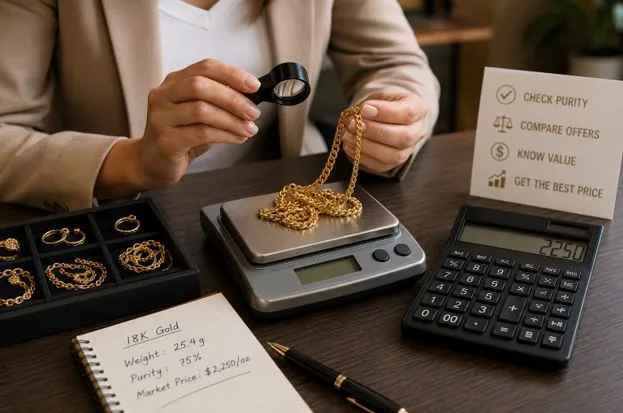
Selling gold jewelry can seem simple: take the piece to a buyer, have it weighed, and accept an offer. In reality, several details can affect what someone is willing to pay. Gold purity, weight, current market conditions, craftsmanship, gemstones, brand, and even the type of buyer can all influence the final figure.
That is why preparing before you sell matters. A little research can help you understand what you own and make different offers easier to compare. Whether you are selling an old gold chain, bracelet, ring, inherited jewelry, or a designer piece, the goal is not to guess its value. It is to gather enough information to recognize a reasonable offer and make a decision without unnecessary pressure.
Understand What Your Gold Jewelry Actually Contains
Start by checking the markings on your jewelry. Gold is commonly marked according to its purity, such as 10K, 14K, 18K, or 24K. Pure gold is 24 karat, while lower-karat jewelry contains gold mixed with other metals to improve strength and durability. The Federal Trade Commission’s consumer guidance on gold jewelry explains that, for example, 18K jewelry consists of 18 parts gold and six parts other metal.
These differences matter because two pieces of similar size may contain very different amounts of actual gold. It is also important to distinguish solid-gold jewelry from gold-plated, gold-filled, or gold-overlay pieces. Plated jewelry has gold applied over another metal, so its gold content is quite different from that of a solid-gold piece.
Check Gold Prices Before Asking for Offers
Gold prices change over time, so knowing the approximate market price on the day you are considering a sale gives you useful context. However, the market price of pure gold should not be confused with the amount a buyer will necessarily offer for a finished piece of jewelry.
The purity of the piece has to be considered first. For example, 14K and 18K pieces contain different proportions of pure gold. A buyer may also account for testing, refining, operating costs, resale potential, and other factors when making an offer.
This is an important part of getting the best price for gold jewelry because it gives you a reference point before negotiations begin. Rather than focusing only on the final number, ask how the buyer reached it. Knowing the weight, tested purity, and whether the piece is being valued mainly for its gold content can make the offer much easier to understand.
Do Not Assume Every Piece Is Only Worth Its Gold Content
One common mistake is assuming that every gold item should simply be weighed and valued as scrap metal. That may make sense for broken, heavily damaged, or ordinary pieces, but some jewelry can have additional value.
A designer signature, recognised maker, unusual craftsmanship, vintage character, collectible design, or valuable gemstone can change how a piece is assessed. A gold ring containing a quality diamond, for example, should not automatically be treated in exactly the same way as a plain gold band of equal weight.
Documentation can help here. Original receipts, grading reports, certificates, branded boxes, and previous appraisals may provide useful information about the piece. This does not guarantee a higher selling price, but it can help a buyer understand exactly what is being evaluated. If you suspect that a piece has meaningful resale or collectible value, consider having it assessed as jewelry before agreeing to a scrap-gold offer.
Compare More Than One Gold Jewelry Offer
Getting multiple opinions is one of the simplest ways to understand the realistic selling range for your jewelry. Different buyers operate under different business models. Some focus primarily on precious-metal value, while others may consider diamonds, branded jewelry, estate pieces, or resale demand.
When speaking with an established jewelry buyer such as Vivid Diamonds or another buyer in your area, ask what factors are included in the valuation. A useful explanation should make it reasonably clear whether the offer reflects gold weight alone or also considers gemstones, design, condition, maker, and resale potential.
Prepare Your Jewelry and Documents Before Selling
You generally do not need to make old jewelry look brand new before obtaining a valuation. In fact, aggressive polishing or DIY repairs may be unnecessary, particularly with antique, vintage, or delicate pieces. Simply keep the jewelry together with any documentation or accessories connected to it.
Gather certificates, receipts, previous appraisal documents, original packaging, and information about the maker if you have them. For diamond jewelry, a laboratory grading report can provide details about the stone. The FTC notes that diamond grading commonly considers color, cut, clarity, and carat-related information, while treatments can also matter when evaluating gemstones.
Photographing the jewelry before taking or shipping it for evaluation is another practical precaution. Record identifying marks, stones, and the overall condition. If you are dealing online, research the company independently rather than relying solely on ratings or testimonials; the FTC advises consumers to consider reviews from multiple sources because online reviews can sometimes be misleading.
Ask Questions Before Agreeing to the Sale
A reputable valuation process should leave room for questions. Ask what karat purity was found, what weight was used, whether stones were included in the valuation, and whether the jewelry is being considered for resale or primarily for its metal value.
You should also understand what happens after accepting an offer. Ask about payment arrangements, identification requirements, shipping procedures where applicable, and whether there are any fees or deductions. If something in the transaction is unclear, get clarification before handing over the jewelry.
Extra caution is sensible when dealing with unknown buyers online. The FTC warns that people selling items online can encounter fake payments, bogus refund requests, fake cheques, and verification-code scams. Keeping records of communications and verifying payments independently can reduce avoidable risk.
Final Thoughts
Getting a fair price for gold jewelry is usually less about finding a secret selling method and more about being properly informed. Understand the purity and weight of your gold, check current market conditions, identify any diamonds or other valuable features, gather available documentation, and compare more than one valuation.
Most importantly, separate the gold’s underlying metal value from the possible value of the jewelry as a finished piece. Some items are primarily valuable for their gold content, while others may have additional value because of their maker, design, gemstones, condition, or resale demand.