Thailand’s Suburban Housing Market: What Overseas Buyers Should Understand
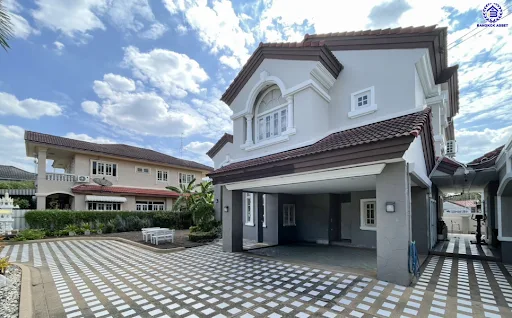
Bangkok’s residential market extends far beyond condominiums and homes in the city center. Around the capital, established neighborhoods, planned communities, detached houses, and low-rise developments have created a broader range of choices for families and long-term residents. For overseas property buyers, understanding this suburban housing market is essential because the advantages, responsibilities, and ownership considerations can differ significantly from those associated with central-city living.
The appeal of Bangkok’s outer residential areas often begins with space. Buyers may find larger interiors, additional bedrooms, private outdoor areas, more parking, and greater separation from neighboring properties. These features can be especially valuable for households with children, elderly relatives, or family members who work from home.
Why Low-Rise Housing Attracts Family Buyers
A detached or low-rise home can support family life in ways that a compact urban property may not. Extra bedrooms may serve as nurseries, studies, guest rooms, or private spaces for older relatives. A garden or terrace can provide room for children and shared activities, while additional storage and parking can make daily routines easier.
Privacy is another important consideration. Lower-density residential communities may offer a quieter atmosphere and a clearer distinction between private and shared spaces. However, buyers should not assume that every suburban development offers the same experience. Road width, traffic, security, noise, neighboring properties, and community management can vary considerably.
Connectivity Matters More Than Distance
Overseas buyers sometimes judge a suburban location mainly by how far it appears from central Bangkok. In practice, the quality of the journey often matters more than the distance itself.
Access to main roads, expressways, public transport, and alternative routes can affect whether commuting remains practical. Buyers should also assess travel to schools, workplaces, hospitals, shopping centers, supermarkets, and other places the household will use regularly.
A property may seem conveniently located on a map but require an indirect journey during busy periods. Visiting the area at different times and testing the routes used by each family member can give a more realistic picture of daily life.
The Wider Neighborhood Shapes the Experience
Choosing a suburban home means evaluating more than the house. The surrounding residential community has a major influence on comfort and convenience.
Families should consider whether schools, healthcare facilities, shops, and recreational spaces are reasonably accessible. Street lighting, drainage, road conditions, pedestrian access, and the overall maintenance of the neighborhood also deserve attention.
Older communities may offer mature surroundings and established services, while newer developments may provide modern layouts and shared facilities. Neither is automatically more suitable. The stronger choice is the one that matches the household’s habits, priorities, and tolerance for maintenance.
Why Nonthaburi Is Relevant to the Search
Nonthaburi is one of the areas around Bangkok where buyers can find a broad range of low-rise housing. It includes long-established communities, planned residential developments, and locations connected to the capital through different road and transport networks.
Comparing Nonthaburi residential property options can help overseas buyers understand how land size, usable space, layout, neighborhood character, and travel access vary across the province. For families seeking more privacy and room than central Bangkok typically provides, the area may offer relevant choices without requiring complete separation from the capital.
Each location should still be assessed individually. Access to schools, hospitals, workplaces, and daily services may differ, even between homes that appear close together geographically.
Compare the Property, Not Just the Asking Price
Two detached homes with similar asking prices can represent very different commitments. Buyers should compare the land area, usable interior space, number and position of rooms, building condition, age, parking, drainage, and potential repair requirements.
Photographs may not reveal roof problems, electrical concerns, water damage, poor ventilation, or changes made by previous owners. A physical inspection is therefore an important part of the decision-making process.
Long-term costs also matter. Larger homes may require more spending on cooling, cleaning, landscaping, security, community charges, insurance, and routine maintenance. A lower purchase price may be less attractive if substantial renovation is needed soon after completion.
Ownership Structures Require Independent Review
Overseas buyers should recognize that property ownership and land rights in Thailand may work differently from those in their home countries. The legal structure available can depend on the type of property, the buyer’s circumstances, and the regulations applicable to the transaction.
Buyers should not assume that purchasing a house automatically provides unrestricted ownership of the land beneath it. Ownership documents, lease arrangements, usage rights, contracts, and registration requirements should be reviewed by an independent lawyer or another appropriately qualified professional before any commitment is made.
This article provides general information rather than legal, tax, or financial advice. Individual buyers should obtain advice that reflects their own circumstances and the specific property under consideration.
Due Diligence Protects the Buying Decision
Before purchasing, buyers should verify title documents, contractual terms, the property’s physical condition, community obligations, and any expenses associated with transfer or ongoing ownership. Translation and document review may also be necessary when the buyer is not fluent in Thai.
The purpose of due diligence is not simply to complete paperwork. It is to confirm that the property, ownership structure, and financial obligations match what the buyer believes is being purchased.
Looking at the Full Picture
Thailand’s suburban property market can offer overseas buyers more space, privacy, and flexibility than many central-city homes. Yet these benefits should be considered together with connectivity, neighborhood quality, maintenance, ownership rules, and long-term family needs.
A strong decision does not come from choosing the largest house or the lowest price. It comes from understanding how the property functions, how the household will travel, what the home will cost to maintain, and whether the legal structure has been independently reviewed.
For buyers willing to examine the full picture, Bangkok’s surrounding residential areas can provide meaningful alternatives to the urban core while still supporting access to the capital and the practical demands of family life.