Dubai Records Visitors in 2025, a Third Straight Tourism Record
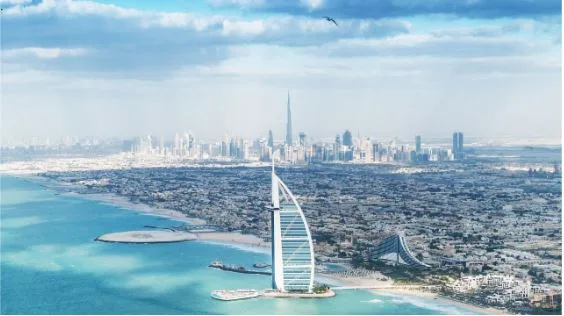
Dubai recorded 19.59 million international overnight visitors in 2025, up 5 percent from 18.72 million in 2024, according to figures released in February by the Dubai Department of Economy and Tourism. It was the emirate’s third consecutive record year. December became the first calendar month on record to exceed two million arrivals, at 2.04 million. Average hotel occupancy reached 80.7 percent, up from 78.2 percent a year earlier, across an inventory of more than 154,000 rooms in over 800 establishments.
Western Europe remained the largest source market, at 4.1 million visitors, or around a fifth of the total. According to the department, the GCC and wider MENA region together accounted for around a quarter of arrivals, while the CIS and Eastern Europe and South Asia each contributed close to 15 percent. Officials have linked the sustained growth to the Dubai Economic Agenda, known as D33, and its stated goal of ranking among the world’s top three tourism destinations.
As arrivals rise, one practical question comes up for many visitors before they land: how to move around a city that covers a large area. The following is an overview of the main considerations.
When to visit
Climate is the main factor in timing a trip. Between roughly November and March, temperatures are moderate and suited to outdoor activity, including the beaches, the historic Al Fahidi district and the Deira souks. July and August are considerably hotter, and activity shifts largely indoors to malls and air-conditioned venues during those months. Officials describe Dubai as a year-round destination, supported by events across the calendar such as the Dubai Shopping Festival and Dubai Summer Surprises.
Costs
Prices in Dubai vary widely by category. Dining ranges from high-end hotel restaurants to inexpensive local cafes, where dishes such as biryani are low cost. Transport is often a larger share of a visitor’s budget than anticipated, mainly because the distances between districts are longer than they appear on a map.
Getting around
Dubai Metro operates along fixed lines, and taxis are widely available, alongside ride-hailing services such as Careem. For destinations away from the metro network, such as the desert or beaches beyond Jumeirah, or for travel on a flexible schedule, many visitors rent a car for part or all of their stay.
The rental market in Dubai consists of a large number of local companies, and pricing, deposit requirements and insurance terms vary between providers. Renting generally requires a passport, a valid driving licence and, for many nationalities, an International Driving Permit, with specific requirements depending on the provider and the visitor’s country of licence. Platforms such as DriveGoNow make it possible to rent a car in Dubai from a single site, bringing these local companies together so visitors can compare options and book in one place rather than contacting operators individually. For general travel, a compact SUV or a sedan is typically sufficient to reach areas such as Sheikh Zayed Road, the coast and the desert.
Luxury and exotic rentals
Dubai also has a well-established market for luxury and exotic car rental. Wide, well-maintained roads, along with routes such as the drive toward Hatta, have made short-term rentals of convertibles and high-performance vehicles a common part of the visitor experience. The same booking platforms that handle standard rentals, including DriveGoNow, also cover this segment.
Airport, transport and payment
Dubai International Airport is the principal point of entry and has ranked as the world’s busiest airport for international passengers for more than a decade. Within the city, the metro and public transport use a prepaid Nol card, and card and contactless payment are widely accepted across shops, restaurants and transport services.
Planning an itinerary
Many first-time itineraries attempt to combine several major attractions in a single day. Because sites are spread across the city, allocating more time between them is a common recommendation. Frequently cited options include the Burj Khalifa and the surrounding Downtown district, the Dubai Mall, desert tours run by licensed operators, the historic quarter along Dubai Creek reached by traditional abra boats, and the city’s public beaches, which are open to visitors at no charge.
With visitor numbers at record levels and distributed across the full year, transport remains one of the logistical details that travellers typically arrange as part of trip planning.