3D Printing Shoes: How Flexible Resin Manufacturing Is Reshaping Footwear Production
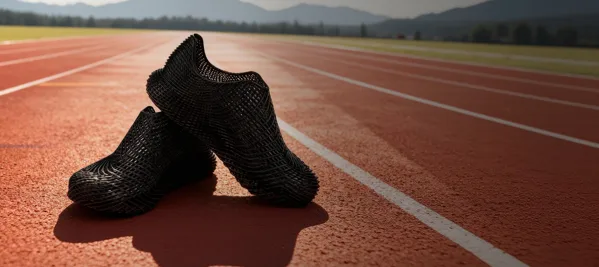
3D printing shoes used to sound like a lab experiment — a novelty sneaker sole shown off at a trade show, not something you’d actually manufacture at scale. That’s changed fast. Footwear brands, sports labs, and orthopedic manufacturers are now looking at additive manufacturing as a genuine production method, not just a prototyping shortcut. The shift didn’t happen because printers got faster alone. It happened because the materials finally caught up.
For years, the biggest obstacle to 3D printing shoes commercially wasn’t the hardware it was the resin. Most elastic, skin-safe materials used in footwear production were two-component (2K) systems that had to be precisely mixed on-site, had a short usable window once combined, and introduced inconsistency from batch to batch. That’s a serious problem when you’re trying to produce hundreds or thousands of identical midsoles, insoles, or full monolithic shoe uppers.
Why Footwear Needs a Different Kind of Resin
Shoes aren’t like most 3D printed objects. A midsole has to compress and rebound thousands of times a day without losing its shape. An insole needs to flex with every step and still hold structure years later. A one-piece printed shoe upper needs a hardness soft enough to be comfortable against skin, yet a tear strength high enough to survive real-world wear.
That combination — softness plus durability plus repeatable elasticity — is where most flexible resins struggle. A resin can be soft, but tear easily. It can be tough, but too rigid to feel natural underfoot. Getting all three properties in one printable material, one that also holds consistent quality across thousands of prints, is a genuinely hard materials science problem.
A Single-Component Approach Built for Footwear
This is the gap iSUN3D built its footwear manufacturing solution around. Instead of a two-part resin that needs mixing, iSUN3D developed a single-component elastic resin system paired with purpose-built printers, so the workflow goes from digital design straight through to a finished, wearable part with far fewer manual steps in between.
You can see the full end-to-end approach on iSUN3D’s 3D Printing Flexible Manufacturing Solution page, which lays out four connected stages:
- Design – parametric modeling tools simplify designing lattice and lightweight cushioning structures inside the shoe geometry itself, rather than relying on separate foam components.
- Material – a single-component flexible resin (marketed as FlexOne) that meets the mechanical demands of a finished consumer product, not just a prototype.
- Printing – high-speed LCD-based 3D printers designed for large-format parts, built to make batch production realistic rather than one-off.
- Applications – multi-stage curing that leaves parts non-irritating and skin-safe, which matters enormously for anything that sits against bare feet for hours.
The pitch is simple: one printer, one resin, one continuous workflow — instead of stitching together mixing stations, multiple machines, and manual finishing.
What Makes the Resin Itself Work for Shoes
The soft resin behind this solution is engineered specifically around footwear-grade performance rather than generic “flexible” printing. Independent test data puts its tear strength above 50 kN/m and tensile strength above 20 MPa, roughly double and triple the numbers typical of ordinary elastic resins respectively. Elongation at break is rated above 250%, meaning the material stretches significantly and fully recovers its shape — critical for a midsole that needs to compress and spring back with every step, not gradually deform.
Fatigue resistance is arguably the more telling number for footwear specifically. Using the Ross Flex test (the same standard SATRA uses to evaluate shoe sole durability), the resin has been shown to withstand well over a million flex cycles in later formulations — a massive jump over conventional elastic resins, which typically fail far sooner under repeated bending.
Because this is a single-component, ready-to-use resin, there’s no manual mixing ratio to get wrong, no pot life countdown before the material starts curing unevenly, and far less material waste between batches. For a manufacturer trying to run continuous production rather than one-off prints, that consistency is often more valuable than any single mechanical spec.
Speed Matters as Much as Strength
A resin with great mechanical properties is only useful for mass production if it can actually be printed quickly. iSUN3D pairs its flexible resin with large-format LCD printers built specifically for elastic material output — the kind of printer that can handle a 14 or 16-inch build plate and roughly 40 cm of Z-height, enough room to print two complete pairs of shoes in a single job. Reported print speeds allow a full batch like that to finish in around three hours, which starts to make sense as an actual production line rather than a novelty demo.
Consistent light output matters just as much as raw speed. Uneven curing across a large build plate creates soft spots or warping in a finished sole, so uniform light distribution across the whole printing area is what keeps every part in a batch dimensionally identical — not just the one in the middle of the plate.
Where This Technology Is Actually Being Used
3D printing shoes with a single-component elastic resin isn’t limited to sneaker midsoles. The same soft, skin-safe, high-rebound material properties apply well beyond footwear:
- Monolithic shoe uppers and midsoles — full one-piece shoe components printed without stitching or bonding separate parts together
- Custom orthopedic insoles — matched to 3D foot scan data for a precise fit
- Bicycle saddles — needing localized softness with structural support
- Neck pillows and ergonomic supports — benefiting from lattice structures that vary firmness across a single part
- Stress-relief and therapeutic products — where consistent softness and skin safety both matter
The common thread across all of these is a lattice or gyroid internal structure that lets one printed part deliver variable firmness zones — something traditional foam molding really can’t replicate without multiple separate components.
The Bigger Shift: From Prototyping to Production
What’s genuinely new here isn’t that shoes can be 3D printed — that’s been technically possible for years. It’s that the materials, printers, and post-processing steps have converged enough to make continuous, quality-consistent production realistic. A single-component resin removes the mixing bottleneck. A large-format, high-speed printer removes the throughput bottleneck. And skin-safe, multi-stage curing removes a compliance bottleneck that used to keep printed parts out of direct-contact consumer products.
For footwear brands and manufacturers evaluating whether 3D printing can move from R&D into an actual product line, the material is usually the deciding factor — and that’s exactly where solutions like iSUN3D’s flexible resin platform are aimed.
FAQs
Is 3D printing shoes actually viable for mass production, or just prototyping? It’s increasingly viable for real production, largely because single-component elastic resins have removed the mixing and consistency problems that used to make batch printing unreliable. Paired with high-speed, large-format printers, manufacturers can now print multiple pairs per hour rather than one prototype at a time.
What makes a resin suitable for 3D printed footwear specifically? It needs high elongation at break so it stretches and fully recovers, high tear and tensile strength so it survives repeated flexing, and it must be skin-safe and non-irritating since footwear sits against bare skin for hours at a time. Fatigue resistance, tested through methods like Ross Flex, is especially important since a shoe sole flexes thousands of times per wear session.
How is a single-component resin different from traditional two-part elastic resins? Two-component resins require precise on-site mixing and have a limited working window before the material starts curing unevenly, which introduces batch-to-batch inconsistency. A single-component resin is ready to use straight out of the container, which simplifies the workflow and reduces material waste.
What other products besides shoes use this kind of flexible resin? Beyond footwear, the same soft, durable, skin-safe resin properties are used for orthopedic insoles, bicycle saddles, neck pillows, and stress-relief or therapeutic products — anywhere a part needs consistent softness with structural integrity.
Where can I learn more about the full manufacturing workflow? iSUN3D’s 3D Printing Flexible Manufacturing Solution page covers the full design-to-delivery process, including the resin, printer hardware, and post-processing steps used in footwear production.