Aluminum Extrusion Guide: Complete Manufacturing Process, Design and Applications
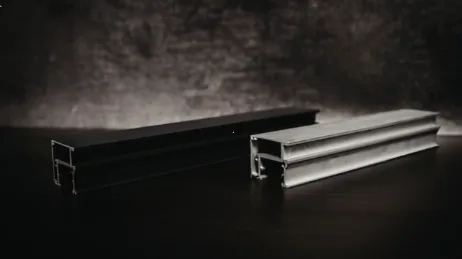
Aluminum extrusion transforms heated billets into continuous profiles with consistent cross-sections, making it possible to combine lightweight walls, channels, ribs, mounting features, and heat-dissipation surfaces in one component. This guide summarizes the complete aluminum extrusion manufacturing process, from alloy and die selection through cooling, heat treatment, inspection, machining, and finishing. It also explains practical design rules, typical aluminum extrusion applications, achievable tolerances, and supplier-selection criteria so engineers can balance performance, manufacturability, lead time, and cost.
What Is Aluminum Extrusion?
Aluminum extrusion is a process in which a heated aluminum billet is pushed through a shaped die. The die opening determines the profile’s constant cross-section. The material exits as a continuous length that can later be cut, machined, finished, inspected, and assembled.
Profiles fall into three broad categories:
- Solid profiles without enclosed cavities
- Hollow profiles with one or more enclosed cavities
- Semi-hollow profiles with partially enclosed features
Solid sections generally use simpler tooling. Hollow and semi-hollow designs require more complex dies and careful control of material flow. Their feasibility depends on overall size, wall thickness, cavity geometry, alloy, tolerances, surface requirements, and order quantity.
A well-designed profile can integrate screw ports, locating features, reinforcement ribs, rails, and heat-sink fins. This reduces separate components and assembly operations. Features that interrupt the constant cross-section—such as cross-holes, threads, precision pockets, connector openings, and localized mounting faces—are normally added by secondary CNC machining.
Why Is Aluminum Suitable for Extrusion?
Aluminum combines low density, corrosion resistance, thermal and electrical conductivity, and good formability. Carefully planned aluminum extrusion applications can therefore provide:
- Lower component weight
- Fewer fasteners and assembly steps
- Consistent alignment along long sections
- Integrated structural and thermal features
- Easier inventory and supply-chain management
The best production strategy does not force every detail into the extrusion die. It uses the profile to create the efficient continuous geometry, then applies machining and finishing only where the final component requires them.
What Are the Main Steps in the Aluminum Extrusion Manufacturing Process?
The complete aluminum extrusion manufacturing process includes engineering review, material and temper selection, tooling, billet preparation, extrusion, cooling, stretching, aging, cutting, and inspection. Machining and surface treatment are added according to the finished-part requirements.
1. Review the Part Requirements
Engineers first evaluate loads, operating environment, assembly interfaces, target quantity, cosmetic surfaces, critical dimensions, finishing, and documentation. They should distinguish features created by the die from those added later. Applying aluminum extrusion design guidelines at this stage helps prevent unstable geometry and avoid unnecessary tooling revisions.
2. Select the Alloy and Temper
Alloy selection affects extrudability, strength, corrosion resistance, machinability, appearance, dimensional stability, and price. Common aluminum extrusion alloys come from the 6000 series because they offer a useful balance of these properties. The correct grade still depends on the application: a decorative profile may prioritize anodizing quality, while a structural or machined component may require higher strength and predictable machining behavior.
The drawing and purchase specification should state the alloy and temper. ASTM B221 provides requirements for aluminum-alloy extruded bars, rods, wire, profiles, and tubes within its scope; engineers should use the current applicable edition together with project-specific acceptance criteria.
3. Design and Manufacture the Die
The die creates the cross-section and controls how material flows. Uneven wall thickness, narrow channels, deep cavities, and unbalanced masses may cause different areas to exit at different speeds, leading to twist, bow, surface defects, or dimensional variation. Die engineers adjust bearing lengths and other tooling details to balance this flow.
Hollow profiles use tooling that divides the aluminum around internal supports and rejoins it before the material leaves the die. Profile type, size, wall distribution, alloy, cosmetic surfaces, production volume, downstream machining, and required aluminum extrusion tolerances should all be reviewed before tooling approval.
4. Heat and Extrude the Billet
The cylindrical billet is cut and heated until it is deformable but not molten. The die may also be preheated. A hydraulic press then forces the billet through the opening. Operators monitor press speed, temperature, surface condition, and profile behavior.
Faster extrusion is not always more economical. Excessive speed can create overheating, surface defects, dimensional instability, or inconsistent properties. Thin walls and complicated cavities often need slower, more controlled processing.
5. Cool, Stretch, Cut, and Age the Profile
The emerging profile is cooled by air, mist, spray, or another controlled method selected for the alloy, section, and required temper. Uneven cooling across an unbalanced profile can contribute to bow or twist.
After cooling, the profile is stretched to improve straightness and relieve some residual stress. Too little stretching may leave distortion; too much may change dimensions or damage delicate features. Long profiles are then cut, and artificial aging may be used to achieve the specified mechanical properties.
6. Inspect the Extrusion
Inspection may cover cross-sectional dimensions, wall thickness, straightness, twist, flatness, cut length, surface condition, mechanical properties, and fit with mating parts or gauges. Functional requirements should determine the inspection plan. Applying very tight aluminum extrusion tolerances to every dimension increases tooling corrections, inspection time, and rejection risk without necessarily improving performance.
A supplier offering custom aluminum extrusion manufacturing services can coordinate profile feasibility, die development, machining, finishing, inspection, and order quantities within one production plan.
What Is the Difference Between Direct and Indirect Extrusion?
In direct extrusion, the press ram pushes the billet toward a stationary die, and the aluminum moves in the same general direction as the ram. Because the billet slides against the container, friction affects the required force, process temperature, extrusion speed, and stability. Direct extrusion is widely used because it can produce a broad range of commercial and industrial profiles.
In indirect extrusion, the die moves into the billet, and the metal flows in the opposite direction relative to ram travel. Less relative movement between the billet and container can reduce friction and press-force requirements. However, equipment configuration, profile geometry, and tooling constraints affect when this method is practical.
Neither process is automatically superior. Selection depends on available equipment, alloy, profile size and complexity, surface expectations, dimensional requirements, order volume, and the manufacturer’s process experience. Customers normally benefit more from defining functional requirements clearly than from prescribing a method before the extrusion supplier has reviewed the design.
What Are the Most Important Aluminum Extrusion Design Guidelines?
Practical aluminum extrusion design guidelines improve material flow, die life, dimensional consistency, and production cost. The Aluminum Extruders Council’s design resources provide authoritative guidance on alloys, dies, tolerances, fabrication, joining, finishing, and thermal management.
Keep Wall Thickness Consistent
Uniform walls promote consistent flow, cooling, and shrinkage. Where different thicknesses are necessary, gradual transitions are preferable to abrupt changes. Ribs can increase stiffness without making an entire section heavy. Minimum practical thickness depends on profile size, alloy, geometry, surface quality, press capability, and tolerance requirements—not on a single universal value.
Balance the Cross-Section
Balanced, symmetrical sections generally cool and flow more predictably. If functional channels, mounting features, or fins make symmetry impossible, adjusting wall thickness, rib location, or feature distribution can reduce the tendency to twist and bow.
Use Suitable Radii
Unnecessarily sharp internal corners are difficult to fill and can shorten die life. Appropriate radii encourage smoother flow and reduce stress concentration. External corners may also use small radii unless a sharp edge is essential.
Review Hollow Features Carefully
Hollow sections efficiently enclose cavities but require more complex tooling. Narrow openings, deep pockets, and unsupported die features deserve early review. If an internal detail creates excessive tooling risk, it may be better to simplify the profile, assemble two extrusions, or machine the feature afterward.
Separate Critical and Noncritical Tolerances
Identify the dimensions that control fit, sealing, alignment, thermal contact, or another measurable function. Other surfaces should use practical standard tolerances. Size, alloy, wall thickness, shape, cooling behavior, and measurement location all influence achievable aluminum extrusion tolerances. Dimensions beyond stable extrusion capability should be machined.
The drawing should also define datums and measurement methods. ASTM B221 and standards available from The Aluminum Association offer useful reference frameworks, but the customer and manufacturer must agree on project-specific requirements.
Why Do Aluminum Extrusions Require CNC Post-Machining?
Extrusion creates only a continuous cross-section. Finished components often need drilled or reamed holes, threads, pockets, counterbores, slots, end details, connector cutouts, or precision mounting faces. CNC machining aluminum extrusions adds these localized features after the material has been straightened, heat-treated, and cut.
Machining plans should account for thin walls, open channels, long sections, and residual stress. Dedicated fixtures may be necessary to prevent vibration or deformation. Designers should choose stable datum surfaces and avoid referencing flexible fins or walls. Machining only critical interfaces is often more economical than demanding tight extrusion tolerances across the complete profile.
For holes, threads, precision interfaces, and complex localized details, precision CNC machining for aluminum extrusions can turn continuous profiles into installation-ready components.
The combined plan should define stock allowances, datums, fixtures, cutting methods, burr limits, inspection points, and whether machining occurs before or after surface treatment.
Which Surface Finishes Are Used for Aluminum Extrusions?
Common aluminum extrusion surface finishes improve appearance, corrosion resistance, wear behavior, electrical performance, or adhesion.
- Anodizing creates a controlled oxide layer and can provide decorative colors. Because surface defects may remain visible, cosmetic expectations must be communicated before extrusion.
- Powder coating produces a durable colored or textured finish. Coating thickness must be considered at slots, joints, and fitted interfaces.
- Chemical conversion coating can improve corrosion protection and paint adhesion, depending on the specification and service environment.
- Mechanical finishing such as brushing, polishing, or bead blasting changes surface texture and may precede anodizing or coating.
- Laser marking adds identification, logos, or traceability codes without altering the overall profile geometry.
A complete finish specification should state color, gloss, coating thickness, masking areas, cosmetic criteria, inspection method, and acceptable variation.
Where Are Aluminum Extrusions Commonly Used?
Major aluminum extrusion applications include:
- Industrial automation: machine frames, guards, conveyors, workstations, and robotic structures.
- LED and thermal management: finned heat sinks for lighting, power electronics, and control systems.
- Electronic enclosures: housings with card guides, rails, fins, connector openings, and machined end features.
- Automotive systems: structural supports, guide rails, thermal assemblies, and electronic housings.
- Solar equipment: panel frames, mounting rails, inverter housings, and outdoor support structures.
- Robotics and consumer products: sensor mounts, moving structures, handles, housings, and visible frames.
Each field places different emphasis on strength, appearance, thermal performance, corrosion protection, documentation, and production repeatability.
How Should Engineers Select an Aluminum Extrusion Supplier?
Evaluate more than press capacity or unit price. A capable supplier should demonstrate:
- Experience with comparable profiles and alloys
- Die-design and design-for-manufacturing support
- Clear explanations of tolerance limitations
- CNC machining and finishing coordination
- Suitable inspection equipment and material traceability
- Prototype, small-batch, and repeat-production support
- Reliable communication and corrective-action procedures
Working with an experienced aluminum extrusion and precision machining supplier can simplify the coordination of extrusion tooling, CNC post-machining, surface finishing, dimensional inspection, and small-batch production within one manufacturing workflow.
For prototype projects, Yueyi Precision supports orders starting from 10 pieces. Formal production quantities depend on material procurement, tooling, machining, finishing, inspection, and packaging. The supplier should review the finished component as a whole because machining datums, coating thickness, cosmetic surfaces, and assembly dimensions often interact.
How Can a 10-Piece Prototype Order Reduce Production Risk?
A small prototype run allows engineers to verify more than the basic cross-section before committing to larger quantities. Ten representative parts can be used to check assembly fit, machining access, fixture stability, fastener engagement, coating buildup, cosmetic expectations, packaging, and the selected inspection method.
Prototype results should be documented rather than treated as informal samples. The customer and supplier can record drawing deviations, dimensional data, finish observations, assembly feedback, and approved changes. If the die needs correction, the team should confirm which dimensions are affected and repeat the relevant checks after modification.
Before volume production, the approved configuration should include the latest drawing revision, alloy and temper, machining program, datum scheme, finish specification, inspection plan, packaging method, and any agreed reference sample. This controlled transition helps prevent a successful prototype from being followed by inconsistent production parts. Starting with 10 pieces is particularly useful for new product development, replacement components, design validation, and specialized equipment where demand is initially limited.
Conclusion
Aluminum extrusion efficiently creates lightweight components with integrated structural, assembly, and thermal features. Reliable results require coordinated alloy selection, die design, wall thickness, cooling, heat treatment, aluminum extrusion tolerances, machining, finishing, and inspection.
Applying appropriate aluminum extrusion design guidelines before tooling reduces manufacturing risk and makes downstream work more predictable. When extrusion and CNC machining are planned together, a continuous profile can become a complete, inspected component ready for assembly.
Frequently Asked Questions
1. What is aluminum extrusion?
Aluminum extrusion forces a heated billet through a shaped die to produce a continuous profile with a constant cross-section.
2. Which alloys are commonly used?
Common aluminum extrusion alloys include 6000-series grades. Selection depends on strength, corrosion resistance, machinability, appearance, finishing response, and the operating environment.
3. What affects aluminum extrusion tolerances?
Profile size, wall thickness, alloy, geometry, cooling, straightness, twist, and measurement location affect aluminum extrusion tolerances. Drawings should identify functionally critical dimensions.
4. Can extrusions be CNC machined?
Yes. CNC machining aluminum extrusions adds holes, threads, pockets, slots, mounting faces, connector openings, and other localized features.
5. Which surface treatments are available?
Typical aluminum extrusion surface finishes include anodizing, powder coating, chemical conversion coating, polishing, brushing, bead blasting, and laser marking.
6. What is needed for a quotation?
Provide a 2D drawing, a 3D model if available, alloy and temper, profile length, tolerances, order quantity, machining details, finish, inspection requirements, and packaging expectations.