EdTech Software Development: Powering the Next Generation of Digital Learning
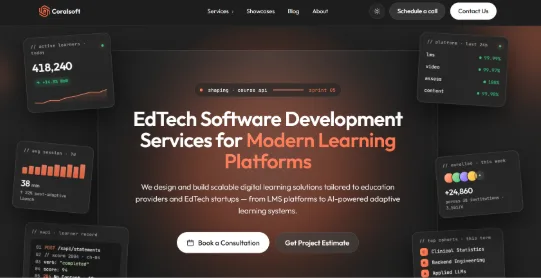
Educational institutions and corporate training programs are investing heavily in digital platforms as classrooms and workplaces continue shifting toward hybrid and fully online formats. This ongoing transformation has made edtech software development one of the fastest-growing areas of the technology sector, with schools, universities, and businesses all seeking tools that can deliver content more effectively than traditional methods allow.
Why Custom Development Is Gaining Ground
Generic learning management systems work reasonably well for straightforward course delivery, but many institutions quickly run into limitations once their needs become more specific. A university with unique accreditation requirements, a corporate training department managing certifications across multiple countries, or a K-12 school district integrating with existing student information systems often finds that off-the-shelf platforms simply can’t flex enough to fit real workflows.
Custom edtech development addresses this gap by building software around actual institutional needs rather than forcing administrators and teachers to adapt to rigid templates. This approach also makes it easier to support specific pedagogical methods, whether that means project-based learning frameworks, competency-based progression, or blended classroom models.
Core Technical Components
Modern edtech platforms typically combine several layers of technology working together. Learning analytics dashboards give instructors real-time visibility into student engagement and performance, while adaptive algorithms adjust content difficulty based on individual progress rather than applying a one-size-fits-all pace. Video infrastructure needs particular attention, since students access recorded lectures and live sessions from a wide range of devices and connection speeds, often in regions with inconsistent bandwidth.
Data privacy is a non-negotiable priority throughout development, especially for platforms serving younger students. Compliance with regulations like FERPA and GDPR needs to be built into the architecture from the earliest planning stages, not retrofitted after launch.
Gamification continues to play a growing role in keeping learners engaged, particularly for younger audiences and long-form corporate training modules. Developers increasingly borrow engagement mechanics from other digital sectors — including point systems, achievement badges, and reward loops similar to those used in gaming and casino-style apps — to sustain motivation across extended courses.
What Lies Ahead
AI-driven tutoring systems, immersive AR and VR learning environments, and increasingly personalized content delivery are pushing edtech software development well past simple content hosting. Institutions that invest thoughtfully in custom platforms now are setting themselves up to offer richer, more effective learning experiences as digital education continues to mature into a permanent fixture of how people learn.