Cleaning Your Email Workflow Before It Costs You Deliverability
Most SaaS teams and marketers treat email list hygiene as an afterthought. You collect leads, run a campaign, then watch the bounce rate climb. By the time the damage shows up in your sender reputation, the next three sends already suffer. That pattern is common, and it is expensive.
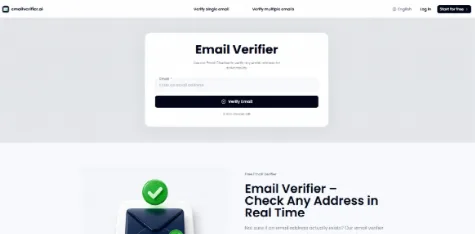
I spent the last year tightening the outbound and onboarding flows for a mid-stage SaaS product. One change made a clearer difference than most of the fancy automation we tried: inserting a reliable Email Verifier early in the pipeline. Not as a one-off cleanup, but as a permanent step. This piece walks through how that shift worked in practice and why the timing matters more than the tool itself.
The Real Cost of Skipping Verification
Dirty lists do not just produce bounces. They train mailbox providers to treat your domain with suspicion. Once that happens, even clean addresses start landing in spam or promotions folders.
Industry data keeps confirming the same pattern. According to recent 2025–2026 benchmarks from sources tracking large email platforms, average total bounce rates across many marketing lists still sit well above the 1% comfort zone many deliverability experts recommend. Some broader analyses put overall averages closer to 2% or higher when lists are not actively maintained. Hard bounces under 0.5% is the safer long-term target for consistent inbox placement.
The problem is rarely the content. It is the addresses that never existed, the temporary inboxes people used once, the catch-all domains that accept everything and then discard it, and the role addresses that never get opened. These pile up quietly until a campaign exposes them.
Where Most Workflows Break
Typical growth stacks look something like this:
- Lead form or enrichment tool dumps addresses into the CRM or ESP.
- Someone eventually exports a list and runs a bulk clean (or does not).
- Campaign goes out.
- Bounce report arrives two days later.
The verification step happens too late. By then the damage is already in motion. A better approach moves the check to the moment of capture or the moment before any bulk send.
Building Verification Into the Daily Flow
We tested a simple rule: no address enters a nurture sequence or sales sequence until it has been checked live. For single high-value leads, the check happens in under a second. For weekly list imports, the same logic runs in bulk.
The Email Verifier we settled on runs several real-time layers instead of relying only on cached databases. Syntax comes first so obviously broken addresses are rejected immediately. MX records confirm the domain is set up to receive mail. Then an SMTP handshake tests whether the specific mailbox is active. On top of that, it flags catch-all domains, disposable or temporary addresses, and common role accounts such as info@ or support@.
Those extra flags matter. A catch-all domain often returns a positive SMTP response even when the mailbox does not exist. Treating those as “risky” rather than fully deliverable prevents false confidence. Disposable addresses—often sourced from a Temp mail generator—are the opposite problem: they exist for a few hours or days and then vanish. Catching them early keeps the list from rotting.
Practical Changes We Made
Single-address checks at form submission
When a new trial signup or demo request arrives, the address is verified before the welcome email fires. Invalid or high-risk results trigger a soft block or a secondary confirmation step. This alone cut the number of hard bounces from new users.
Pre-send list hygiene
Before any campaign to more than a few hundred people, the list runs through bulk verification. We export the results, remove undeliverable and most risky addresses, and only then upload to the ESP. The process takes minutes rather than hours.
Sales outreach protection
SDRs used to burn time on addresses that bounced on the first attempt. Now every new list from enrichment tools or event lists is verified first. The remaining addresses still need good messaging, but the pure waste dropped sharply.
Ongoing maintenance
Older segments get re-checked every quarter. People change jobs, domains expire, and temporary addresses linger longer than expected. A quick bulk pass keeps the historical database from becoming a liability.
What Actually Improved
After three months of consistent use, the bounce rate on our main marketing list moved from roughly 3.8% down to under 0.7%. Open rates and click rates improved as a side effect because more messages reached real inboxes. The sales team reported fewer “mailbox does not exist” replies. None of these gains required rewriting email copy or changing the product.
The tool itself is straightforward. You can verify a handful of addresses without creating an account. Higher volume and API access sit behind paid plans, which is normal for any serious verification service. The important part is the real-time nature of the checks and the clear labeling of risk factors rather than a simple yes/no.
Common Objections and Realistic Answers
“Verification is slow.”
Modern tools finish a single check in under a second and process bulk lists efficiently. The time saved later far outweighs the few seconds added at capture.
“It is another tool to manage.”
Once the API or bulk upload is connected, it becomes invisible infrastructure. The alternative is managing the consequences of bad data after every campaign.
“Free options are good enough.”
Some free checkers only look at syntax or cached records. They miss live mailbox status and catch-all behavior. A free tier that still performs real SMTP checks is useful for occasional work, but teams sending regularly usually need reliable volume and clear risk scoring.
A Simple Decision Framework
Ask three questions before the next campaign:
- When was the last time this list was verified live?
- Do we know which addresses are catch-all, disposable, or role-based?
- What is our current hard-bounce rate on similar sends?
If any answer is unclear, the verification step belongs earlier in the process.
List hygiene is not glamorous. It does not produce the same excitement as a new feature launch or a clever subject line. Yet it quietly protects the one asset that is hardest to rebuild once damaged: the ability to reach people who actually want to hear from you.
Inserting a capable Email Verifier into the workflow is one of the higher-leverage, lower-effort changes most teams can still make. The earlier it sits in the sequence, the less cleanup work appears later.