Laser Methane Detectors for Gas Leaks
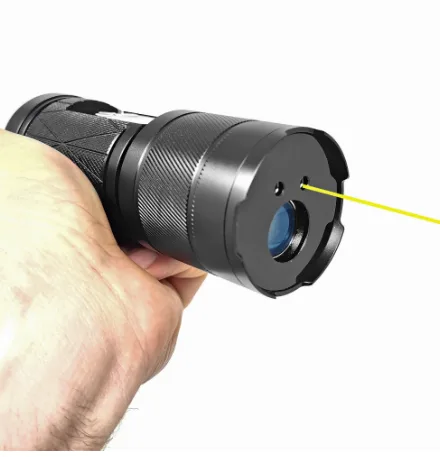
Methane leaks are invisible, odorless in their pure form, and dangerous — capable of causing explosions, asphyxiation, and significant environmental harm. Traditional gas detectors require physical contact with the gas plume, forcing technicians to walk into potentially hazardous zones. A laser methane detector changes that equation entirely. Using tunable diode laser absorption spectroscopy (TDLAS), a laser methane detector can detect methane from a safe distance — sometimes 30 meters or more — simply by pointing a laser beam at the suspected leak area. Whether you inspect pipelines, landfills, rooftops, or residential gas lines, laser methane detection delivers speed, safety, and precision that conventional sniffer-style detectors simply cannot match.
Pros and Cons of Laser Methane Detectors
PROS
- High accuracy and fast response time for methane leaks.
- Remote detection capability enhances operator safety in hazardous zones.
- Low maintenance requirements due to non-contact optic design.
- Highly selective technology prevents cross-sensitivity false alarms from gases.
CONS
- Higher initial equipment purchase cost compared to traditional sensors.
- Requires clear line-of-sight to target and reflective surface.
- Performance affected by extreme weather or heavy dust particles.
- Specifically detects methane, missing other hydrocarbon gas leaks.
What is a Laser Methane Detector?
A Laser Methane Detector is an advanced remote sensing device designed to detect methane gas emissions from a distance. Utilizing Tunable Diode Laser Absorption Spectroscopy (TDLAS), it emits a targeted laser beam that interacts with methane molecules in the air. By measuring the specific absorption of light wavelengths, the detector quantifies gas concentrations instantly without physical contact.
How does Tunable Diode Laser Absorption Spectroscopy (TDLAS) work?
TDLAS works by tuning a semiconductor laser light to match the specific absorption spectrum of methane molecules. As the laser beam travels through a gas cloud, methane absorbs light at a precise wavelength. The reflected beam is captured by a sensor, and the device calculates methane concentration based on light attenuation, providing highly accurate, real-time measurement.
What are the primary applications of laser methane detectors?
Laser methane detectors are extensively used in natural gas pipeline inspection, municipal landfill monitoring, oil and gas production facilities, wastewater treatment, and urban distribution systems. They are also deployed on drones, vehicles, and handheld devices to perform rapid surveys over vast geographical areas or hard-to-reach infrastructure safely.
What Does ppm·m Mean?
Ppm·m stands for parts per million meter, the standard unit for open-path laser detection. It represents the methane concentration multiplied by the path length of the gas cloud the laser passes through. For example, a reading of 500 ppm·m could mean a 1-meter-wide cloud at 500 ppm, or a 5-meter-wide cloud at 100 ppm. Because the laser cannot know the cloud’s exact width, it reports the integrated total. Higher readings indicate either a denser leak, a larger plume, or both.
Why is detecting methane leaks critical for the environment?
Methane is a potent greenhouse gas with a global warming potential over 28 times greater than carbon dioxide over a 100-year timeframe. Detecting and repairing methane leaks quickly prevents atmospheric release, mitigates climate change impacts, improves air quality, and assists industrial operators in achieving stringent ESG compliance and net-zero targets.
What is the detection range of a portable laser methane detector?
Handheld portable laser methane detectors typically feature a detection range spanning from 30 meters up to 100 meters (roughly 100 to 330 feet), depending on optical quality, laser power, and surface reflectivity. UAV-mounted or fixed-tower systems can often achieve even greater operational distances during aerial or perimeter surveys.
Can a laser methane detector detect other gases?
No, laser methane detectors are engineered specifically for methane gas. Because the laser diode is tuned precisely to methane’s unique infrared absorption peak, it ignores other hydrocarbons such as propane or butane, as well as atmospheric gases like water vapor, ensuring zero cross-sensitivity and highly targeted monitoring.
How do laser methane detectors compare to traditional FID or catalytic bead sensors?
Unlike Flame Ionization Detectors (FID) or catalytic bead sensors, laser detectors offer non-contact, remote sensing, eliminating the need for personnel to enter hazardous atmospheres. They deliver faster response times, require no chemical consumables or sensor head replacements, and eliminate false positives caused by interfering gases.
Are laser methane detectors safe to use in explosive environments?
Yes, most commercial handheld and vehicle-mounted laser methane detectors are engineered with intrinsic safety certifications (such as ATEX or IECEx). Because the laser operates at low energy levels and the electronics are fully encapsulated, they can safely operate in potentially explosive Zone 0, 1, or 2 environments.
What role do drones play in laser methane detection?
Integrating lightweight laser methane detectors onto unmanned aerial vehicles (drones) enables fast, automated aerial inspection of extensive pipeline networks, offshore platforms, and hazardous topographies. Drone-based surveys reduce inspection costs, improve worker safety, and pinpoint leaks in terrain inaccessible to ground vehicles.
How do weather conditions affect laser methane detector performance?
Heavy rain, dense fog, snowfall, or thick dust can scatter or obstruct the laser beam, reducing light return and operational range. While modern algorithms compensate for mild atmospheric interference, severe environmental factors may require recalibration, reduced survey distances, or temporary inspection delays.
What calibration and maintenance do laser methane detectors require?
Laser methane detectors require minimal routine maintenance because they lack degrading chemical elements. Most devices include built-in reference cells for automated self-calibration upon startup. Periodic optical lens cleaning and annual bump testing or factory calibration ensure ongoing accuracy and optimal optical sensitivity.
How is methane concentration displayed and measured by laser detectors?
Methane concentrations are measured in parts per million meters (ppm-m). This unit reflects the total methane concentration integrated along the path of the laser beam. Modern detectors display results on digital screens, generate real-time visual heatmaps, and trigger audible or visual alarms when set thresholds are exceeded.
Can laser methane detectors work indoors?
Yes, laser methane detectors operate effectively indoors, such as inside compressor stations, industrial plants, or residential properties during gas leak responses. The laser beam can reflect off walls, floors, or ceiling tiles, allowing inspectors to survey high pipes and hidden spaces from ground level.
What are the key features to look for when buying a laser methane detector?
Key features include maximum detection distance, response time (preferably under 0.1 seconds), intrinsic safety certification, battery life, weight, ruggedness (IP rating), and connectivity options such as Bluetooth or GPS integration for seamless data logging and digital report generation.
Conclusion
Laser methane detectors represent a major technological leap in gas detection, combining remote optical sensing with unmatched precision and speed. By enabling safe, non-contact leak detection across pipelines, industrial plants, and waste facilities, TDLAS technology plays a vital role in reducing industrial risks and environmental emissions. As global regulations tighten and autonomous inspection tools evolve, laser methane detection will remain essential for global methane mitigation, environmental compliance, and workforce safety.