Beyond the Shade Number: How to Avoid Costly Helmet Mistakes
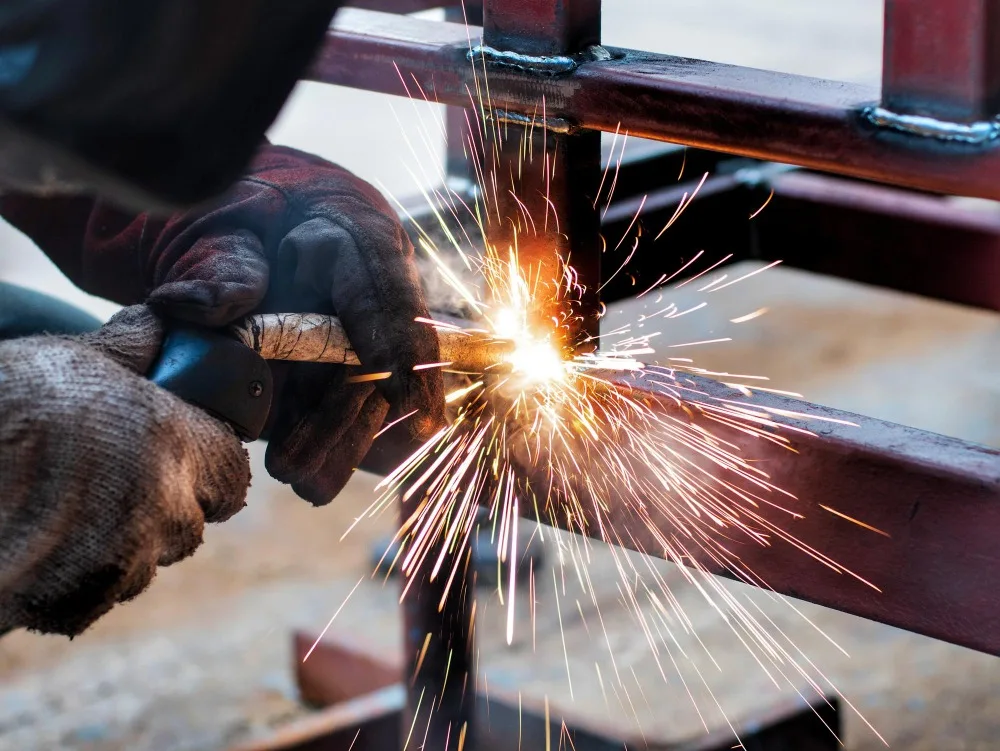
Every welder knows the feeling. That split second of a brilliant, searing light before you can react. You see spots for minutes, and a dull headache sets in. This is arc flash, and repeated exposure can cause serious, permanent eye damage. Modern helmets are designed to eliminate this risk entirely, but a surprising number of welders still get flashed, even with a new helmet.
The problem is rarely a faulty product. It’s a mismatch between the helmet’s features and the work being done. The technology in an auto darkening welding helmet is a major leap forward, but it introduces new variables. Getting these wrong can lead to eye strain, poor weld quality, and the very arc flash you sought to prevent. With safety compliance driving a significant portion of the helmet market’s growth, nearly 35% according to Proficient Market Insights, understanding these features is no longer optional.
Quick answer: Choosing the right helmet goes far beyond the darkest shade number. You must match the number of arc sensors, lens reaction speed, and power source to your specific welding processes and work environment. A helmet perfect for high-amperage MIG welding in a shop might be a liability for low-amperage TIG work outdoors.
What’s inside
- What’s the real risk of the wrong lens speed?
- Why do arc sensors matter more than you think?
- Are you choosing the right power source for your work?
- How does optical clarity affect your final weld?
- Is your helmet’s fit compromising your safety?
- Frequently Asked Questions About Helmet Care
────────────────────────────────────────
What’s the real risk of the wrong lens speed?
A lens that reacts too slowly exposes your eyes to thousands of micro-flashes over time, causing cumulative damage that standard safety glasses cannot prevent.
This reaction time is the tiny fraction of a second it takes for the auto-darkening filter, or ADF, to switch from its light state to its dark, protective shade. While a speed of 1/20,000th of a second sounds instantaneous, the intense energy of a welding arc means any delay matters. The lens provides passive protection from ultraviolet and infrared radiation at all times. However, the momentary blast of intense visible light is what causes the immediate pain and long-term damage of arc flash.
Repeated exposure to these micro-flashes leads to a painful condition called photokeratitis. Welders know it as “welder’s flash,” and it feels like having sand poured directly into your eyes. Symptoms include severe pain, sensitivity to light, and excessive tearing. While a single case typically heals, the cumulative effect of repeated flashes can contribute to the formation of cataracts and other serious, career-ending eye conditions. To prevent these outcomes, OSHA requires employers to provide workers with suitable eye and face protection against welding hazards.
The push for better protection is a significant force in the industry. The North American market is a major part of this, holding about 36% of the global share for these helmets, according to Proficient Market Insights. Within this large market, the focus is shifting toward features that improve both safety and usability. In fact, Proficient Market Insights also notes that demand for lightweight and customizable designs is fueling nearly 28% of the market’s growth, as comfort directly impacts whether a helmet is worn correctly all day.
❝ A key detail to check is how the helmet performs with low-amperage TIG welding. The initial arc is often less bright and stable, which can be a challenge for helmets with slower lenses or fewer sensors. For this type of precision work, a reaction time of 1/25,000 of a second or faster is not a luxury; it’s a necessity to avoid getting flashed on the initial strike.
Beyond eye health, a slow-reacting lens directly impacts the quality of your work. That initial flash makes you flinch, even slightly. This involuntary reaction can ruin the placement of a critical tack weld or the start of a bead. A helmet should be a tool that lets you focus entirely on the puddle, not one that forces you to fight your own reflexes at the start of every weld.
────────────────────────────────────────
Why do arc sensors matter more than you think?
The number and placement of arc sensors directly determine if the helmet will darken reliably when your view of the arc is obstructed.
Think of arc sensors as tiny electronic eyes that constantly watch for the bright flash of a welding arc. When they detect it, they trigger the lens to darken. A helmet with only two sensors, usually located at the top and bottom of the lens, can be easily fooled. If you are welding in a tight corner or around a pipe, your arm or the workpiece itself can block a sensor. When that happens, the helmet might fail to darken or, just as dangerously, flicker back to its light state mid-weld, flashing your eyes.
This is why most professional-grade helmets now feature four independent arc sensors. With sensors placed nearer to each corner of the lens, the helmet has redundant lines of sight. It is far less likely that an obstruction will block all four sensors simultaneously. This is not just a feature for convenience; it is a critical safety function for anyone doing out-of-position or fabrication work.
| Number of Sensors | Ideal Welding Application | Common Failure Scenarios |
| Two Sensors | Basic MIG and Stick welding on an open bench. | Pipe welding, corner joints, or any out-of-position work where a hand or workpiece can block a sensor. |
| Four Sensors | All-position fabrication, low-amperage TIG, and professional shop or field work. | Extremely rare to have all four sensors blocked simultaneously, providing consistent protection. |
Beyond the sensor count, look for the helmet’s optical clarity rating. The European standard, EN379, is often used as a benchmark. It rates lenses on a scale of 1 to 3 (with 1 being the best) in four categories:
- Optical Class (Accuracy): How distorted is the view? A “1” rating is like looking through clean, flat glass.
- Diffusion of Light: Is the view clear or hazy from impurities in the lens?
- Luminous Transmittance: Is the lens uniformly dark, or does it have lighter/darker areas?
- Angle Dependence: Does the shade stay consistent when you look through the lens at an angle?
A lens with a “1/1/1/1” rating achieves a score of 1 in each of the four categories. A budget helmet might be “1/2/1/2”, which can lead to a less clear, more fatiguing view of the weld puddle. In North America, which holds a significant portion of the market, approximately 32.7% of the global welding helmet share, according to Market Growth Reports, you should also ensure any helmet meets the ANSI Z87.1+ standard for high-impact resistance. This marking confirms the helmet shell and lens can withstand impacts from flying debris, a common workplace hazard.
────────────────────────────────────────
Are you choosing the right power source for your work?
Your helmet’s power source directly impacts its reliability, especially in different working conditions like low light or cold temperatures.
Most auto-darkening helmets use a combination of a lithium battery and a solar-assist panel. It’s a common misconception that the solar panel recharges the battery. In reality, the panel powers the lens directly when you are actively welding and a bright arc is present. This reduces the drain on the internal battery, extending its life. The battery itself provides the initial power to darken the lens and keeps it ready between welds.
This hybrid system works well for many, but it has limitations. If you frequently work indoors in a dimly lit shop, under equipment, or do a lot of quick tack welds, the solar panel contributes very little. The helmet will rely almost entirely on its battery, which will drain much faster than the advertised lifespan suggests.
There are three main power configurations to consider:
- Replaceable Batteries with Solar-Assist: This is the most versatile option. You get the benefit of extended battery life from the solar panel during arc-on time, but you can also easily swap in fresh batteries (typically CR2450 coin cells) when they eventually run out. This is ideal for professionals who cannot afford downtime.
- Non-Replaceable (Fixed) Battery with Solar-Assist: These helmets have a battery sealed inside the auto-darkening filter cartridge. The main advantage is often a slightly lighter and more streamlined design. The significant downside is that when the battery dies, the entire expensive filter cartridge must be replaced. Their lifespan is finite from the day they are made.
- Battery-Only (No Solar): While less common, some specialized helmets run only on replaceable batteries. These are excellent for environments with no ambient light, such as pipe welding inside a vessel, where a solar panel would be useless.
❝ When considering a helmet with a non-replaceable battery, it’s fair to ask a supplier about its manufacturing date. The battery’s lifespan starts ticking the moment it’s assembled, not when you first strike an arc. A helmet that has been on a shelf for a year or two may have significantly less working life left than a newer one.
Cold weather is another critical factor. Standard lithium batteries lose a significant amount of their power in freezing temperatures. A helmet that works perfectly in a heated shop may become sluggish or fail to darken reliably when used on a job site in the winter. If you work in cold climates, look for helmets specifically rated for low-temperature operation or stick with a model that uses replaceable batteries you can keep warm until needed.
────────────────────────────────────────
Frequently Asked Questions
Is an auto-darkening welding helmet worth the investment? Absolutely. The primary benefit is improved weld quality and reduced fatigue. Because the lens is clear before you strike an arc, you can position your torch or electrode precisely without needing to nod the helmet down. This leads to more accurate tack welds and cleaner bead starts, which is especially critical for TIG welding or intricate fabrication.
What is the best auto-darkening welding helmet? The “best” helmet depends entirely on your primary welding process and environment. For low-amperage TIG, you need a helmet with four arc sensors and a fast lens speed to reliably detect the faint arc. For heavy-duty outdoor stick or flux-core welding, a durable shell and a simple, robust headgear might be more important than a wide viewing area. The best choice is always the one tailored to your specific work.
How can you tell if the battery in your helmet is failing? The most common sign of a failing battery is a slow or inconsistent reaction time. You might notice a slight “flash” at the beginning of a weld that you didn’t before. Some helmets have a low-battery indicator light, but a practical test is to cover the solar panel and try to trigger the sensors with a bright, flickering light source like a torch striker or a BBQ lighter. If it flickers or fails to darken, the battery is likely weak.
How long does an auto-darkening helmet last? The lifespan varies by component. The helmet shell itself can last for many years with proper care. The auto-darkening filter (ADF) is the key component; models with non-replaceable batteries typically have a lifespan of five to seven years from the date of manufacture. The headgear is a wear item and often needs to be replaced every couple of years. The outer clear cover lenses are consumables and should be replaced as soon as they become scratched or clouded to maintain optical clarity.
What do the “sensitivity” and “delay” controls actually do? Sensitivity controls how much light is required to trigger the lens to darken. You would turn the sensitivity down if you are welding near other welders to prevent their arcs from darkening your helmet. You would turn it up for very low-amperage TIG welding to ensure your helmet darkens from the weaker arc. Delay controls how long the lens stays dark after the arc stops, which is useful for high-amperage welding where the workpiece glows brightly even after you stop welding, protecting your eyes from the residual light.
────────────────────────────────────────
Beyond the Spec Sheet: A Helmet You Can Trust
Choosing the right auto-darkening helmet is less about chasing the highest-end features and more about avoiding critical failures. The most expensive helmet is useless if its sensors get blocked while you are welding in a tight corner, or if its non-replaceable battery dies mid-project. A lens that is a millisecond too slow can still make you flinch, ruining a precise TIG start. These small failures have an outsized impact on the quality of your work and your safety.
Instead of focusing on a single specification, consider your most common welding scenarios. The crucial question is not “What is the shade range?” but “Will this helmet reliably trigger on a low-amperage arc?” It is not “How big is the viewing area?” but “Can I trust the power source to work in a cold or dimly lit shop?”
Ultimately, the goal is to find a helmet that becomes an extension of your senses, allowing you to focus completely on the weld puddle. The right helmet is not the one with the most impressive numbers on paper, but the one whose design and features are most resilient to the specific failure modes you are likely to encounter in your daily work.
────────────────────────────────────────
About the author
Welding Supplies from IOC is an authorized online dealer of welding equipment, safety gear, and consumables from brands including Miller, Lincoln Electric, and ESAB. The company provides a comprehensive selection of machines, from beginner MIG welders to industrial TIG systems, for professional fabricators, repair shops, and hobbyists. With a focus on matching tools to the task, Welding Supplies from IOC curates its offerings to support welders at every stage of their career, from first projects to advanced industrial applications.