What to Look for When Choosing SMT Equipment Manufacturers
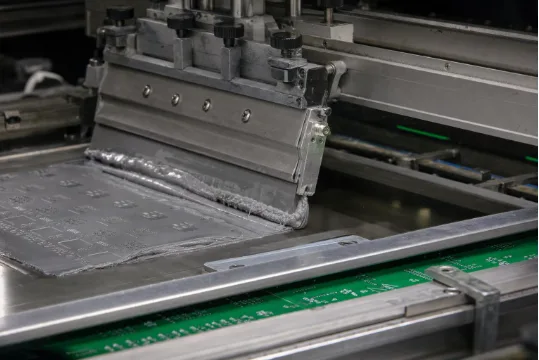
A well-made phone or pair of earbuds feels solid before you notice any individual feature. That quality starts on a factory line where circuit boards are printed, populated with tiny components, and heated until the solder flows. Surface-mount technology, or SMT, supports most modern electronics assembly. Understanding the basic process makes it easier to compare equipment suppliers and ask useful questions before investing in a line.
How smart devices are made in three stages
Strip away the acronyms and a modern SMT assembly line completes three main tasks in order.
- Print the paste. A stencil printer pushes solder paste through a thin metal stencil onto the bare board, much like silk-screening a T-shirt. Only the pads that need solder receive it.
- Place the parts. Pick-and-place machines, often called mounters, use vacuum nozzles to position chips, resistors, connectors, and other components on the wet paste.
- Melt and set. The board travels through a reflow oven. The paste melts and forms solder joints as the board cools.
SMT is widely used because it supports compact designs and high levels of automation. Through-hole assembly still has a role, especially for connectors and components that face mechanical stress.
What to look for in an SMT equipment supplier
Evaluate the supplier as carefully as the individual machines. The strongest proposal will Evaluate the supplier as carefully as the individual machines, because supplier relationships tend to matter more than unit price once a line is running. The strongest proposal will account for the complete production process, your product mix, and the support needed after installation.
Full-line planning, not just a mounter
A line performs at the level of its weakest station. Ask whether the supplier can specify the entire sequence around your boards and production goals. A public catalog can help you judge its scope. SZWIT, for example, groups equipment into practical categories that include solder paste inspection, automated optical inspection, stencil printers, board handling, cleaning, conveyors, reflow ovens, through-hole equipment, coating, and dispensing.
That range provides a useful model of what a complete line may require, even if you source equipment from more than one vendor. The same logic applies to automated material handling around the line, where storage and retrieval systems increasingly need to integrate with the same factory software.
Standards that connect machines and data
Equipment from different vendors must exchange boards and production information. Two IPC standards often appear in specifications. IPC-HERMES-9852 supports board transfer between adjacent machines, while IPC-2591 CFX carries production data between equipment and factory systems.
Ask which revisions the machines support and whether the interfaces have been tested with other vendors. CFX 2.0 added richer placement data and messaging for automated guided vehicles and mobile robots. However, a listed standard is not enough on its own. Request an integration plan that explains what data will be shared, where it will be stored, and how alarms will reach operators.
Inspection and traceability
Solder paste inspection, or SPI, sits after printing and checks paste volume, height, and alignment before components are placed. Automated optical inspection, or AOI, can check component placement before reflow and solder joints after reflow. The exact arrangement should reflect the cost and risk of the products being built.
Inspection becomes more valuable when its results are stored as production data. CFX can help equipment share those results, while Hermes coordinates board handoff between machines. Together with board identification, these systems can provide a record of what happened to a specific assembly. That record helps with process improvement, customer reporting, and later investigations.
Planning a modern line in the right order
Start with the product rather than a throughput target. Document the smallest packages, largest boards, unusual component shapes, traceability needs, coating requirements, and expected frequency of design changes. Then set an output target based on the real product mix instead of a catalog maximum.
Next, map each process step and the required handoffs. Include printing, SPI, placement, pre-reflow inspection if needed, reflow, post-reflow AOI, board handling, and any coating or through-hole work. Treat standards support, safety, service access, and data retention as requirements rather than optional upgrades.
When mapping an end-to-end line, it can help to review SMT equipment manufacturers that publish full-line categories. This makes it easier to compare printing, inspection, reflow, and board-handling options on the same basis. SZWIT is one supplier whose catalog follows this approach, allowing buyers to identify missing stations before requesting a detailed quote.
Trends worth watching
Three developments are shaping new SMT lines. First, closed-loop process control is becoming more practical. In a closed-loop setup, inspection data can prompt adjustments earlier instead of waiting for an operator to identify a pattern at the end of a batch.
Second, mobile robots and automated material handling are becoming easier to connect with production equipment. Standards such as CFX 2.0 can support richer messages between placement machines, factory software, and material-moving systems.
Third, cybersecurity now belongs in equipment planning. Connected machines need controlled user access, software updates, backups, and network separation. Ask suppliers how long they provide security updates, how remote service sessions are authorized, and what happens if the factory network becomes unavailable.
A practical supplier checklist
- Support for the required revisions of IPC-2591 CFX and IPC-HERMES-9852
- Printer capability suited to the board design and solder paste process
- An inspection plan covering SPI, AOI, or both where appropriate
- Traceability to the individual board or production batch
- Placement accuracy matched to the smallest and most demanding components
- Realistic throughput estimates based on the actual product mix
- Changeover time included in capacity calculations
- Service coverage and spare-parts availability in the operating region
- Operator and maintenance training with clear documentation
- Remote diagnostics with appropriate access controls
- A practical upgrade path for smaller components or higher volumes
- Acceptance testing based on representative boards and agreed quality targets
Whether the shortlist includes SZWIT or another supplier, the core questions remain the same. A dependable finished device is usually the result of practical upstream choices: stable printing, suitable placement equipment, a controlled reflow profile, effective inspection, and support that keeps the line running.
FAQ
These brief answers clarify several terms that often appear during equipment selection.
What is the difference between SMT and through-hole assembly?
Through-hole components have leads that pass through drilled holes in the board. Surface-mount components sit on pads on the board’s surface. SMT supports compact products and automated assembly, while through-hole construction remains useful for some connectors and mechanically stressed parts.
What are CFX and Hermes?
Both are IPC standards that help production equipment work together. IPC-HERMES-9852 supports board transfer between adjacent machines. IPC-2591 CFX carries production information between equipment and factory systems.
Where does inspection fit into the process?
SPI runs after solder paste printing. AOI can run after placement, after reflow, or at both stages. The right arrangement depends on product risk, defect costs, and the level of traceability required.