Bring Your Tabletop Sessions to Life With Better Sound
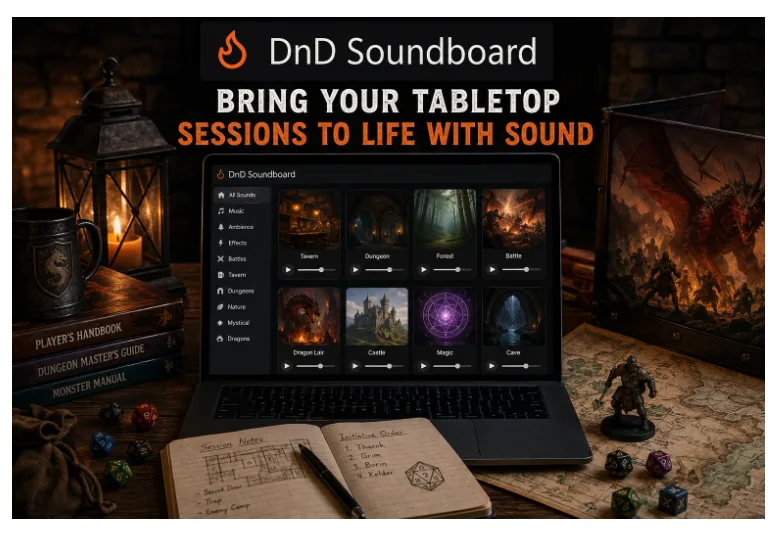
A great tabletop session is not only about the story being told. The right audio can make a quiet exploration feel more immersive, add energy to a tense battle, or give a busy tavern scene more character. A dnd soundboard gives game hosts an easy way to add music, background sounds, and useful effects directly from a web browser without installing extra software.
What Is a DnD Soundboard?
A DnD soundboard is an online collection of sounds designed for tabletop roleplaying sessions. Instead of searching through different websites or playing separate audio files, a game host can keep useful sounds in one convenient place.
These sounds can be used during many types of scenes. A quiet forest background can support an exploration session, while battle sounds can make combat feel more active. Tavern ambience can also help create a lively setting when players enter a new location.
The biggest benefit is convenience. When the audio is available from a browser, the game host can quickly select a sound and keep the session moving.
Why Sound Matters During a Tabletop Game
Tabletop games depend heavily on imagination. Players create locations and situations in their minds based on the information provided by the game host. Audio can support that process without taking attention away from the main story.
For example, imagine a group exploring an old underground location. Instead of relying only on spoken descriptions, the host can play a low background sound that matches the environment. When the group reaches a dangerous area, a suitable effect can help make the change in atmosphere more noticeable.
Sound can also help separate different parts of a session. Players may immediately recognize that a new scene has started when the background audio changes.
Useful Sounds for Different Scenes
One reason to use a DnD soundboard is the variety of situations that can benefit from audio. A good sound collection can support different parts of a campaign.
Tavern and Town Scenes
Busy locations often need background activity. Tavern sounds, crowd noise, conversations, and general room ambience can make these scenes feel more active.
These sounds work particularly well when players are gathering information, meeting characters, or deciding where to travel next.
Forest and Outdoor Exploration
Outdoor areas can feel different depending on the surroundings. Birds, wind, rain, water, and other natural sounds can create a suitable background while players travel through forests or open areas.
Keeping these sounds at a low volume allows players to continue talking while still giving the scene a stronger sense of place.
Dungeon Exploration
Quiet and enclosed locations benefit from subtle background audio. Footsteps, distant noises, dripping water, doors, and other effects can be used while players explore unfamiliar areas.
The host does not need to play something constantly. Short effects at the right moment can sometimes have a greater impact than continuous audio.
Combat Scenes
Combat is usually one of the busiest parts of a tabletop session. Suitable sound effects can add energy while players take turns and describe their actions.
A host can keep several combat effects ready and trigger them when appropriate. This approach avoids spending time searching for individual audio files during an important scene.
How to Use a DnD Soundboard
Using an online soundboard can be very straightforward. Since the sounds are available through a web browser, the host can open the website before the session and keep it ready in another browser tab.
Before the game begins, it helps to identify the sounds that may be needed during the planned session. A few background tracks and several useful effects can be enough for an entire evening.
It is also a good idea to test the volume before players arrive. Background audio should support the conversation rather than compete with it. Keeping the sound at a comfortable level makes it easier for everyone to follow the game.
Tips for Better Audio During Sessions
A few simple habits can make sound effects much easier to manage.
Prepare sounds in advance: Look through the available categories before the session and identify the sounds that match the planned locations and encounters.
Keep the volume balanced: Background music and effects should remain low enough that everyone can hear the game host and other players.
Use effects selectively: Playing every available sound can become distracting. Save stronger effects for moments where they actually add something to the scene.
Match sounds to the location: Try to keep outdoor, indoor, underground, and busy town environments noticeably different.
Keep the soundboard accessible: Having the website open in a separate browser tab makes it faster to switch between the game and audio.
Making Sessions More Immersive
Good storytelling does not require complicated equipment. A laptop, a stable browser connection, and a well-organized collection of sounds can provide plenty of atmosphere.
The key is timing. A background sound can establish a location, while a short effect can highlight a specific event. Used together, these small additions can make familiar scenes feel different from one session to another.
A DnD soundboard is especially useful for hosts who want a simple way to manage audio without building a complicated setup. Since everything can be accessed online, preparation can remain quick and practical.
Build an Audio Routine for Your Next Session
The best way to find out which sounds work for your group is to use them during actual sessions. Start with a few categories, learn which effects your players respond to, and gradually build a personal collection of favorites.
Over time, the soundboard can become part of your regular preparation routine. A few clicks before a scene can provide the background needed to turn a simple description into a more engaging moment, giving everyone at the table another way to become part of the story.