Black Mold in Your Home? Here’s What Comes Next
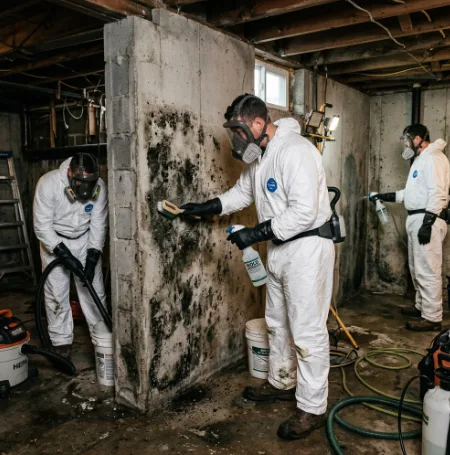
Most homeowners don’t discover black mold until it’s already spread behind walls, under flooring, or deep into ceiling cavities. By then, what started as a small moisture problem has quietly grown into a serious health and structural concern. The good news? With the right professional response, black mold doesn’t have to be the end of the story—it’s actually the beginning of a proper restoration.
This post walks you through what black mold really is, why it demands professional attention, and how ARG Restoration and Construction approaches remediation to protect both your property and the people inside it.
What Makes Black Mold Different from Other Mold Types?
Not all mold is created equal. The term “black mold” typically refers to Stachybotrys chartarum, a dark greenish-black fungus that thrives in areas with persistent moisture—think water-damaged drywall, wet insulation, or damp wood. Unlike surface-level mildew that can be wiped away, black mold colonizes porous materials deeply, making it nearly impossible to fully eliminate without professional-grade equipment and techniques.
Exposure to black mold has been linked to respiratory issues, chronic headaches, skin irritation, and in more severe cases, neurological symptoms. For young children, the elderly, and anyone with a compromised immune system, the risks are considerably higher.
That’s what sets this particular mold apart—it’s not just an aesthetic problem. It’s a health hazard that demands a structured, expert-led response.
How Does Black Mold Actually Spread Through a Property?
Mold spreads through spores—microscopic particles that travel through the air and land on new surfaces. Once a spore finds a damp, organic surface, it begins to grow. Within 24 to 48 hours of water exposure, mold can take hold. Left unchecked over days or weeks, it spreads aggressively through walls, subflooring, and HVAC systems.
This is why mold problems so often feel sudden. The growth has been happening out of sight, and by the time discoloration or musty odors appear, the affected area is typically much larger than what’s visible to the naked eye.
Common triggers include:
- Undetected plumbing leaks behind walls or under sinks
- Flooding or water intrusion from storms or burst pipes
- Poor ventilation in bathrooms, basements, and crawl spaces
- Roof leaks that allow moisture to seep into attic insulation
Understanding the source isn’t just useful—it’s essential. Removing mold without addressing the root cause guarantees a return visit.
What Does Professional Black Mold Remediation Actually Involve?
There’s a common misconception that mold removal means scrubbing visible growth with bleach and calling it done. Professional remediation is an entirely different process.
Comprehensive Inspection and Testing
Before any work begins, ARG Restoration and Construction conducts a thorough assessment of the property. This includes moisture mapping, air quality testing, and a detailed inspection of areas where mold is likely to have spread beyond what’s visible. Accurate scoping at this stage determines the scale of the remediation needed and prevents incomplete removal.
Containment to Prevent Cross-Contamination
Once the affected zones are identified, containment barriers are established. Negative air pressure systems are used to ensure that mold spores disturbed during removal don’t migrate to clean areas of the home. This step is critical—without proper containment, remediation efforts can inadvertently worsen the spread.
Safe and Thorough Removal
Affected materials are carefully removed, bagged, and disposed of according to industry standards. This may include sections of drywall, insulation, flooring, or framing, depending on how deeply the mold has penetrated. No shortcuts are taken. If a material is too compromised to be cleaned, it’s replaced entirely.
HEPA Filtration and Air Scrubbing
After physical removal, high-efficiency particulate air (HEPA) scrubbers run continuously to capture airborne spores. This stage clears the air of microscopic particles that would otherwise settle and potentially reignite mold growth.
Antimicrobial Treatment and Clearance Testing
All treated surfaces receive an antimicrobial application to prevent regrowth. Post-remediation clearance testing confirms the environment is safe before any reconstruction begins.
Why Attempting DIY Removal Often Makes Things Worse
Hardware store mold sprays and personal protective equipment from a home improvement store are simply not built for serious black mold situations. Disturbing mold colonies without proper containment sends millions of spores airborne. Without the right filtration equipment, those spores settle into new areas—carpets, furniture, HVAC ducts—creating new colonies.
Beyond the spread risk, DIY approaches rarely address the moisture source. The mold returns. Often worse than before.
Professional remediation, handled by a certified team, removes the mold entirely, addresses the moisture cause, and documents the process for insurance purposes. That documentation matters more than most homeowners realize—especially when filing a claim or selling a property.
Restoring What Was Damaged—Not Just Removing What Was Visible
Mold remediation is only half the job. Once the mold is gone, the structural damage it caused needs to be repaired. Drywall panels, insulation batts, wooden framing, flooring materials—these all need to be replaced to bring the property back to a safe, livable condition.
Black mold removal completed by a qualified restoration team doesn’t just eliminate the fungus—it fully restores the structural integrity and indoor air quality of your home, giving your family a clean, safe environment to return to without the worry of recurring contamination. ARG Restoration and Construction handles both sides of this process: the remediation and the rebuild, so homeowners work with one team from start to finish rather than coordinating between multiple contractors.
That continuity matters. It reduces miscommunication, speeds up the timeline, and ensures that every phase of the project meets the same standard of quality.
Mold Doesn’t Wait—And Neither Should You
The longer black mold remains in a property, the deeper it spreads and the more damage accumulates. What might be a contained remediation project today can become a full-scale structural repair in a matter of weeks.
ARG Restoration and Construction brings certified expertise, professional-grade equipment, and a commitment to complete restoration to every mold project. From the initial inspection to the final clearance test, the focus is on getting your home back to a condition that’s genuinely safe—not just visually clean.
If you’ve spotted signs of mold, noticed a persistent musty smell, or experienced a recent water event in your home, don’t wait for visible damage to spread further. Reach out to ARG Restoration and Construction today for an assessment and let the experts handle it properly, the first time.