Why Children Read Longer When They Are the Hero of the Story
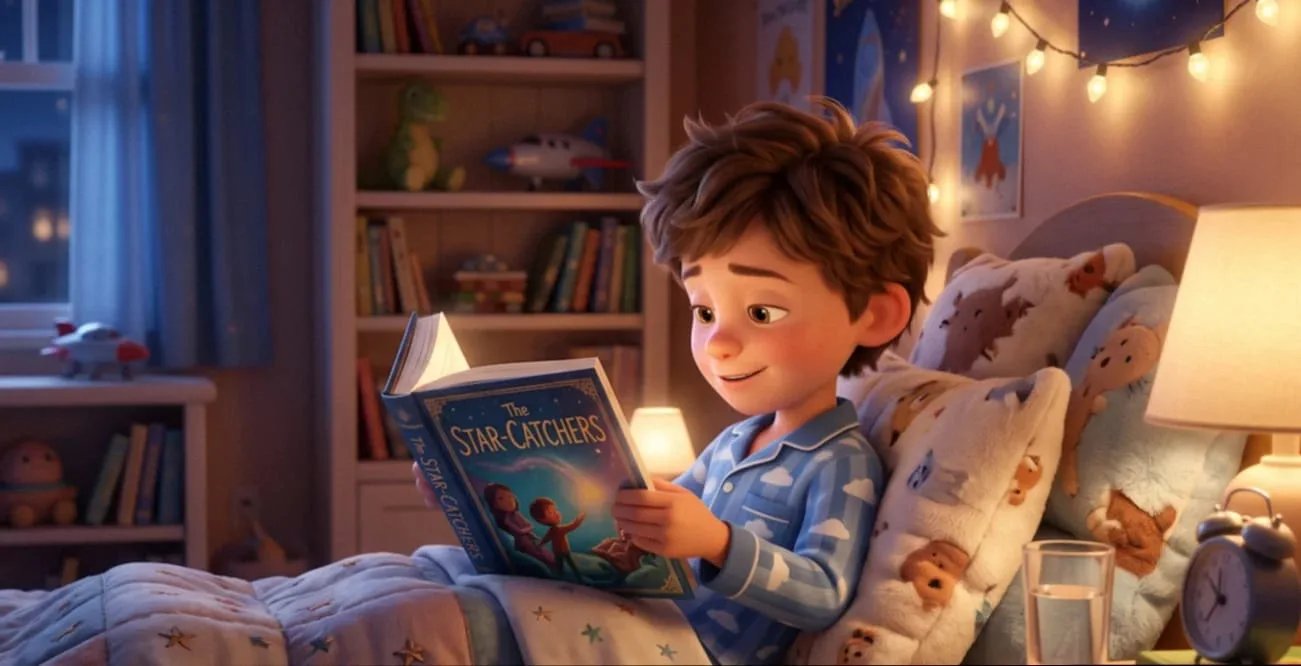
Every parent knows the bedtime negotiation. The book comes out, and within four pages the wriggling starts, then a request for water, then a sudden urgent thought about a dinosaur. Anything except the next page. Then one night you read a different book and the same child sits still for twenty minutes and asks you to start again from the beginning. What changed usually has nothing to do with the quality of the writing. The child recognised someone.
The self reference effect: why a personalized children’s book works
Psychologists call it the self reference effect. Information we connect to ourselves gets encoded more deeply and recalled more reliably than information about other people. It is one of the most replicated findings in memory research, and it does not wait for adulthood to switch on. Preschoolers show it already. They remember objects they were told belonged to them better than identical objects assigned to another child.
Apply that to a picture book and the conclusion is not complicated. A story about a brave child holds a certain amount of interest. A story about your child, by name, is personal information, and personal information gets more attention and far more staying power.
Developmental researchers see something similar in the way children assemble a narrative identity. Somewhere between three and six, kids start putting together an account of who they are, what they are like, what they seem to be good at. Books feed that process. When a child hears a story in which someone with their name is brave, or kind to a smaller creature, they are collecting evidence about themselves rather than simply following a plot.
Mirrors and windows: where a personalized book for kids fits on the shelf
The educator Rudine Sims Bishop gave the field its most durable image. Books should work as windows onto lives beyond our own, and as mirrors that reflect a child’s own life back at them so they know their experience counts as material for a story. (She added a third category, sliding glass doors, the books you can walk through into someone else’s world.)
Most children’s shelves are heavy on windows and thin on mirrors, and the gap is widest for the kids who need the reflection most. Children with uncommon names, with two dads, with hearing aids or a wheelchair, with a home in a country that almost never shows up in picture books. Years can pass before they meet a protagonist who looks anything like the person in their bathroom mirror.
That is the practical case for a personalized children book. It is a mirror you can guarantee. The face on the page belongs to your child, the name is their name, and the little brother who never appears in commercial picture books is standing right there in the illustration.
What a personalized children’s book changes at bedtime
Four things come up consistently when families add a personalized title to the rotation.
- Attention holds longer. Recognition works as a hook before the story has done any work at all. A child who spots their own name on page one already has a reason to reach page two.
- Rereading goes up, and rereading is where the literacy gains sit. Early reading research is unusually consistent on this point. Repeated readings of one text build vocabulary and comprehension far more efficiently than a single pass through something new. Personalized books get reread compulsively, so the same 500 words go through a child’s head twenty times instead of once.
- Conversation opens up. Dialogic reading, the back and forth where a parent asks questions instead of reciting, has some of the strongest evidence behind it in early literacy. It is much easier to start when the child is in the story. Would you have done that? Were you scared, like in the book? The questions ask themselves.
- Reluctant readers come back. For a child who has already decided that books are a thing they are bad at, a story they star in sidesteps the whole problem of self concept. They read to find out what happens to them, and the performance anxiety never gets a chance to start.
How to choose a personalized children’s book that gets read twice
Quality varies enormously between services, and the difference shows up within about ten seconds of flipping.
- Look for a real story rather than a name dropped into a template. If you could substitute any child and any moral without the plot changing, the book gets read once and shelved.
- Check the likeness as well as the name. Books built from an actual photo produce a character your child recognises instantly. Personalization that only swaps the name rarely survives a second reading.
- Get the supporting cast in. A sister, or the dog from down the road. Their presence turns the book into a family record instead of a novelty.
- Buy for durability. A book heading for 200 readings has to physically survive 200 readings, which means hardcover binding and thick pages rather than a stapled softcover.
- Read the text aloud before you commit. Picture book language exists to be spoken. If it has no rhythm you will notice on the fourth night, and so will the child.
Services that build the illustrations around a photo you upload, which is the approach behind a personalized children book from Little Hero Book, tend to clear the likeness bar most convincingly. The child on the page is recognisably the child holding it.
The real reason a personalized children’s book earns a permanent shelf spot
The literacy argument holds up, but it is not the reason these books survive house moves.
A personalized book is a dated object. It fixes one child, at one age, with one gap toothed grin and one best friend, into something that sits on a shelf. In five years the haircut will look absurd and the excavator obsession will be long over, and the book will be the only place either of them is still written down.
Children are very good at telling the difference between a gift bought for them and a gift made about them. That distinction is worth more than the reading statistics, and it happens to be what keeps a book in the bedtime rotation long enough for the reading statistics to arrive.