From Preseason Scouting to the Final Trip Back: How eBikes Are Changing Hunting Logistics
A successful hunting trip often depends on the work completed before the season officially begins. Routes need to be checked, access points confirmed, equipment moved, and changing trail conditions understood. Once the season starts, hunters still need to manage distance, weather, elevation, supplies, and the return journey.
These logistical demands can become especially challenging when a promising location sits several miles from the nearest legal parking area. Walking preserves the quiet character of the outdoors, but carrying equipment over long distances can use valuable time and energy. Trucks and ATVs can handle heavier loads, yet their size, noise, fuel requirements, and access restrictions limit where they are practical.
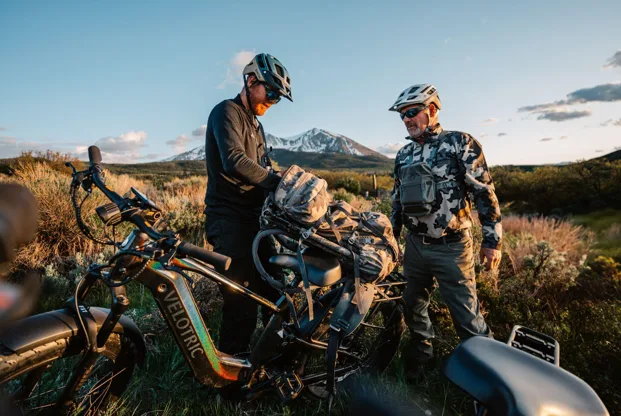
This is where the electric hunting bike is finding a distinct role. Instead of replacing traditional hunting skills, an eBike can connect the separate stages of a trip, helping riders scout routes, move between camp and trail, carry equipment, and complete the final miles back to the vehicle.
Hunting Is Also a Transportation Problem
The transportation challenge begins before a hunter reaches the field.
A truck may cover the highway and maintained access roads, but it cannot always complete the journey. Beyond the parking area, the route might continue along a gated forest road, a narrow trail, or a muddy track where full-size vehicles are prohibited or impractical.
That creates a gap between where the vehicle must stop and where the day actually begins.
Walking remains the simplest way to close that gap, especially over short distances. The calculation changes when the route includes several miles, repeated climbs, cold weather, or a heavy pack. Energy used during the approach is energy that will not be available later, and every piece of equipment carried in must eventually be carried back out.
An electric bike offers another way to organize those miles. Pedal assistance can reduce the effort required on climbs and long approaches, while racks and compatible carrying systems move some of the load from the rider’s shoulders to the bike.
The advantage is not simply getting somewhere faster. It is arriving with more of the rider’s physical energy available for the rest of the day.
Stage One: Preseason Scouting
An electric hunting bike can be especially useful before opening day. Riders can check approved access roads, identify damaged or blocked sections, and compare several possible routes without covering every mile on foot.
Preseason rides also provide a chance to test battery use under realistic conditions. Hills, soft ground, temperature, and equipment weight can affect range, so a practice ride is more useful than relying entirely on the advertised maximum.
Access must still be confirmed in advance. Federal land, state-managed areas, wildlife management areas, and private property may apply different rules to electric bikes.
Stage Two: The Early-Morning Approach
Before sunrise, riders need to balance quiet movement with safe visibility. An eBike produces less mechanical noise than a gas-powered vehicle, making it useful between a campsite, parking area, and distant access point.
However, the bike and rider are not completely silent. Tires, brakes, and unsecured equipment can still create noise. Cargo should be secured before departure, and speed should remain low enough to identify roots, rocks, and ruts in limited light.
Required lighting should always be used on public roads and shared routes.
Stage Three: Moving Gear Without Wearing It
Hunting equipment becomes more demanding over distance. Water, extra clothing, optics, tools, food, and emergency supplies may feel manageable near the truck but considerably heavier after several miles of uneven terrain.
A properly equipped fat tire ebike can shift part of that burden to a rear rack, panniers, or an approved trailer. This can reduce pressure on the rider’s shoulders and back while keeping essential items organized.
Loading an eBike still requires discipline. Heavy equipment should remain low and balanced rather than stacked high on one side. The rider must check the total payload limit of the bicycle, the individual capacity of the rack, and the rating of any trailer or mounting hardware.
Handling also changes as weight increases. A loaded bike will accelerate differently, require more distance to stop, and feel less agile through tight turns. Riders should practice with a realistic load before taking the bike into a remote area.
Stage Four: Camp Runs and Midday Mobility
An eBike can also handle the smaller trips around a hunting camp. Riders can use it to collect supplies, return to a vehicle, check another route, or visit nearby services without moving a truck or RV.
This gives the bike value beyond the main approach. The same electric bike can support camping, fishing, photography, and other outdoor activities after hunting season ends.
Stage Five: Planning for the Return
The return trip may involve more weight, lower temperatures, changing trail conditions, and a tired rider. Battery planning should therefore cover the complete round trip rather than only the distance to the destination.
Cold weather, hills, soft terrain, cargo, speed, and higher assistance levels can all reduce range. Using lower assistance on easier sections helps preserve power for climbs and the journey back.
Riders should keep a battery reserve and remain prepared to pedal without assistance if conditions change.
A Bike Built for a Trip That May Change Along the Way
A hunting route rarely remains consistent from beginning to end. A maintained gravel road may narrow into a rutted track, dry ground can become soft after rain, and a lightly loaded morning ride may turn into a much heavier return to camp. The value of an outdoor eBike lies in how well it adapts as those conditions change.
The Velotric Nomad 2X is built around that kind of changing workload. Its 4-inch tires and full air suspension help maintain comfort and control when a smooth access road gives way to gravel, packed soil, sand, snow, or repeated trail bumps. Instead of forcing the rider to choose between a comfortable long-distance bike and a more rugged platform, it brings both functions into the same ride.
Its motor support becomes most useful when the day gets harder. The 750W motor, with up to 1,400W of peak power and 105Nm of torque, can assist with climbing, restarting on an incline, and returning with additional equipment. A total payload capacity of up to 560 pounds and a rear rack rated for 120 pounds also give riders several ways to organize gear without carrying everything on their backs.
Range should still be treated as part of the plan rather than a promise. The bike offers up to 75 miles of pedal-assist range, but hunters should reserve enough battery for the more demanding return journey. For appropriate off-road situations, Stealth Mode can reduce speed, switch off the lights, and dim the display for more controlled, low-profile travel. Required lighting must still be used on public roads and whenever visibility is important.
At 80 pounds, the Nomad 2X is a substantial electric bike that requires planning before the trip begins. Riders need a suitable way to transport, secure, and unload it. That extra size makes less sense for someone seeking a bike to carry frequently, but it supports a different priority: maintaining stability, comfort, and carrying capability throughout an outdoor trip whose conditions may change along the way.
The Bike Works Best as Part of a System
An electric hunting bike provides the most value when it is treated as one part of a larger transportation plan.
The truck handles the long drive. The bike covers approved roads and trails beyond the parking area. Walking remains the right choice for the final approach or any location where riding is unsafe, disruptive, or prohibited.
Thinking in stages prevents the eBike from becoming a solution in search of a problem. It also helps hunters decide which equipment belongs on the bike, which routes should be ridden, when the bike should be parked, and how much battery must be saved for the return.
This approach is different from trying to use an eBike everywhere. The goal is to use each form of transportation where it works best.
A More Organized Way to Move Through Hunting Season
Electric bikes are changing hunting season less through novelty than through logistics. They can make scouting more efficient, reduce the physical cost of long approaches, support camp errands, and provide another way to move equipment across approved routes.
The greatest advantage may be the flexibility to divide a journey into manageable stages. Instead of choosing only between walking the entire distance and using a full-size motor vehicle, hunters can combine driving, riding, and walking according to the terrain and local access rules.
A model such as the Nomad 2X brings the range, suspension, traction, and load capacity needed to support that approach. But its usefulness still depends on careful route research, responsible riding, realistic battery planning, and respect for the land.
Used that way, an electric hunting bike becomes more than transportation. It becomes part of a better-organized outdoor system, supporting the work before the season, the miles during it, and the final trip safely back.