How Does Expert Tree Care Keep Your Landscape Healthy Year-Round
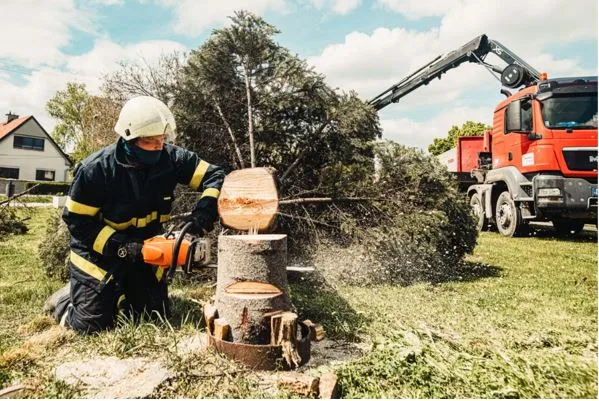
Rockwall summers bake the land & winter ice storms break limbs at a moment’s notice. A beautiful landscape in the spring can be patchy and bare by fall, and the ground or sprinklers are the first things blamed. The solution to the actual issue is typically up in the tree, which hasn’t had a proper checkup in a few months, if not years.
Things are different with healthy trees. They provide shade for lawns, protection for other plants against the elements, soil stabilization, and a landscape that lives up to its expectations throughout the year. But trained crews are able to detect those signs early, before the broken limb becomes a danger, or the root system pulls down the yard.
So, what is involved in this sort of regular care, and why is it important for a North Texas property? Let’s find out:
1. Diagnoses Problems Before They Become Emergencies
Rockwall tree care services usually begin with a comprehensive tree health evaluation and not with a hasty tree cut. An arborist would look for issues that may be missed during a homeowner’s walk-through, including thinning canopy, root flare, and fungal growth. Early detection could be the difference between simple and inexpensive treatment and expensive emergency removal.
This is what that early diagnosis usually includes:
- Compaction and drainage controls around the root zone area
- Cavity, deadwood and bark found by visual inspection.
- Initial signs of pest activity or disease before symptoms appear
Trees that are healthy rarely drop limbs on flower beds, irrigation lines or fences, and strong roots also help in holding the soil in place for other plantings.
2. Decides The Time For Pruning Around Texas Growing Seasons
Pruning at the wrong time of year does more harm than good. For instance, in North Texas, oaks should not be cut during the period of February to June because wounds that are made during this time will attract beetles that carry the fungus that causes oak to wilt. Professional crews construct a pruning calendar based on species and season, NOT convenience.
Typical pruning work includes:
- Structural pruning for shape and safety in the dormant season
- Trimming for the storm-prep season.
- Species-specific timing to avoid disease-spreading insects.
Good pruning can also help direct air and sunlight throughout the landscape, allowing other lawns and shrubs to receive sufficient sunlight without increased stress.
3. Protects Against Pests Already Spreading Through North Texas
Local pest threats aren’t hypothetical. Emerald ash borer, an invasive beetle that kills ash trees in just a few years, was detected in Rockwall County in 2025. It adds to dozens of other counties in North Texas that are quarantined by Texas A&M AgriLife due to the spread of the pest in more than 30 counties statewide.
A good pest-monitoring program typically involves:
- Regular checks for D-shaped exit holes and canopy dieback.
- Use of targeted treatment programs rather than complete pesticide applications
- When removal is necessary, coordination with the local quarantine rules is needed.
Early detection reduces the likelihood of a pest infestation gaining additional yard and tree line partners.
4. Manages Drought Stress Before Trees Show Damage
The soil dries quickly with Texas heat, and a drought-stressed tree is vulnerable to secondary pests and disease. When leaves begin to turn brown, roots are frequently suffering for several weeks. Deep, infrequent watering combined with regular mulching helps to maintain cooler and more hydrated roots between waterings.
A solid drought-management plan usually includes:
- Deep root watering as per soil type
- Mulch rings that regulate soil temperature and moisture.
- Recovery fertility plans that don’t overfeed
Healthy trees also provide shade, which keeps lawn areas and garden beds from drying out in long, severe heat spells.
5. Protects the Long-Term Value of Your Property
Mature, healthy trees give structure, shade, and year-round appeal to a property, creating an established yard that stays attractive in every season. That landscape also works as a financial asset. A 2025 study at Virginia Tech identified that houses with trees nearby and providing shade have higher values, but there are still specific locations of the trees that affect the values.
Here are a few practical examples of how that value manifests itself:
- Maintained marketability for resale and area value
- Limbs and trunks are weak, reducing liability.
- Cost savings over the removal costs in an emergency.
The Bottom Line
A healthy landscape is not a result of luck or weather! It’s a matter of taking care of the trees that hold it all together, year after year. Every piece builds upon the previous, ranging from early diagnosis to smart pruning to pest monitoring and drought management. In the long run, this lack of care will result in costs in the form of storm damage, pest expansion, or a decaying canopy that are no longer worth resale. Regular tree care can also help maintain healthier lawns, shrubs and outdoor areas because healthy trees lead to healthier surroundings, and it’s one of the wisest investments a homeowner can make.