Why Men’s Depression Often Looks Like Anger Instead of Sadness
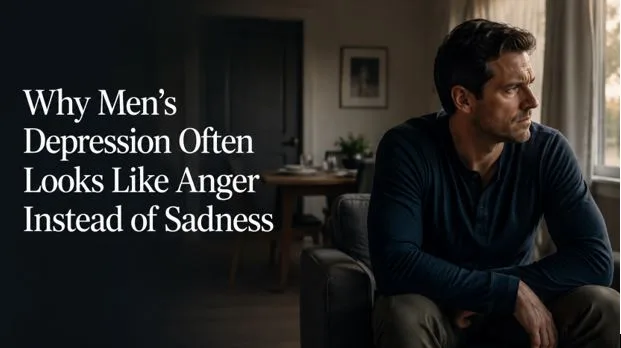
When most people picture depression, they picture sadness, someone withdrawn, tearful, visibly low. For a lot of men, that’s not what it looks like at all. It looks like irritability. It looks like snapping at a partner over something small, or a short fuse at work that wasn’t there a year ago. Because it doesn’t match the expected picture, it often goes unrecognized, sometimes for years, as anything other than a bad temper.
Why Depression Presents Differently in Men
Men often experience depression differently than women, and a significant part of that difference is emotional expression itself. Rather than expressing sadness directly, many men mask depression through irritability, aggression, or avoidance. This isn’t a conscious choice to hide what’s happening. It’s often the form depression actually takes, shaped by years of cultural conditioning around what emotions are acceptable to show and which ones aren’t. Effective depression treatment for men has to start from this different presentation, not from the standard, more visibly sad picture depression is usually described with.
What This Actually Looks Like Day to Day
A few patterns tend to show up in men experiencing depression that don’t immediately register as depression to the person feeling them, or to the people around them:
- Irritability, frustration, or anger outbursts that seem disproportionate to what triggered them
- Fatigue, low energy, and disrupted sleep, either insomnia or oversleeping
- Loss of interest in activities, work, or social situations that used to feel worthwhile
- Turning to substance use or reckless behavior as a way of coping
- Physical symptoms like headaches, muscle tension, or digestive issues that don’t have an obvious medical cause
Many men experiencing these symptoms don’t connect them to depression at all, since none of it looks like the sadness they associate with the word.
Why This Pattern Goes Untreated for So Long
A few things tend to keep men from recognizing or addressing this pattern. Societal expectations still discourage many men from acknowledging emotional struggle openly. Depression itself often gets viewed as a personal weakness rather than a medical condition, which makes seeking help feel like an admission of failure rather than a reasonable response to a real problem. And because the emotional expression is masked, through anger, withdrawal, or overwork, it’s genuinely harder for a man to recognize his own depression, let alone explain it to someone else.
Why a Men’s-Specific Approach Makes a Difference
Understanding that depression shows up differently in men isn’t just an academic distinction. It changes what effective treatment actually looks like. A treatment environment built specifically around how men process emotions, communicate distress, and respond to therapy removes some of the friction that keeps men from engaging honestly in a mixed or generic setting. This isn’t about avoiding difficult material. It’s about creating conditions where men are more likely to actually say what’s true, rather than deflecting or minimizing the way they might elsewhere.
What Treatment Actually Involves
Depression treatment built for men typically combines Cognitive Behavioral Therapy, to identify and shift the negative thought patterns feeding the depression, with Dialectical Behavior Therapy for men who struggle with anger, avoidance, or impulsive reactions tied to their emotional state. Individual therapy provides space for personalized, confidential work, while group therapy offers something individual sessions can’t fully replicate: connection with other men navigating the same patterns, which tends to reduce the isolation that often accompanies depression in the first place.
Where This Approach Is Built Into Care
Triony Behavioral Health in Nashville is built specifically around this understanding of how depression shows up in men, offering a men’s-only environment designed to remove the stigma around mental health treatment and create space for honest conversations that a generic, mixed setting often doesn’t allow for.
The Bottom Line
If irritability, anger, or a short fuse have replaced what used to feel like patience, and it’s happening alongside fatigue, lost interest, or a general sense of disconnection, that combination is worth taking seriously as a possible sign of depression, not just a bad stretch or a personality change. Recognizing the pattern is often the hardest part. Treatment built around how men actually experience depression is what makes acting on that recognition possible.