Why Flexible Barrier Bags Are Widely Used for Long-Term Product Freshness
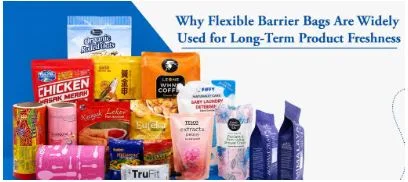
Maintaining product freshness is one of the most important packaging challenges for food producers, retailers, supplement brands, pet-food companies, and specialty product manufacturers. Even a well-made product can quickly lose its quality when it is exposed to oxygen, humidity, light, strong odors, or environmental contamination.
Flexible barrier bags are widely used because they address several of these risks without requiring heavy or bulky packaging. Their layered construction can help slow the movement of air, water vapor, aromas, and light between the product and its surroundings. At the same time, the bags are lightweight, easy to store, and available in many shapes, sizes, and closure formats.
The effectiveness of any package depends on the selected materials, sealing method, product characteristics, and storage conditions. A high-barrier bag cannot preserve an item indefinitely, but the right construction can support a longer shelf life and help products maintain their intended taste, aroma, color, texture, and overall condition.
What Is a Flexible Barrier Bag?
A flexible barrier bag is a lightweight package manufactured from one or more layers of film, foil, paper, or other flexible materials. These layers are combined to provide specific protective properties.
A typical structure may be designed to control:
- Oxygen exposure
- Moisture transmission
- Light penetration
- Aroma loss
- Odor transfer
- Grease migration
- Physical contamination
- Puncture or tearing
The exact construction varies depending on the product. Dry snacks may require strong moisture protection, while coffee beans may need both oxygen and aroma barriers. Light-sensitive ingredients may benefit from an opaque structure, and products with sharp edges may require additional puncture resistance.
The term “barrier” does not refer to one universal level of protection. Manufacturers should compare verified material specifications rather than assuming all flexible bags perform in the same way.
Oxygen Can Reduce Product Quality
Oxygen is one of the main causes of quality deterioration in many packaged products.
Exposure to air can contribute to oxidation, which may alter flavor, aroma, nutritional quality, and appearance. Products containing fats and oils can develop unpleasant odors or tastes, while certain colors and sensitive ingredients may gradually degrade.
Oxygen control is especially important for:
- Coffee
- Tea
- Nuts
- Dried fruit
- Spices
- Powdered ingredients
- Pet treats
- Nutritional products
- Snack foods
- Dehydrated products
High-barrier layers help reduce the rate at which oxygen enters the package. The benefit depends on the quality of the seal, because even a strong film cannot perform effectively when the package has incomplete seams, pinholes, or damaged closures.
Moisture Protection Helps Preserve Texture
Water vapor can change a product even when no visible liquid enters the package.
Crisp foods may become soft after absorbing moisture from the air. Powders can clump, dry ingredients may become difficult to pour, and moisture-sensitive items can lose stability. In other situations, a product may lose moisture through the package and become excessively dry.
Flexible barrier bags can be selected to reduce moisture transfer in either direction.
This is useful for products such as:
- Crackers and chips
- Biscuits and cookies
- Dry mixes
- Flour-based products
- Candy
- Dried herbs
- Seeds
- Granola
- Freeze-dried foods
- Powdered supplements
The required level of moisture protection depends on the product’s sensitivity and the expected climate. A bag used in a humid environment may need different performance characteristics from packaging used in a consistently dry storage area.
Multilayer Construction Provides Targeted Protection
Flexible packaging often combines several materials because no single layer provides every desired property.
One layer may provide heat-sealing performance, another may add strength, and a third may improve resistance to oxygen, moisture, or light. The printed exterior layer can support branding while protecting the graphics from rubbing or damage.
A multilayer structure may be designed to provide:
- A printable outer surface
- Mechanical strength
- Puncture resistance
- Oxygen protection
- Moisture protection
- Light control
- Food-contact suitability
- Reliable heat sealing
The structure should be developed around the product rather than selected only by appearance or price. A more complex material is not automatically better if the product does not require its full performance.
Mylar-Style Packaging Supports Long-Term Protection
The word Mylar is commonly used in the packaging market to describe durable polyester-based or multilayer flexible bags, although specific material structures can vary considerably between suppliers.
Businesses use Custom Mylar Bags for products that require a combination of protection, convenient storage, and branded presentation. Depending on their construction, these bags may help reduce exposure to moisture, oxygen, light, and external odors.
They can be used for:
- Coffee and loose-leaf tea
- Dried foods
- Confectionery
- Herbs and spices
- Powdered products
- Pet treats
- Craft ingredients
- Specialty retail items
- Sample products
- Subscription-box goods
Customization can include printed logos, product information, opening instructions, barcodes, preparation guidance, and brand colors. However, printing should be combined with a material specification suited to the contents. Attractive artwork cannot compensate for inadequate barrier performance.
Light Protection Matters for Sensitive Products
Light can affect the color, flavor, aroma, and stability of certain foods and other sensitive goods.
Transparent packaging may help customers see the product, but it can also increase exposure to visible or ultraviolet light. Opaque or metallized bags are often selected when protection is more important than full product visibility.
Light-sensitive products may include:
- Coffee
- Tea
- Spices
- Dried herbs
- Nutritional powders
- Certain confectionery products
- Natural ingredients
- Products containing sensitive oils
The level of protection depends on the complete material structure. A dark printed surface may reduce some exposure, but it does not necessarily provide the same performance as a fully opaque or foil-based barrier.
Businesses should request technical information from their supplier when light protection is essential to product quality.
Aroma Retention Protects the Customer Experience
Aroma is a major part of how customers evaluate products such as coffee, tea, spices, herbs, and flavored snacks.
If aromatic compounds escape through the packaging, the product may smell weaker when opened. External odors can also enter some packages and affect the contents, particularly when products are stored near strongly scented goods.
Flexible barrier structures can help preserve desirable aromas while limiting unwanted odor transfer.
This is valuable throughout:
- Warehouse storage
- Retail display
- Shipping
- Home storage
- Subscription delivery
- International transportation
A reliable closure also matters after the initial opening. Resealable zippers can help customers limit repeated environmental exposure, although they do not always recreate the same protection as an unopened heat seal.
Heat Sealing Improves Package Integrity
A bag’s protective performance depends heavily on how well it is sealed.
Heat sealing joins compatible inner layers to create a closed seam. When performed correctly, it can help prevent air, moisture, dust, and contaminants from moving through the opening.
Seal quality can be affected by:
- Temperature
- Pressure
- Dwell time
- Film thickness
- Product particles
- Grease or powder near the seal
- Equipment condition
- Operator training
Coffee grounds, spices, powders, crumbs, or oil in the sealing area may prevent complete closure. Manufacturers should keep the seal zone clean and regularly check packages for weak seams or channels.
For products intended for extended storage, relying only on a zipper closure may be insufficient. A heat seal above the zipper can provide stronger initial protection and visible evidence that the package has not been opened.
Resealable Closures Support Freshness After Opening
Many products are consumed over several days or weeks rather than in one use.
Resealable zippers allow customers to close the package after removing a portion. This can reduce continued exposure to humidity, air, dust, and household odors compared with leaving the bag open.
Resealable formats work well for:
- Coffee
- Nuts
- Dried fruit
- Granola
- Pet treats
- Candy
- Protein powders
- Baking ingredients
- Tea
- Snack foods
The zipper should be positioned far enough below the top seal to allow easy opening. It should also remain free from product particles that may prevent complete closure.
Clear instructions such as “press firmly to reseal” can help customers use the feature correctly.
Dark Packaging Can Create a Premium Appearance
Barrier performance is the main technical reason for selecting flexible protective packaging, but visual design also influences customer expectations.
Businesses may choose custom black mylar bags to create a bold, modern, or premium appearance. Black provides strong contrast for white, metallic, or brightly colored printing and can help specialty products stand out on retail shelves.
This format may suit:
- Premium coffee
- Luxury confectionery
- Gourmet snacks
- Specialty tea
- High-end pet treats
- Limited-edition products
- Gift collections
- Subscription-box items
Dark packaging can also help reduce direct visibility of the contents, which may be useful for light-sensitive products. However, appearance alone does not guarantee a specific light, oxygen, or moisture barrier. The material specification must still be evaluated separately.
Flexible Bags Use Storage Space Efficiently
Rigid containers can occupy substantial warehouse and shipping space, even before they are filled.
Unfilled flexible bags are generally supplied flat, allowing large quantities to be stored in relatively compact cartons. This can help businesses manage packaging inventory more efficiently.
Operational benefits may include:
- Reduced storage space
- Easier movement of empty packaging
- Lower package weight
- Efficient case packing
- Less unused space
- Simplified inventory organization
Filled bags can also conform more closely to the product than some rigid containers. However, overly flexible packaging may not protect items that are easily crushed, so additional cartons, trays, or shipping materials may still be required.
Lower Weight Can Improve Distribution Efficiency
Flexible barrier bags are usually lighter than glass jars, metal tins, and many rigid plastic containers.
Lower package weight can reduce the total weight of shipping cases and may make products easier for customers to carry. This can be especially valuable for e-commerce businesses shipping many individual orders.
The total distribution benefit depends on:
- Bag dimensions
- Product density
- Shipping distance
- Secondary packaging
- Case design
- Pallet efficiency
- Damage rates
A lightweight bag that punctures or allows products to be crushed may create more waste than a slightly stronger structure. Weight reduction should therefore be balanced with adequate durability.
The Right Size Reduces Headspace and Material Waste
A bag that is much larger than the product may contain excessive empty space and use more material than necessary.
Too much headspace can also make the product appear smaller or allow contents to move during transportation. A very tight package, however, may be difficult to seal or may place excessive pressure on the seams.
Businesses should consider:
- Product volume
- Product weight
- Bulk density
- Filling method
- Required headspace
- Zipper placement
- Seal width
- Shelf presentation
Testing several sizes with the actual product is more reliable than selecting dimensions based only on capacity estimates.
Gussets Improve Capacity and Shelf Presentation
Flexible bags may include bottom or side gussets that expand as the package is filled.
A bottom gusset can allow the bag to stand upright, making it suitable for retail shelves and customer storage. Side gussets may provide additional capacity for products such as coffee, powders, and bulk dry ingredients.
Common formats include:
- Stand-up pouches
- Flat pouches
- Side-gusset bags
- Quad-seal bags
- Flat-bottom bags
- Three-side-seal pouches
The best format depends on how the product is filled, displayed, transported, and used.
A stable base can improve shelf visibility, but the bag must be tested to ensure it remains upright after handling and as the product is gradually consumed.
One-Way Valves Can Support Freshly Roasted Coffee
Freshly roasted coffee can release carbon dioxide after packaging.
A one-way degassing valve allows gas to leave the package while limiting outside air from entering. This can reduce swelling and help preserve the protective environment inside the bag.
Valve performance depends on:
- Correct installation
- Bag structure
- Roast level
- Packing time
- Seal integrity
- Storage conditions
Valves are specialized components and should be selected with guidance from an experienced packaging supplier. They are not necessary for every product and should not be added simply because they create a premium appearance.
Printed Bags Communicate Essential Information
Flexible bags provide a large printable surface for both branding and practical product details.
Packaging may communicate:
- Product name
- Flavor or variety
- Net quantity
- Ingredient information
- Allergen declarations
- Storage instructions
- Preparation guidance
- Best-before coding
- Business contact details
- Barcodes and batch information
The design should maintain a clear visual hierarchy. Important legal or safety information must remain readable and should not be hidden within decorative graphics.
Businesses should also leave suitable areas for variable details such as lot codes, production dates, and expiration information.
Tamper-Evident Features Build Confidence
Customers want reassurance that packaged products have not been opened or altered.
A heat-sealed top can provide evidence of initial package integrity. Tear notches may then help the customer open the bag cleanly above the reusable zipper.
Other options may include:
- Tear strips
- Perforated tops
- Security labels
- Breakable seals
- Shrink bands in specific applications
The feature should be easy for customers to understand. Complicated opening systems may create frustration or cause them to cut through the zipper accidentally.
Barrier Needs Differ by Product
There is no universal flexible bag suitable for every long-term storage application.
A low-moisture dry snack has different needs from oily coffee beans, hygroscopic powder, or strongly aromatic spices. Shelf-life requirements also vary according to the expected sales cycle.
Before choosing a structure, businesses should evaluate:
- Product moisture level
- Fat content
- Aroma sensitivity
- Light sensitivity
- Oxygen sensitivity
- Sharp edges
- Filling temperature
- Desired shelf life
- Storage climate
- Distribution route
The packaging supplier may require product samples or technical data before recommending a structure.
Storage Conditions Still Influence Freshness
Barrier packaging slows environmental exposure, but it cannot completely overcome poor storage practices.
Products should normally be stored according to their specific temperature, humidity, and light requirements. Packages should be protected from physical damage, pests, chemicals, and strong external odors.
Warehouses should consider:
- Temperature control
- Humidity monitoring
- Stock rotation
- Clean shelving
- Pest prevention
- Protection from sunlight
- Careful carton stacking
- First-in, first-out procedures
Even a strong barrier bag may fail if it is punctured, crushed, poorly sealed, or exposed to extreme heat.
Shelf Life Must Be Tested
Theoretical material specifications are useful, but they do not replace shelf-life testing with the actual product.
Manufacturers should assess how the packaged item changes over the intended storage period. Testing may evaluate:
- Flavor
- Aroma
- Texture
- Color
- Moisture content
- Oxidation
- Seal integrity
- Microbiological stability
- Nutrient retention
- Customer acceptability
Accelerated tests can provide early indications, but real-time studies may still be necessary depending on the product and regulatory requirements.
Shelf-life claims should be based on evidence rather than packaging assumptions.
Puncture Resistance Prevents Hidden Failures
Small holes can significantly reduce barrier performance.
Sharp product edges, rough handling, machinery, and damaged cartons can puncture flexible films. Some failures are difficult to notice visually but may allow oxygen or moisture to enter gradually.
Products with higher puncture risk may require:
- Thicker films
- Tougher inner layers
- Rounded product edges
- Protective inserts
- Stronger shipping cartons
- Improved handling procedures
Drop tests, compression tests, and transportation trials can help identify weak points before commercial production begins.
Sustainability Requires a Full Evaluation
Flexible packaging uses relatively little material compared with many rigid formats, but multilayer structures can be difficult to recycle through conventional systems.
The environmental impact depends on:
- Material composition
- Package weight
- Product protection
- Food waste prevention
- Transportation efficiency
- Manufacturing process
- Local recycling availability
- End-of-life treatment
A package that extends shelf life and prevents product waste may provide important benefits, even if its disposal options are limited. At the same time, brands should avoid vague claims such as “completely eco-friendly” unless they have reliable evidence.
Clear, specific communication is more credible than broad sustainability language.
Order Samples Before Committing to Bulk Production
Printed mockups show branding, but they cannot fully demonstrate barrier performance, seal behavior, filling efficiency, or transport durability.
Businesses should test physical samples with the real product and equipment.
A practical trial should evaluate:
- Product capacity
- Filling speed
- Seal strength
- Zipper performance
- Puncture resistance
- Shelf stability
- Print quality
- Standing performance
- Shipping durability
- Customer usability
Samples should be tested under the same storage and distribution conditions expected after launch.
Work With a Reliable Packaging Supplier
Supplier expertise becomes particularly important when packaging must support an extended shelf life.
Businesses should ask potential suppliers about:
- Material specifications
- Barrier test data
- Food-contact suitability
- Printing methods
- Seal recommendations
- Minimum order quantities
- Production tolerances
- Lead times
- Quality-control procedures
- Replacement policies
A reliable supplier should be willing to explain the proposed structure rather than describing every bag simply as “high barrier.”
Clear technical communication reduces the risk of choosing packaging that looks suitable but performs poorly.
Common Flexible-Packaging Mistakes
Several avoidable errors can reduce the effectiveness of barrier bags:
- Choosing material based only on appearance
- Using the wrong barrier level
- Allowing product into the seal area
- Relying only on a zipper for initial closure
- Ignoring puncture risks
- Selecting an oversized package
- Storing bags in excessive heat or humidity
- Failing to conduct shelf-life tests
- Printing unreadable information
- Making unsupported freshness claims
Packaging should be treated as part of the complete product system rather than as a decorative item purchased at the end of development.
Conclusion
Flexible barrier bags are widely used for long-term product freshness because they can help reduce exposure to oxygen, moisture, light, external odors, and contamination. Their multilayer construction can be adapted to different products while remaining lightweight, space-efficient, and suitable for branded retail presentation.
Features such as resealable zippers, heat-sealed tops, gussets, tear notches, and specialized valves can improve convenience and performance when selected for a clear purpose. However, no bag can guarantee freshness on its own.
Successful packaging requires the correct material structure, reliable sealing, appropriate sizing, controlled storage, and testing with the actual product. Businesses should evaluate technical specifications alongside branding, cost, usability, and environmental considerations.
When these factors are balanced carefully, flexible barrier bags can protect product quality throughout storage and distribution while giving customers a convenient and professional package that supports freshness well beyond the initial purchase.