The NAD+ Price Map: Four Ways to Buy One Molecule, From $30 a Month to $2,000 a Session
By B.A. Utterback, Founder, PepScribe
My company recently did something unglamorous: we put four prices for the same molecule side by side, with a named source for every figure, and published the table. The molecule is NAD+, a coenzyme involved in cellular energy metabolism and one of the most searched therapies in the longevity category. What the table shows is a market where the identical substance sells for $30 a month in one room and $2,000 a session in another, and where almost no buyer ever sees both numbers at once.
Here is the map.
At the top sit clinic IV infusions. Physicians’ published quotes put a typical session between $200 and $500, and high-dose drips of 500 to 750 milligrams between $800 and $2,000 per session. These are real prices for a real service: an hour or more in a chair, staffed monitoring, and the ceremony of the drip bag. Some patients want exactly that. But the price is mostly the room, not the molecule.
Next, in-clinic intramuscular injections, quoted at $100 to $300 per injection. The injection takes minutes, and the math turns on cadence: at the weekly schedules commonly used, a patient is spending $400 to $1,200 a month. This is the format where the gap between sticker price and monthly cost hides best, because each visit sounds affordable in isolation.
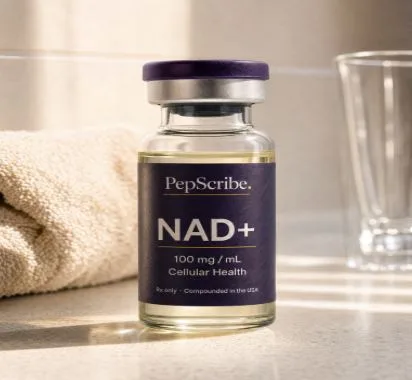
Third, prescribed at-home programs. A licensed clinician reviews the patient’s health history, and if the therapy is appropriate, medication ships monthly from a licensed US compounding pharmacy. At my company that runs $228 a month for injection and $159 a month for nasal spray, clinician oversight and shipping included. One useful comparison from the table: a single monthly clinic IV at the lower quoted range and an at-home injection plan land in similar territory, while a weekly in-clinic injection schedule costs several times either.
At the bottom, over-the-counter oral precursors such as NMN, at $30 to $60 a month. These are a different product in a meaningful sense: no prescription, no clinician, and a precursor molecule the body must convert rather than NAD+ itself. They belong on the map anyway, because for many buyers they are the honest starting point, and one of the physicians we quote takes them herself.
Why publish this at all? Because the NAD+ market runs on price opacity, and opacity always taxes the patient. When a clinic quotes $500 a session, the buyer has no anchor to judge it against. When a website says “from $99,” the buyer has no idea which format, which dose, or which supervision level that number describes. Every figure in the full comparison is tied to a named physician’s published quote or to our own published pricing, so a reader can check the work instead of trusting the author. That standard should be ordinary. In this category it is rare enough to be a differentiator.
There is also a compliance dimension the price map surfaces. Compounded NAD+ is a prescription medication prepared for an individual patient by a licensed 503A pharmacy, and it is not an FDA-approved drug; a clinician decides whether it is appropriate at all. The formats on the map differ in price, and they differ in how much clinical judgment sits behind them, and the second difference is the one that matters medically. A buyer comparing a $40 bottle of capsules to a $228 prescribed program is comparing two categories of product: one is a supplement bought on personal judgment, and the other is a therapy that exists only after a licensed clinician has reviewed a health history and decided it is appropriate.
My advice to anyone pricing NAD+ therapy is the same advice I would give for any therapy in this space. Get all four formats on one page before you commit to any of them. Ask what the monthly cost is at the cadence being recommended, not the per-visit sticker. And treat a provider who publishes their numbers with sources as telling you something about how they will treat you after they have your card.
The prices will keep moving. The map is the part that keeps mattering.
Compounded medications are prepared for individual patients by licensed pharmacies and are not FDA-approved drugs. Whether any therapy is appropriate is a licensed clinician’s decision.
AUTHOR BOX:
B.A. Utterback is the founder of PepScribe, a telehealth practice for peptide and hormone therapy. He is a former Emergency Medical Technician who went on to an executive career in technology, including creating medical mobile applications.
More at https://pepscribe.com/authors/b-a-utterback
Disclaimer
This article is for informational purposes only and does not constitute medical or financial advice. NAD+ products and treatments may vary in cost, quality, availability, and suitability. Consult a qualified healthcare professional before considering any NAD+ therapy or supplement.