6 Best Vegetarian Meal Plans for Weight Loss Built Around Protein per Serving
You want to lose weight – without living on salads or running endless macro math. Our 2026 guide to the six best vegetarian meal plans for weight loss fixes that dilemma. Each template lays out a full day of eating, stays between 1,200 and 1,800 calories, and shows its protein (often 80 g or more) so you see numbers, not hype. In the pages ahead we’ll stack the plans by cost, prep time, nutrient balance, and even dental-health factors. Talk with your clinician if you have medical concerns, then choose the template that fits your real life.
The best vegetarian weight-loss plans at a glance
Quick answer: which plan comes out on top?
Short on time? Eat This Much takes first place for precision: its 1,500-calorie vegetarian track averages 108 g protein per day and costs about the same as a normal grocery run. EatingWell follows with a free seven-day menu that still tops 80 g protein and 30 g fiber. Hurry The Food Up wins on price, Mayo Clinic Diet adds clinical coaching, Seattle Sutton delivers ready-to-eat meals, and Strongr Fastr syncs macros to your workouts.
| Rank | Plan | Calories (sample) | Protein / day | Cost model |
| 1 | Eat This Much | 1,500 | 108 g | Free basic, < $10 per month premium |
| 2 | EatingWell | 1,800* | ≥ 80 g | Groceries only, no fee |
| 3 | Hurry The Food Up | 1,460 | 84–93 g† | Groceries only, budget |
| 4 | Mayo Clinic Diet | ~ 1,400 | ~ 58 g‡ | $12–$50 per month + groceries |
| 5 | Seattle Sutton | 1,200 | ~ 63 g | ≈ $24 per day, delivered |
| 6 | Strongr Fastr | 1,500 | 110 g§ | ≈ $18 per month, or ≈ $7 billed annually, + groceries |
*Simple tweaks lower to 1,500 kcal or raise to 2,000 kcal.
†Higher range includes an optional protein shake.
‡App tools let you nudge protein toward 75 g.
- Based on an exported sample week.
That table shows why Eat This Much and EatingWell lead on both macros and practicality; the next sections unpack the scores in detail.
How we ranked the best vegetarian meal plans for weight loss
Eligibility requirements
Each plan had to meet six firm criteria before we scored it:
- Fully vegetarian. Eggs and dairy count; any meat or fish disqualifies the plan.
- Full-day coverage. At least three meals plus room for a snack.
- Weight-loss calories. Fixed or adjustable to 1,200–1,800 calories per day.
- Protein transparency. Public nutrition tables or an in-app generator must show exact macros.
- Current U.S. availability. Prices and data must be live on August 5, 2026.
- No miracle claims. We exclude programs promising extreme or unverified results.
If you are navigating life after bariatric surgery, protein and texture requirements shift, and a plant-forward plan needs adjusting before it is safe to follow. The Bariatric & Metabolic Center of Colorado’s guide to the vegetarian diet for weight loss works through that trade-off and publishes the per-serving protein figures behind every plan in this comparison: a cup of Greek yogurt at 23 grams, a cup of cottage cheese at 28, a cup of lentils at 18, a cup of quinoa at 8, an ounce of almonds at 6, and two tablespoons of peanut butter at 7. It also notes evidence that a whole-food, plant-based pattern may raise metabolic rate by up to 14 percent, a small but welcome edge when calories are tight.
Our scoring formula
We rate each finalist on eight weighted factors, then convert totals to a 0–100 scale.
| Criterion | Weight | A 5/5 score means… |
| Protein adequacy and distribution | 22 % | ≥ 90 g per day and about 25 g at each main meal |
| Calorie control and scalability | 14 % | Stays within 1,200–1,800 kcal without rewriting recipes |
| Macro and micronutrient coverage | 14 % | Lists iron, calcium, B12, fiber, plus full macro panel |
| Cost and access value | 10 % | ≤ $8 per day in our standard basket |
| Prep time and usability | 10 % | ≤ 15 active minutes per day or fully prepared |
| Scientific backing | 14 % | Reviewed by registered dietitians or published methodology |
| Oral-comfort adaptability | 10 % | Soft or easily modified meals; limited acidic sipping |
| Sustainability | 6 % | Whole-food focus, ingredient reuse, minimal waste |
A plan that earns 5/5 in every column scores 100 overall. Missing data caps that factor at 3/5, and failure to clear eligibility drops the plan from the list.
Why the guide we link isn’t in the ranking
The explainer we link above is the Bariatric & Metabolic Center of Colorado’s own guide, and it is a background resource rather than a day-by-day meal plan. Adding it here would blend an information piece with the product plans and distort the scoring. We link to that primer for context, then let the six fully built plans compete on even terms.
What “high protein” means in this comparison
Daily protein vs. protein per meal
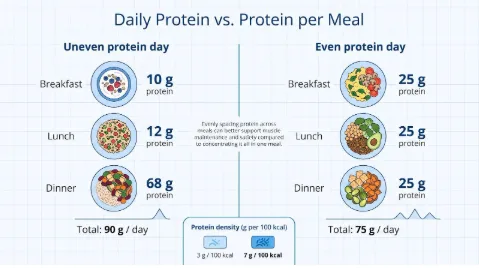
A plan can boast 90 g protein per day yet still leave you with only 10 g at breakfast and 12 g at lunch. We set a higher bar:
- Total protein. We logged how many grams each plan supplies over 24 hours.
- Per-meal balance. We checked that breakfast, lunch, and dinner each land near 25 g. Plans meeting both marks rose in the ranking; plans that cram half the day’s protein into one smoothie dropped.
Why even spacing matters
The Academy of Nutrition and Dietetics reports that adults absorb and use protein more effectively when it is spread across the day, not delivered in one large dose. Even spacing also helps curb late-night snacking and protects lean tissue during weight loss.
Why we also track protein density
We record protein density (grams of protein per 100 calories). Meals with at least 5 g per 100 kcal deliver muscle-supporting amino acids without extra energy, so they earn the highest scores in our rubric.
1. Eat This Much – best overall for precise calories and macros
Plan snapshot
Select Vegetarian, 1,500 calories in the Eat This Much app and a seven-day menu appears: 1,495 kcal, 108 g protein, 168 g carbs on average, with about 25 g protein at breakfast, lunch, and dinner.
Groceries for the week land in the $56 to $91 range depending on your store and region. App access ranges from free to about $5 per month on an annual subscription; month-to-month costs more. Most meals need 10–20 active minutes, and a leftovers toggle cuts weekday cooking.
The generator builds the template from your macro targets rather than from a dietitian-written menu, so treat it as a precision tool rather than clinical advice; you can still adjust allergens, swap ingredients, or limit store trips. For readers who want macro precision without spreadsheet work, Eat This Much leads the pack.
2. EatingWell – best free dietitian-designed plan
Plan snapshot
EatingWell’s seven-day vegetarian menu proves you can hit ≥ 80 g protein and ≥ 30 g fiber a day without a subscription fee. The base version lands around 1,800 kcal; built-in swaps trim it to 1,500 kcal or raise it to 2,000 kcal.
Average meal split: breakfast 24 g, lunch 27 g, dinner 29 g protein. Recipes focus on whole foods – edamame-quinoa bowls, sheet-pan tofu fajitas, Greek-yogurt parfaits – and each carries an ESHA-verified nutrition panel.
Estimated groceries run $56–$91 for the week. Most mains finish in ≤ 30 minutes; planned leftovers turn weeknights into 10-minute reheat sessions. If you want solid macros, high fiber, and zero platform cost, this plan delivers.
3. Hurry The Food Up – best budget meal-prep plan
Plan snapshot
The free seven-day PDF from Hurry The Food Up lands at 1,458–1,483 kcal and supplies 84–93 g protein plus ≥ 30 g fiber each day, counting the optional shake.
A test cart built around lentils, chickpeas, oats, and frozen vegetables comes in near $42 for the week at a discount grocer. The grocery list is grouped by aisle, so you spend less time shopping and more time batch-cooking.
Protein breakdown: breakfast 18–24 g, lunch ≥ 20 g, dinner ≈ 22 g, with an optional 23 g shake. Skip the powder and you still clear roughly 70 g whole-food protein while saving a few dollars.
Active prep takes 20–25 minutes on batch days, then falls to 5 minutes for reheat-and-assemble meals. Each recipe lists macros per serving, so nutrition math is done for you.
For students, new grads, or anyone counting every dollar, this plan shows you can meet solid protein targets and keep calories in check without straining the food budget.
4. Mayo Clinic Diet – best for clinical and behavior support
Plan snapshot
The Mayo Clinic Diet’s vegetarian path is a six-week, app-based program blending recipe swaps, grocery lists, habit coaching, and daily trackers. A sample day lands at 1,371 kcal and 58 g protein; built-in tools let you raise meals toward about 1,500 kcal and 75 g protein.
Why it stands out
- Behavior science first. Progress charts and habit prompts reinforce meal timing, mindful eating, and daily movement.
- Clinical oversight. Registered dietitians and Mayo physicians review every update; a higher-protein, lower-volume option supports GLP-1 users.
- Transparent pricing. Membership is $49.99 per month if you pay month to month, and drops to $17 per month on the six-month plan or $12 per month on the 12-month plan, both paid upfront. Food costs mirror standard groceries, in the range of $9 to $14 per day.
Prep and flexibility
Dinners such as cauliflower-lentil curry take 25–35 active minutes; breakfasts and lunches usually need under 15 minutes. “Make It Easy” swaps – Greek yogurt for pancakes, for example – trim time even further.
For readers who want medically reviewed structure plus behavior coaching, Mayo offers credibility no static meal plan can match, even if its default protein trails the triple-digit leaders.
5. Seattle Sutton – best no-cook vegetarian plan
Plan snapshot
Seattle Sutton ships three chilled vegetarian meals per day – heat and eat. The 1,200-calorie track averages about 63 g protein and 1,550 mg sodium across breakfast, lunch, and dinner. The 2,000-calorie tier ups portions while keeping the same weekly menu.
Cost and convenience
Meals cost around $24 per day before local delivery fees. While pricier than cooking at home, the price aligns with other prepared services and eliminates food waste and dishwashing.
Texture and tracking
Most entrées – egg bites, lentil-sweet-potato stew, ricotta-spinach lasagna – are fork-tender. Macros appear on every label, and customer support can flag upcoming crunchy dishes if you need soft foods after dental work.
Trade-offs
Protein density trails our top three DIY plans, and menu choice is limited to the weekly shipment. Still, for readers who want portion-controlled, dietitian-designed meals with zero kitchen time, Seattle Sutton offers predictable simplicity at a set price.
6. Strongr Fastr – best for fitness-focused automation
Plan snapshot
Set Strongr Fastr to 1,500 kcal, vegetarian, high protein and the generator delivers a seven-day menu plus grocery list. A sample week averages 1,512 kcal, 110 g protein, and 34 g fiber – roughly 25 g protein at each main meal.
Cost and prep
Estimated groceries land between $56 and $91 for the week. Premium access runs about $18 per month on the three-month plan, or about $7 per month billed annually, after a short free trial. Recipes are fast: 15-minute tofu scrambles, chickpea jar salads, and one-pan veggie frittatas.
Training-friendly extras
- Carb timing adjusts around logged workouts
- Optional creatine and supplement reminders
- In-app lifting library syncs with the meal plan
Watch-outs
You must export the plan to view exact macros, and nutrient accuracy can vary with user-selected ingredients – spot-check labels before you buy. Still, if you want a meal plan that flexes with your training calendar, Strongr Fastr supplies automation no spreadsheet can match.
Head-to-head comparison
| Plan | Protein / day | Calories (sample) | Protein density (g / 100 kcal) |
| Eat This Much | 108 g | 1,495 | 7.2 |
| Strongr Fastr | 110 g | 1,512 | 7.3 |
| Hurry The Food Up* | 93 g | 1,480 | 6.3 |
| EatingWell | 80 g | 1,800 | 4.4 |
| Mayo Clinic Diet | 58 g | 1,371 | 4.2 |
| Seattle Sutton | 63 g | 1,200 | 5.3 |
*About 70 g if you skip the optional shake.
What the numbers mean
- Eat This Much and Strongr Fastr top 100 g protein and deliver more than 7 g per 100 kcal, helpful for lifters or anyone on a tight calorie budget.
- Hurry The Food Up reaches the low 90s with its shake yet still clears 70 g on whole foods alone, keeping costs low.
- EatingWell pairs 80 g protein with 30 g fiber, a mix many readers value for fullness.
- Mayo and Seattle Sutton provide lower protein but add clinical coaching or zero prep. If convenience or medical oversight matters more than triple-digit protein, they remain solid picks.
Conclusion
Protein is a key tiebreaker, but the ideal plan still hinges on calories, fiber, cost, prep time, and clinical needs. If you want the tightest macro control, start with Eat This Much or Strongr Fastr; if you want a menu you can cook from this week without paying a platform fee, EatingWell and Hurry The Food Up both clear the protein bar for free. Pick the plan whose weakest column you can live with, run it for a full seven days, and check your own totals against the head-to-head table above before you commit to a subscription.