Can Puppies Go Swimming – What Owners Should Know Before the First Session
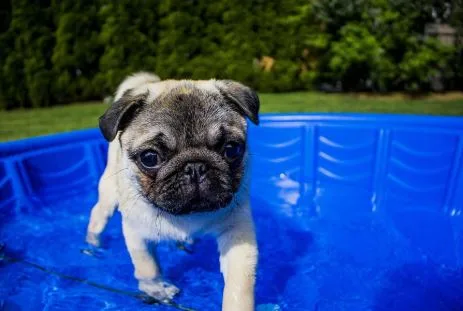
There is a persistent myth that every dog is a natural swimmer, and that puppies especially will simply paddle off the moment their paws touch water. Some do. Plenty do not, and a puppy’s first experience of water often shapes how they feel about it for years afterwards. Getting the basics right matters more than most owners expect, particularly when the dog in question is only a few months old and still working out what its own legs are for on dry land, let alone in a pool.
Age and health status are the two things to settle before anything else. There is no single magic number at which a puppy becomes “ready” for water, because it depends on breed, size, temperament and general development, but most puppies are better off waiting until their core vaccination course is complete and their vet has given a straightforward go-ahead. This is not about being overly cautious for its own sake. Puppies are still building their immune protection in those early months, and a facility used by other dogs is a shared environment, however clean and well run. A quick conversation with your own vet, who knows your puppy’s history, breed predispositions and any joint or growth concerns, is the sensible starting point rather than an afterthought. This applies just as much to a boisterous ten-week-old as it does to a breed with known early orthopaedic considerations, where a vet’s input on timing is genuinely useful rather than optional.
The cost of rushing things
Owners keen to tick “swimming” off the list of puppy experiences sometimes push a young dog into water before it has any interest in going there, on the theory that early exposure builds confidence. In practice the opposite often happens. A puppy that is picked up and lowered into a pool against its instincts, or chased in by an eager owner, is more likely to associate water with a loss of control than with fun, and that first bad memory can be sticky. A far more reliable route is to let curiosity do the work: a puppy that is allowed to approach water on its own terms, sniff it, dip a paw in, and retreat if it wants to, is building a genuinely positive association rather than a tolerated one. Confidence built this way tends to last; confidence forced tends to collapse the moment something startles the dog.
This is one of several reasons a controlled, warm, indoor pool is such a different proposition from a lake, river or the sea, where cold water and unpredictable conditions take the pace of the introduction out of anyone’s hands. An indoor pool kept at a steady, comfortable temperature removes several variables at once: there is no shock of cold, no current pulling the puppy somewhere it did not choose to go, and a controlled space that a handler can shape around what the individual puppy needs that day. It is a much easier environment in which to read a puppy’s body language and adjust accordingly, which matters more in the early sessions than owners often realise.
A puppy’s stamina in water is genuinely limited, since swimming uses muscles a young dog has not built up yet, so a first outing is best kept short and padded out with calm time at the poolside, ideally with a well-fitted buoyancy aid so the puppy can focus on the feel of moving through water rather than on staying afloat.
Letting the puppy set the pace
The single most useful thing an owner can do in that first session is resist the urge to hurry things along. If a puppy wants to spend the first several minutes simply standing at the water’s edge, that is time well spent, not time wasted. Some puppies will wade in within a minute or two; others need the better part of a session just to feel settled being near the water at all, with actual swimming coming the next visit, or the one after. Hounds & Waves, a private dog pool in Swindon, is being built with exactly this kind of unhurried first session in mind, and when it opens the aim will be a pace set by the puppy rather than the clock: unhurried, low-pressure, and led throughout by what the dog is showing you, with an owner in the water alongside rather than calling instructions from the side.
It is also worth being honest that not every puppy takes to water quickly, and a handful never become especially enthusiastic swimmers at all, whatever the breed reputation might suggest. That is a perfectly normal outcome, not a failure on the owner’s part or a sign that something needs fixing. A calm, patient, no-drama first exposure, with the vet conversation done beforehand and no pressure to perform on cue, gives a puppy the best possible chance of enjoying water on its own terms, whether that turns into an enthusiastic hobby or simply a pleasant occasional outing later in life.