How a Smart Piano Can Make Learning Music More Interactive and Enjoyable
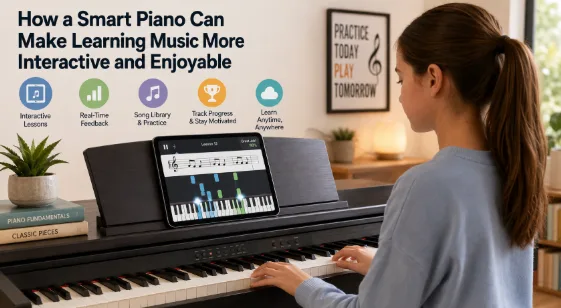
Learning the piano has traditionally required a combination of regular practice, printed sheet music, and guidance from a teacher. While these methods remain valuable, modern technology is creating new ways for people to develop their musical skills. Digital instruments are becoming more interactive, connected, and accessible, giving both beginners and experienced musicians additional tools to support their practice.
One of the most interesting developments in this space is the smart piano. By combining the familiar experience of playing a piano with digital learning features, app connectivity, and interactive technology, smart pianos can make music practice more engaging for today’s learners.
What Is a Smart Piano?
A smart piano is a digital instrument designed to provide more than conventional piano sounds and controls. Depending on the model and supporting software, it may connect with mobile devices and applications that provide lessons, practice exercises, song libraries, or other interactive learning tools.
This combination of an instrument and digital learning environment can be particularly useful for beginners. Instead of relying entirely on books or independent trial and error, learners can use technology to add more structure to their practice sessions.
At the same time, smart pianos can still provide features that more experienced players expect from a modern digital instrument, making them suitable for a wide range of users.
Why Technology Is Changing Piano Learning
Digital technology has transformed how people learn almost every skill. Language learners use interactive applications, students attend online classes, and musicians have access to digital sheet music, tutorials, recording software, and practice tools.
Piano education is following the same direction.
Traditional lessons often require students to wait until their next session to receive feedback or new instructions. Digital learning tools can complement those lessons by providing additional material between sessions. A learner can practice songs, repeat exercises, and explore new musical concepts at a convenient pace.
This does not necessarily replace professional teaching. Instead, technology can become another resource within a broader learning routine.
Making Practice More Engaging for Beginners
Consistency is one of the biggest challenges when learning an instrument. New players may initially feel enthusiastic but lose motivation when exercises become repetitive or progress feels slow.
Interactive learning features can help make practice sessions feel more engaging. Visual guidance, digital exercises, song-based learning, and connected applications can introduce variety into a learner’s routine.
For younger students, this interactive approach may also make the piano feel more approachable. Rather than viewing practice only as a formal lesson, they can experience it as an activity that combines music with familiar digital technology.
Adults learning independently can benefit as well. Someone with a busy schedule may prefer short practice sessions supported by an app instead of following a rigid lesson timetable.
The Convenience of App Connectivity
Connectivity is an important part of many modern digital instruments. Compatible applications can provide access to educational content and additional practice resources directly through a smartphone or tablet.
This creates a more integrated learning environment. Instead of keeping separate lesson books, song sheets, and practice notes, learners may be able to access various resources through connected digital tools.
App-based learning can also make it easier to explore different songs and exercises. Beginners can gradually move from basic concepts toward more challenging material as their confidence develops.
The exact features vary between instruments and applications, so buyers should always review compatibility and available functionality before choosing a piano.
A Practical Choice for Home Musicians
Acoustic pianos can be beautiful instruments, but they are not practical for every household. They can require considerable space, regular tuning, and careful placement.
Digital pianos offer a different approach. Many models are designed with home use in mind and can provide piano-style playing without some of the maintenance associated with acoustic instruments.
For learners who want a more traditional furniture-style setup, an upright digital piano can combine the familiar appearance of an upright instrument with modern digital functionality. This makes it an option worth considering for dedicated practice rooms, living spaces, and home learning environments.
Learning at Your Own Pace
Every piano learner progresses differently. Some students quickly understand basic chords but need additional time with rhythm. Others may read music confidently while struggling with coordination between their hands.
Digital learning systems can support this variation by allowing users to repeat exercises as often as necessary.
There is no pressure to keep up with a classroom. Learners can revisit difficult sections, slow down their practice, and spend more time on specific skills before moving forward.
This flexibility can be especially useful for adults returning to music after many years. Someone who played piano during childhood, for example, may want to refresh basic techniques before progressing to more advanced material.
Smart Features Can Complement Piano Teachers
Technology and traditional piano instruction do not have to compete.
A qualified teacher can provide detailed feedback on posture, technique, interpretation, musical expression, and long-term development. These are areas where personal instruction remains extremely valuable.
Smart learning tools can complement this guidance by helping students stay active between lessons. A teacher might introduce a concept during a weekly session, while the student uses digital resources to practice that concept throughout the rest of the week.
This combination can create a more consistent learning routine.
Features to Consider When Choosing a Digital Piano
Not every digital piano is designed for the same type of player. Before purchasing an instrument, buyers should consider how and where they intend to use it.
Keyboard feel is one important factor. Players who want an experience closer to an acoustic piano may prefer weighted keys. Sound quality, speaker performance, connectivity, available learning features, physical dimensions, and portability can also influence the decision.
Beginners may place greater emphasis on accessible learning functions, while experienced musicians might prioritize keyboard response, sound options, recording capabilities, or connectivity with other music equipment.
The ideal instrument is therefore not necessarily the one with the longest feature list. It is the one whose features match the player’s actual goals.
Creating a Better Practice Environment
Buying a piano is only one part of learning music. The surrounding practice environment can also influence progress.
A comfortable bench, suitable instrument height, proper lighting, and a relatively distraction-free space can make regular practice easier. Setting achievable goals is equally important.
Rather than attempting to practice for several hours occasionally, beginners may benefit from shorter but more consistent sessions. Even a focused daily routine can help reinforce coordination, note recognition, rhythm, and muscle memory.
Technology can then be used as a supporting tool rather than a distraction.
Digital Instruments Are Expanding Access to Music
One of the broader benefits of digital music technology is accessibility. Learners today have access to educational resources that would have been difficult to obtain only a few decades ago.
Online lessons, interactive applications, digital sheet music, video demonstrations, and connected instruments allow people to explore music regardless of whether they have immediate access to a traditional music school.
This is particularly valuable for self-directed learners.
A motivated beginner can now combine structured lessons, independent practice, online educational resources, and smart instrument features to create a personalized learning experience.
Finding the Right Balance Between Technology and Practice
Smart technology can make piano learning more convenient and interactive, but progress still depends on consistent practice. No application or digital feature can completely replace the time required to develop coordination, rhythm, listening skills, and musical understanding.
The most effective approach is to treat technology as a learning assistant.
Interactive features can provide structure and motivation, while regular practice develops the physical and musical skills required to become a confident player. Traditional instruction, when available, can add another valuable layer of guidance.
As digital instruments continue to evolve, the boundary between the piano and the learning platform is becoming increasingly connected. For modern learners, this combination offers a flexible way to explore music, build confidence, and make regular piano practice a more engaging part of everyday life.