AI Video Marketing in 2026: How Brands Turn Product Pages Into Scalable Campaigns
Short-form video has become one of the fastest ways for a brand to explain a product, test a message, and reach buyers across multiple channels. The challenge is no longer simply producing one polished commercial. Marketing teams now need a steady stream of variations for social feeds, landing pages, paid ads, email campaigns, and marketplace listings. That demand changes the production model. Instead of treating every video as a separate creative project, effective teams build a repeatable system that starts with reliable product information and turns it into many focused assets.
Start With the Product Page, Not a Blank Document
A strong workflow begins with the information a buyer can already verify: the product name, main benefit, use cases, visual identity, pricing context, and proof points. Product pages often contain most of the raw material needed for a useful campaign. The creative team should extract those facts before writing a script. This reduces vague claims and keeps the message aligned with what customers will see after they click. It also gives writers a stable source of truth when they create different hooks for different audiences.
The next step is to separate features from outcomes. A feature describes what the product does, while an outcome explains why that capability matters. A compact device, for example, may matter because it fits a small workspace or travels easily. A faster workflow may matter because a business can respond to trends without waiting for a long production cycle. Turning features into outcomes helps a video feel useful rather than promotional. Each outcome can then become its own short creative angle.
Build a Modular Script
Scalable campaigns use scripts made from interchangeable parts. A practical structure includes a hook, a problem, a demonstration, a proof point, and a clear next action. Teams can write three hooks, two problem statements, two demonstrations, and two calls to action, then combine them into multiple versions. The resulting videos remain consistent while giving the media team enough variety to test. Modular writing also makes approvals easier because reviewers can evaluate individual claims and scenes instead of repeatedly reviewing an entirely new concept.
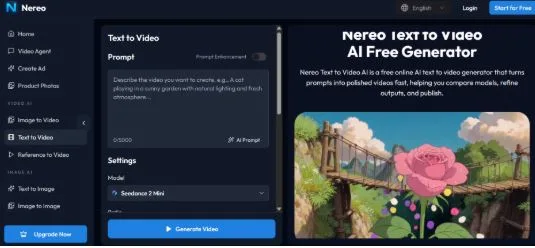
Once the message blocks are approved, a text to video workflow can convert them into visual drafts without forcing the team to rebuild every scene from scratch. This is especially useful in the middle of a campaign, when early performance data shows that a new opening, format, or product benefit deserves testing. The goal is not to automate judgment. It is to shorten the path between a useful marketing idea and a version that can be reviewed, refined, and distributed.
Design for the Channel
A video that works on a product page may not work in a social feed. Channel context affects aspect ratio, pacing, text size, sound strategy, and the amount of explanation a viewer needs. Vertical videos usually need a clear first frame and readable captions. Marketplace assets often benefit from direct product demonstrations. Landing-page videos can spend more time on context because the viewer has already shown interest. Teams should define these requirements before generation so that resizing does not become an afterthought.
Brand consistency should be treated as a system rather than a final visual check. Create a small campaign kit containing approved colors, typography, logo placement rules, product images, prohibited claims, pronunciation notes, and preferred calls to action. Every new version should draw from that kit. Consistent inputs help prevent visual drift when multiple people or tools contribute. They also make it easier to compare results because each variation changes a deliberate creative variable instead of changing the entire identity of the campaign.
Use AI as a Production Layer
Platforms such as Nereo can support the production layer by helping teams turn product information and approved messaging into campaign-ready video concepts. The best results still depend on careful inputs. Marketers should provide a precise audience, a single main promise, concrete visual references, and a clear destination for the viewer. A generation tool can accelerate execution, but it cannot decide which customer problem is most important or whether a claim is supported by the product experience.
Human review remains essential at three points. First, verify every factual statement, price, and product capability. Second, check whether the visuals represent the product accurately and respect usage rights. Third, review the final asset in the context where it will appear. Captions may be readable on a desktop preview but too small on a phone. A call to action may sound clear in isolation but feel abrupt after a shorter edit. These checks protect both campaign quality and audience trust.
Measure Creative Variables, Not Just Videos
Campaign analysis becomes more useful when each variation has a reason to exist. Label versions by hook, benefit, proof type, visual style, and call to action. Then compare results at the variable level. A team may discover that demonstration-led openings perform better than abstract statements, or that customer-outcome language earns more qualified clicks than feature-heavy copy. This approach produces knowledge that can improve the next campaign instead of merely identifying one winning file.
Choose metrics that match the purpose of the video. Reach and view rate help evaluate the opening. Completion rate helps assess pacing and clarity. Click-through rate shows whether the message creates interest, while conversion rate tests the relationship between the creative and the destination page. No single metric explains everything. A high view rate with weak conversions may indicate an entertaining hook that attracts the wrong audience. A lower view rate with stronger conversions may signal a narrower but more relevant message.
A Practical 30-Day Operating Rhythm
In week one, collect product facts, audience questions, existing creative, and brand rules. In week two, produce a small set of modular scripts and visual directions. In week three, launch controlled variations across the highest-priority channels. In week four, review performance, document what changed, and prepare the next batch based on evidence. The team should keep the number of variables manageable. Testing ten unrelated concepts at once creates activity, but it rarely creates clear learning.
The most valuable outcome of an AI-assisted video program is not simply faster production. It is a dependable creative system. Product information becomes structured input, scripts become reusable modules, brand rules become production guardrails, and campaign results become guidance for the next cycle. With that foundation, teams can create more variations without losing accuracy or coherence. Speed matters, but sustainable scale comes from combining faster tools with disciplined messaging, human review, and measurement that leads to better decisions.