Solve the Meaningful Gift Problem With Birthstone Jewelry
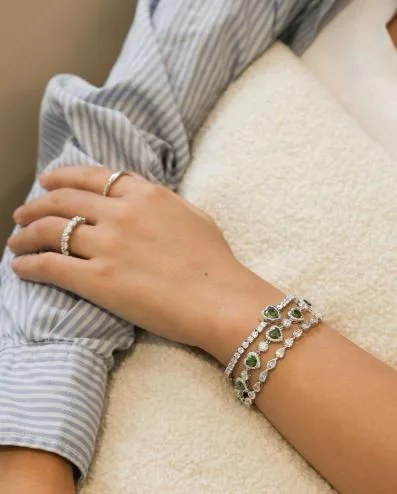
Gift giving has a specific failure mode. You want the piece to feel personal, but you also want it to be genuinely wearable. You want it to say something without feeling like a memorial plaque. The problem is that most personalized gifts solve one side and lose the other. Engraved dates feel meaningful until they clash with everything else in the recipient’s jewelry drawer. Trend pieces feel wearable until the trend fades and the sentiment fades with it.
Birthstones sit in a rare middle position. They carry personal meaning by definition, because the stone is tied to the month of birth, and they slot into daily wardrobes without demanding explanation. A sapphire pendant reads as a sapphire pendant to anyone who sees it. The wearer knows it also represents September. That dual life, quietly meaningful and outwardly stylish, is why birthstones keep solving the gift problem when other approaches stall. This piece walks through why the format works, how to choose well for different recipients, and how to make the gift feel considered rather than templated.
Why the Birth Month Connection Still Works
The appeal of birth-month stones is that they translate a personal fact into an object without needing text, initials, or dates carved onto anything. That makes the piece easier to wear across contexts. A stone reads as decoration first and biography second, which is exactly the balance most recipients actually want in a gift they will wear repeatedly.
Choosing birthstone jewelry also solves a decision paralysis problem. Instead of scanning hundreds of unrelated designs, you start with a stone that is already chosen for you, then narrow by setting, metal, and silhouette. The reduced field makes it far easier to land on something the recipient will actually wear rather than something that looks impressive in the box and then disappears into a drawer.
There is also a low reveal cost. Recipients do not need to explain the stone to anyone. They know why it is theirs, and that quiet knowing is enough. In an age where personalization often means broadcasting personal information, understated symbolism reads as refined rather than performative.
Matching the Stone to the Person
Getting the stone right is half of the gift. Getting the setting right is the other half. Both require thinking about the recipient’s actual lifestyle rather than the version of them that lives in your imagination.
Reading Their Everyday Style
Watch what they already wear for a week. If they lean toward warm metals, do not gift cool. If their pieces are consistently minimal, a heavy statement setting will sit unused. If they wear color, they will welcome a saturated stone. If their palette runs neutral, a paler stone or a bezel setting that mutes the color reads more comfortably to them. The birthstone connection carries the emotional weight, so the physical piece needs to disappear into their existing rotation rather than fight it.
Pay attention to the pieces that get worn most, not the pieces they own. Owned but unworn tells you what feels like a gift misfire. Worn daily tells you what actually works on their body and in their life. That distinction is worth an extra day of observation before deciding.
Choosing the Right Format
Format matters more than most gift givers realize. A pendant works for someone who wears necklaces daily but ignores rings. A ring is the wrong call for a nurse, a chef, or anyone whose work involves gloves. Studs are among the safest formats because they suit almost any face and any workplace, and they layer with existing earrings without needing to become the star. Bracelets carry a specific consideration: sizing matters, and the piece will be visible to the wearer constantly, so make sure the stone is set securely and the closure will hold up to daily flexion.
When to Give and How to Present
Stones tied to birth months invite one obvious occasion, but they are surprisingly flexible beyond it. Birthdays are the default. Anniversaries work well when the stone marks a shared moment, such as the birth month of a child. Graduation gifts land beautifully because the piece bridges the family a graduate is leaving and the independent life they are entering. Even bereavement gifts, when handled with restraint, use a lost loved one’s birth stone to give the recipient something wearable rather than shelved.
Presentation shapes reception. A piece thrown into a paper bag feels casual regardless of price. A well-lined box, a short handwritten note that names the connection you were thinking about, and a moment of privacy for the opening turn even a modest piece into a keepsake. If the recipient is far away, prioritize a jeweler that packs properly and includes a card option rather than shipping in bare polymail.
Making the Gift Feel Personal Rather Than Templated
The risk with any personalized category is that it starts to feel formulaic. Everyone born in July eventually receives a ruby of some kind. The difference between a memorable gift and a forgettable one is the layer of intention on top of the base template.
Consider layering meaning. A pendant that combines the recipient’s stone with the stone of a person they love, such as a parent, child, or partner, adds narrative depth beyond a single-stone gift. This works especially well for parents receiving children’s stones and for grandparents marking new arrivals. The recipient’s stone anchors the piece to them, while the second stone tells a specific relational story. FANCI and other jewelers who specialize in birthstone work often offer this multi-stone customization at a modest premium over single-stone pieces, and the resulting piece tends to become a long-term wardrobe staple rather than a one-birthday memory.
Think about the setting as part of the message. A halo setting reads celebratory and feels right for milestones. A bezel setting reads modern and works for practical daily wearers. A tension or floating setting reads architectural and suits recipients whose taste leans design forward. The stone chooses itself; the setting is where you actually get to express how well you know the person.
Finally, avoid over-explaining the gift when you hand it over. The stone speaks for itself. A short sentence about what the piece marks is enough. Long explanations usually mean the piece is doing less symbolic work than the note is trying to do, which is a signal to reconsider the piece rather than pad the presentation.
Turning a Birth Month Into a Wearable Object
The reason this category keeps working is structural. It gives you a starting point that is already personal, a wide enough design field to match any style, and a symbol that the wearer can carry without needing to explain. That combination is unusual in personalized gifting, and it is why birth-month pieces continue to show up at birthdays, anniversaries, graduations, and quieter transitions where a card would fall short.
The practical takeaway is straightforward. Observe the recipient’s real style rather than the imagined one, choose a format that fits their daily life, and let the setting carry the layer of personal intention that the stone alone cannot express. Do those three things well and the piece stops being a category gift and starts being their piece. That is the shift that turns a well-intentioned present into something they still reach for years after the wrapping is gone.