The Portable Red Light Therapy Panel Built for Real Life
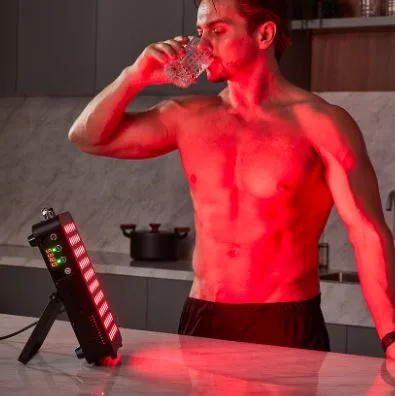
The market for red light devices has spent the last few years pushing in two opposite directions at once. On one end, ever larger full-body panels aimed at users who can dedicate a wall to the modality. On the other, tiny handheld wands that fit in a drawer but treat only a small patch of skin at a time. In the middle sits a category that gets less attention than it deserves: the compact panel that produces genuine therapeutic output while still fitting into a suitcase, an apartment closet, or the corner of a hotel room desk.
This piece is aimed at three specific readers. The frequent traveler who does not want a weekly consulting trip to break a wellness protocol that took months to build. The renter with limited square footage who cannot mount a permanent panel to a shared wall. The multi-user household where the device has to circulate between rooms without becoming a moving hazard. All three want the same thing under different labels: a panel that carries the specifications of a serious device without demanding the footprint of one. The section below describes what that middle path actually looks like when the marketing filler is stripped away.
What Portability Should Not Cost You
The temptation with a compact device is to accept trade-offs that would be dealbreakers on a wall-mounted unit. Buyers rationalize a weaker specification sheet because the panel is small, then wonder six months later why the results feel underwhelming. A well-designed portable red light therapy panel does not force that compromise. The same clinical wavelengths, the same working-distance irradiance targets, and the same beam angle discipline apply whether the housing weighs three pounds or thirty.
Wavelength Integrity in a Compact Housing
Compact panels sometimes cut corners by using cheaper LEDs whose spectral output drifts wider than the label implies. The clinical evidence for red light rests on specific wavelength bands, and a “660 nanometer” LED that actually emits a broad hump centered somewhere near 650 is not delivering the same photons as a tightly binned emitter. Reading the specification sheet for actual wavelength tolerance separates disciplined portable devices from oversized flashlights. The compact form factor is a housing choice, not a license to substitute inferior emitters.
Working-Distance Irradiance in a Smaller Footprint
Smaller panels concentrate their output over a smaller surface. That works in the user’s favor as long as the emitter density and driver current stay serious. A well-engineered compact device can deliver working-distance irradiance in the 80 to 120 milliwatt per square centimeter range at six inches, which is the working zone where session length can stay reasonable. Devices whose specifications only look impressive at contact distance and collapse to a fraction of that number at working distance are optimizing for a benchmark rather than actual use.
Where Compact Panels Genuinely Outperform
Portability is not just a compromise. There are scenarios where a compact panel beats a larger one on measurable grounds, and understanding those scenarios helps buyers stop apologizing for the format.
Targeted Sessions Without a Permanent Setup
Full-body panels are optimized for whole-body exposure, which is the wrong tool if the goal is a concentrated session on a shoulder, a knee, or the lower back. A compact panel positioned six inches from the target tissue delivers a clean therapeutic dose to the specific area without the setup overhead of standing in front of a large panel and rotating for balance. For localized recovery use, the compact format is genuinely the better choice, not the settling-for choice.
Travel Continuity for a Real Protocol
Any modality that requires three to five weekly sessions to produce cumulative effects breaks when travel forces a two-week pause. A compact panel that fits into a carry-on bag with room to spare turns those two weeks from a compliance gap into an uninterrupted continuation. The mental math on whether to bring the device gets easier once the panel is designed with dimensions that fit standard luggage rather than requiring a separate case.
Household Circulation Between Users
In households where more than one person uses the modality, a heavy wall-mounted panel forces everyone to converge on the same room at the same time. A portable panel that lives on a rolling stand or in a lightweight case moves with the user. Two people can run sessions in separate rooms in the same evening, which does not sound like a big deal until the schedule has to survive a busy week that would otherwise force one user to skip.
Choosing the Right Compact Panel
Not every device sold as portable actually earns the label. Some are just underpowered small devices; others are heavy enough to be uncomfortable to move regularly. A clear checklist helps separate the genuine candidates from the marginal ones before the purchase decision has to happen under time pressure.
Weight Below the Practical Threshold
A panel that weighs more than about eight pounds stops being portable in any meaningful sense, regardless of what the marketing calls it. Weight becomes a friction point that discourages daily repositioning. The best portable devices land in a range where a user can carry the panel one-handed to a different room or lift it into a bag without deliberation. BestQool designs the BQ60 with this practical threshold in mind rather than optimizing purely for output on the specification sheet.
Stand and Mounting Flexibility
A useful compact panel supports multiple positioning options: a desktop stand for seated sessions, a tripod thread for photography-style mounting, and a door hook or over-the-door bracket for vertical use. Buyers who assume they will only ever use the panel one way underestimate how often the ideal position shifts based on which body area is being treated. A device that only stands upright on a table forces the user to contort around it rather than the other way around.
Thermal Behavior Across a Full Session
Compact panels have less surface area for passive cooling, so thermal design becomes disproportionately important. A device that cannot sustain full output for the length of a normal ten-to-fifteen-minute session is not delivering the dose the specification sheet implies. Reading reviews for reports of thermal throttling or fan noise across long sessions tells you more about real-world performance than the peak-output number ever will. Well-engineered portable devices sustain their rated output for the full session length without becoming uncomfortably loud.
Cable and Power Considerations
Universal voltage support is not decorative on a device marketed for travel. A panel that only accepts 110 volts becomes a paperweight in most of the world. A detachable, standard power cable is easier to replace than a captive one, and USB-C powered devices open up the possibility of running short sessions from a portable power bank in situations where wall outlets are inconvenient. These are small details that add up when the device is actually used in the varied environments the label promises.
The Practical Middle Path in Red Light Devices
The narrative around red light devices has been dominated by two extremes for long enough that the sensible middle option has been treated as an afterthought. In reality, a well-built compact panel is the right device for a large portion of actual users. It supports targeted sessions without requiring a spare wall. It travels without breaking the protocol. It moves between rooms and users in ways a mounted panel cannot. The trick is not to accept a compact device as a downgrade, but to require the same wavelength discipline, working-distance irradiance, thermal management, and mounting flexibility that would be expected on any serious panel. Users who apply those criteria find that the compact format quietly outperforms both the oversized panel gathering dust in a spare room and the underpowered wand that never really produced results. The best red light device is the one that gets used consistently, and portability is the specification that most directly determines whether a protocol survives a real life.