Doosan DEF Delete Solutions for Common Emissions System Problems
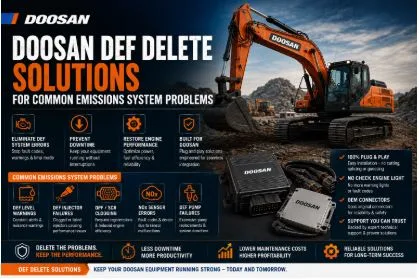
Modern Doosan diesel equipment uses several emissions control technologies to reduce harmful exhaust gases. Among these systems, diesel exhaust fluid, commonly called DEF, plays an important role in reducing nitrogen oxide emissions. When problems develop with the DEF system, equipment owners may start searching for terms such as doosan def delete while looking for ways to avoid warning lights, performance restrictions, or expensive repairs.
Before making any decision, it is important to understand what the DEF system does, why faults occur, and what risks can come with removing or disabling emissions equipment. A DEF related problem is often a symptom of a faulty sensor, contaminated fluid, damaged wiring, a pump issue, a dosing problem, or another component that can potentially be diagnosed and repaired.
What Is the Doosan DEF System?
The Doosan DEF system is part of the emissions control equipment installed on many modern diesel machines. DEF is a liquid made primarily from urea and deionized water. It is injected into the exhaust stream through a selective catalytic reduction, or SCR, system.
The purpose of the SCR system is to reduce nitrogen oxide emissions produced during diesel combustion. Inside the exhaust system, the DEF reacts with nitrogen oxide gases and helps convert them into nitrogen and water vapor.
This process allows modern diesel equipment to meet applicable emissions requirements while continuing to use diesel engines for demanding applications.
Because the system depends on several electronic and mechanical components working together, a fault in one part can trigger warning messages or machine restrictions.
Why Do Owners Search for Doosan DEF Delete Options?
A search for doosan def delete can happen when an operator experiences repeated DEF warnings or expensive repair estimates. Equipment that works in demanding environments may also suffer from contamination, wiring damage, crystallization, sensor failures, or problems caused by improper storage of DEF.
Some owners may believe that removing the system will permanently solve these issues. However, disabling an emissions control system can create legal, operational, warranty, inspection, and reliability concerns.
A better first step is to determine what caused the original fault.
For example, a warning related to DEF does not automatically mean that the DEF tank itself is defective. The issue could involve a temperature sensor, quality sensor, level sensor, dosing module, pump, injector, wiring harness, control module, or SCR component.
Common Doosan DEF Problems
Several issues can affect the performance of a DEF system.
Contaminated DEF
DEF has specific quality requirements. Diesel fuel, hydraulic fluid, dirt, or other substances entering the DEF tank can cause serious problems. Even small amounts of contamination may affect sensors and other components.
Operators should use suitable DEF from a reliable source and keep storage containers clean. DEF should also be stored according to the manufacturer’s recommendations.
DEF Crystallization
When DEF dries, it can leave behind white crystalline deposits. These deposits may appear around connections, dosing components, or the exhaust injection area.
Crystallization can interfere with proper fluid delivery. If deposits are visible, the underlying cause should be investigated rather than simply treating the visible residue.
Sensor Failures
The electronic monitoring system relies on sensors to measure conditions such as fluid level, temperature, quality, and exhaust characteristics. A faulty sensor can create a warning even when another component is functioning normally.
Accurate diagnostic testing is therefore important before replacing expensive parts.
Pump and Dosing Problems
The DEF pump and dosing equipment have to deliver the correct amount of fluid under specific operating conditions. A failure in this area can cause warning codes and may eventually result in reduced machine operation.
Checking the system according to the appropriate service procedures can help identify whether the issue involves the pump, electrical supply, injector, pressure, or another component.
What Is the SCR System?
The Doosan SCR system is the part of the emissions system responsible for the chemical treatment of exhaust gases using DEF.
SCR technology is widely used in modern diesel equipment because it can significantly reduce nitrogen oxide emissions. The system works together with sensors, a DEF delivery system, an injector, and a catalytic component.
When a fault appears, several parts may be involved. This is one reason why replacing components without proper diagnosis can become expensive.
A machine displaying an emissions warning should be treated as a diagnostic issue rather than immediately assuming that the entire system needs replacement.
Risks Associated With a DEF Delete
Searching for doosan def delete information can lead to methods intended to disable emissions controls. Providing instructions for bypassing or defeating those systems is not a responsible approach because emissions equipment exists to meet regulatory requirements.
Removing or disabling emissions controls may create several problems.
First, local regulations may prohibit tampering with emissions equipment. The exact requirements vary by jurisdiction and by the type and use of the machine.
Second, modifications can affect the machine’s electronic control system. A change that appears simple may create additional fault codes, operating restrictions, or compatibility issues.
Third, emissions modifications may affect resale value and warranty coverage. A machine that has been modified from its factory configuration may also become more difficult to service.
There can also be practical concerns. If a modification interferes with engine management, the result may be unpredictable operation rather than a reliable solution.
Better Ways to Address DEF Problems
Instead of looking immediately for a delete, equipment owners should start with proper fault diagnosis.
Begin by identifying the exact diagnostic trouble code. Warning messages can provide useful information, but a professional diagnostic scan may provide more detailed information about the affected component.
Next, inspect the DEF system for obvious physical problems. Look for damaged connectors, wiring issues, fluid leaks, contamination, crystallization, or other visible abnormalities.
The DEF itself should also be checked for appropriate quality and storage history. Old or contaminated fluid can create problems that resemble component failures.
If the fault remains unclear, a qualified technician familiar with the particular Doosan machine should inspect the system. Factory service information and appropriate diagnostic equipment can make the process considerably more accurate.
Doosan Diesel Exhaust Fluid Maintenance
Proper Doosan diesel exhaust fluid maintenance can reduce the likelihood of avoidable problems.
Use DEF that meets the required specification for the machine. Keep the fluid away from dirt, fuel, oil, and other contaminants. Containers and filling equipment should be clean and suitable for DEF.
Avoid storing DEF under unsuitable conditions for extended periods. Temperature and storage conditions can affect its useful life.
Operators should also pay attention to warning messages rather than continuing to operate a machine while ignoring repeated emissions faults. A minor issue can sometimes become a more expensive repair when left unresolved.
When Professional Diagnosis Makes Sense
Professional assistance becomes especially useful when a machine has repeated DEF faults, multiple warning codes, reduced power, or recurring problems after component replacement.
A technician can examine the relationship between the engine, SCR components, sensors, DEF delivery equipment, and electronic control system. This is important because modern emissions systems are integrated into the overall machine rather than functioning as isolated components.
For owners considering Doosan DEF system repairs, obtaining an accurate diagnosis before purchasing replacement parts can prevent unnecessary expenses.
A reputable specialist can also help determine whether the issue is related to routine maintenance, a failed component, electrical problems, contamination, or another mechanical condition.
Choosing a Repair Approach
The right repair depends on the machine model, operating conditions, fault codes, and failed components.
For some problems, replacing a damaged sensor may be sufficient. Other cases may require attention to the DEF pump, injector, wiring, control module, or SCR components.
The important point is to match the repair to the actual fault.
Owners looking for emissions system assistance can also consider a specialist such as Blue Removal for information about available services and equipment related to diesel systems. Any emissions related work should be evaluated against applicable laws, manufacturer requirements, and the intended use of the machine.
How Proper Maintenance Can Reduce Downtime
Construction and industrial equipment often operates under demanding conditions. Dust, vibration, temperature changes, long working hours, and irregular maintenance can place additional stress on mechanical and electronic systems.
A simple maintenance routine can help identify developing problems earlier.
Operators should monitor warning indicators, maintain suitable DEF storage practices, inspect visible connections, follow recommended service intervals, and address recurring fault codes promptly.
Keeping service records can also be useful. If a DEF problem repeatedly returns, documentation of previous repairs can help technicians identify patterns rather than starting the diagnostic process from the beginning each time.
Final Thoughts on Doosan DEF Delete Searches
The popularity of the term doosan def delete reflects a common concern among equipment owners dealing with DEF related warnings and repair costs. However, disabling an emissions system is not the same as solving the underlying mechanical problem.
The DEF and SCR systems perform important emissions control functions, and faults can often be traced to specific components such as sensors, pumps, injectors, wiring, contaminated fluid, or other related equipment.
A proper diagnostic process is usually a more practical long term approach. Identifying the actual cause of a fault can help reduce unnecessary parts replacement, protect machine reliability, and keep the equipment closer to its intended factory configuration.
For owners dealing with recurring Doosan DEF problems, the best starting point is accurate fault identification, proper maintenance, quality DEF, and qualified technical assistance. This approach can help keep diesel equipment working reliably while avoiding unnecessary complications associated with emissions system modifications.