What Makes a Door Feel Fully Resolved?
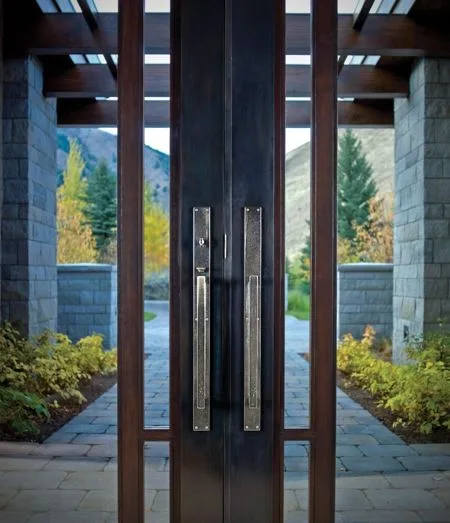
A well-designed door is more than a slab, frame, and handle. It is a composition of materials and functional parts that people see, touch, and use every day. Details such as hinges, stops, flush pulls, and a door surface bolt may occupy little space, yet they can influence whether the complete door feels cohesive. When these elements share a clear relationship with the door and the surrounding interior, function becomes part of the architectural expression.
Begin With the Door Itself
Hardware selection works best when it responds to the door rather than starting as a separate decorative exercise. Material, thickness, scale, construction, and location all influence which details feel appropriate.
A substantial timber entry door, for example, has a different visual weight from a slim interior door. Hardware that feels balanced on one may look too delicate or dominant on the other. Custom millwork and highly detailed doors can create their own requirements because visible hardware becomes part of a carefully composed surface.
Considering the door first gives every later decision a useful point of reference.
Look Beyond the Primary Handle
Handles and levers attract attention because people interact with them frequently. Yet they are only one part of the hardware package.
Hinges may remain visible when the door is closed. Stops can appear against flooring or walls. Bolts and other functional pieces may sit directly on the door surface. Pocket doors and other configurations can introduce flush hardware that becomes prominent at close range.
These components may be secondary in function or visual hierarchy, but they still contribute to the finished composition. Treating them as unrelated purchases can introduce small inconsistencies that become surprisingly noticeable once everything is installed.
Give Visible Hardware a Common Language
A cohesive door package does not require every component to have the same shape. It helps, however, when the pieces share some form of visual relationship.
Finish is an obvious connection, but designers can also look at geometry, surface texture, edge profiles, and overall character. Clean rectangular forms may suit an interior built around precise lines. Softer shapes can relate to curved architectural details or more sculptural furnishings.
Material can provide another thread. When several functional pieces share the same underlying material, their subtle differences can still feel intentional. This allows variation without making the door look assembled from unrelated parts.
Consider Scale Across Every Component
Proportion affects secondary hardware as much as it affects the main handle set. A small functional component can appear visually weak on a large door, while an oversized piece may distract from refined millwork.
Designers can assess each item in relation to the door face, frame, trim, and neighboring hardware. The goal is not to make every component prominent. It is to give each one enough presence to feel appropriate to its setting.
This becomes especially important with tall doors, wide openings, and substantial custom designs. As architectural scale increases, small details often need careful review to ensure they remain visually connected to the whole.
Think About Finish as a Material Decision
Selecting a finish by color alone can overlook some of the qualities that give hardware depth. Sheen, texture, surface variation, and the underlying material all affect how a piece responds to its surroundings.
Hardware sits beside materials such as timber, plaster, stone, glass, and painted surfaces. The relationship can be quiet or expressive. A darker finish might create definition against pale wood, while a warmer metal can develop a softer relationship with rich timber or natural stone.
Perfect matching is not always necessary. A thoughtful interior can contain several metal finishes when each has a clear role. What matters is whether their tones and surface qualities feel considered together.
Pay Attention to Repetition
One small piece of hardware may have limited visual impact. Repetition changes that.
A corridor with several doors creates a sequence of hinges, handles, stops, and other components. In a large residence or hospitality project, those details may appear dozens of times. Small inconsistencies can become more apparent as the pattern repeats.
This is why hardware schedules matter from a design perspective as well as an organizational one. Establishing a clear family of finishes and forms can create continuity across different door types while allowing individual openings to meet their own needs.
Consider the View From Both Sides
A door belongs to at least two spaces. The hardware should make sense from each one.
An opening between an entry and living area, for instance, may connect spaces with different materials or moods. The selected hardware can help bridge those conditions. Designers should also consider what becomes visible when the door stands open, including hinges, edges, and other less obvious components.
This wider view can reveal details that are easy to miss when the specification focuses only on the front elevation.
Make Secondary Decisions Early
Smaller hardware pieces are easy to leave until late in a project. Earlier consideration often produces a more coherent result.
Once the door type, primary hardware, finish direction, and architectural context are established, secondary components can be reviewed as part of the same package. This gives the project team time to consider proportions, coordinate visible finishes, and resolve how each element relates to the door.
It also reduces the chance that a carefully designed opening ends with a functional piece selected only because it was available at the last moment.
Let Function Complete the Design
The most resolved doors rarely depend on one dramatic feature. Their quality comes from the relationship between many decisions, from the material and proportions of the door to the hardware people notice only at close range.
Secondary components deserve attention because they remain part of the finished architecture. Their form, scale, finish, and placement can reinforce the larger design without competing with it.
When every visible element has a clear relationship to the whole, the door feels complete. The result is not detail for its own sake. It is a functional object in which even the quieter components contribute to a coherent architectural experience.