The Overlanding Boom Is Changing What Truck Owners Expect From Truck Caps
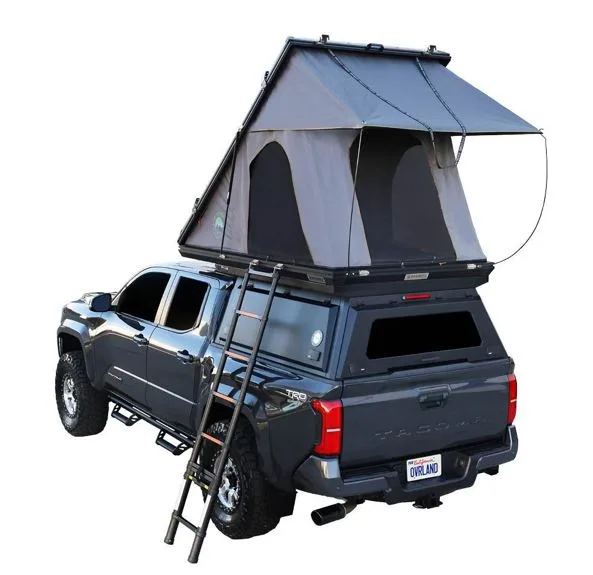
For years, most people bought a truck cap for a fairly simple reason: they wanted to keep tools, luggage, camping gear, or other cargo covered and out of sight.
That is still an important part of the job. But for a growing number of pickup owners, especially those interested in camping and overlanding, it is no longer enough.
Today’s truck cap may also need to carry a rooftop tent, work with an awning, provide quick access to gear from either side of the truck, support additional racks and accessories, and hold up to long stretches of travel on unpaved roads. In other words, the cap is becoming less of a bed cover and more of a foundation for the entire truck build.
There is good reason manufacturers and retailers are paying attention to this shift.
SEMA reported that Americans spent more than $15 billion modifying pickups in 2025 for off-road, utility, recreational, and other uses. Nearly 13 million pickups were accessorized during the year, and 26% of pickup accessorizers surveyed said they use their vehicles for off-road activities.
Overland Expo’s 2025 industry report also estimated that more than 12 million Americans would participate in overlanding during the year, up from 8 million in 2024.
That does not mean every truck owner is suddenly becoming a serious overlander, or that the category will continue growing at the pace it did during the pandemic. In fact, SEMA has described the overland market as healthy but maturing, with slower growth and more competition than during its earlier surge.
What does appear to be sticking is the way overlanding has changed expectations for the equipment people put on their trucks.
A Truck Cap Has to Do More Now
A traditional truck cap mainly creates enclosed space above the pickup bed. It can protect gear from routine exposure to the elements, provide a measure of security, and give owners much more usable enclosed storage than an open bed.
An overland-oriented truck cap has a more complicated job.
A buyer may want side-opening doors so a refrigerator, tools, recovery equipment, or camping gear can be reached without crawling through the tailgate. Another owner may be planning to add a rooftop tent. Someone else may want to mount an awning on one side and recovery boards on the other.
That is why features such as integrated roof rails, crossbar compatibility, modular mounting points, lockable side access, and published load ratings have become much more important.
PeakGear’s current truck-cap buying guide recommends looking at the truck’s exact fitment, the weight of the cap, available vehicle payload, static and dynamic roof-load ratings, and whether the cap is approved for rooftop-tent use before purchasing.
Peak Gear Expert Tip
Start with what you actually want the truck to do.
If the truck will mainly carry luggage and occasionally haul camping equipment, a very different cap may make sense than if you plan to install a rooftop tent, awning, storage system, and other overlanding equipment.
Buying the most rugged or expensive cap does not automatically mean buying the right one.
Rooftop Tents Have Changed the Conversation
One of the clearest examples of the change is the popularity of rooftop tents.
Putting a tent above a truck bed may look straightforward, but the important question is not simply whether the tent fits on top of the cap. The cap and mounting system must be designed and rated for the load.
There are also two different load conditions to think about.
Dynamic load applies while the vehicle is moving. That includes the tent and other equipment being carried on the cap while the truck is driving.
Static load applies while the vehicle is parked. Once a rooftop tent is opened and people climb inside, the load can be considerably higher.
PeakGear’s truck-cap guide specifically advises buyers to verify both static and dynamic ratings rather than assuming that any hard truck cap can carry a rooftop tent.
Ryan Williams, Overland Specialist at PeakGear, summarizes the issue this way:
“Fitment, available vehicle payload, and the cap’s documented roof-load ratings should always be verified first.”
That is an important distinction because a cap can look heavy-duty without necessarily being approved for the equipment an owner intends to put on it.
Peak Gear Expert Tip
Do not buy a rooftop tent and a truck cap independently and assume they will work together.
Check the specifications for the truck, cap, rack or crossbars, and tent as a complete system. Vehicle payload also needs to account for passengers and other cargo, not just what is mounted above the bed.
Side Access Is More Useful Than It Sounds
Side doors are another feature that can seem minor in a showroom but become much more valuable once a truck is packed for a trip.
Imagine a bed filled with storage bins, a cooler or refrigerator, recovery gear, tools, water, sleeping equipment, and food. If the only way into the cap is through the rear, whatever is packed closest to the cab can become difficult to reach.
Large side-opening doors change that.
Frequently used items can be positioned where they are accessible from outside the truck instead of requiring the owner to unload half the bed.
That is one reason purpose-built overland caps increasingly emphasize access and organization alongside basic weather protection.
Peak Gear Expert Tip
Before deciding how to organize a truck cap, make a list of the things you expect to reach most often.
Recovery gear, tools, electrical controls, cooking supplies, or frequently used camping equipment generally should not be buried behind items that only come out once a day.
Good storage is not just about how much fits. It is about how easily you can get to it.
Modularity Is Becoming More Important
Most overland builds do not happen all at once.
A truck owner may start with a cap and some camping equipment. Later comes an awning. Then perhaps a rooftop tent, crossbars, lighting, additional storage, or recovery equipment.
That makes modularity increasingly useful.
Instead of thinking only about what is installed today, buyers are starting to ask what a cap will allow them to add later.
This is also where the distinction between a conventional camper shell and some of the newer modular aluminum or steel truck caps becomes clearer. Certain products are designed from the beginning around rails, mounting channels, crossbars, and replaceable or configurable accessories.
For someone who intends to keep modifying a truck, that flexibility may matter more than having every accessory on day one.
Weight Can Sneak Up on a Build
Overlanding equipment has a habit of accumulating.
A cap is added. Then crossbars. Then a rooftop tent. An awning follows. Inside the bed are storage systems, tools, recovery gear, water, a refrigerator, batteries, and camping supplies.
Individually, none of those additions may seem excessive. Together, they can consume a meaningful portion of a pickup’s available payload.
SEMA’s latest research shows just how extensively truck owners are modifying their vehicles, with pickups remaining the largest contributor to specialty-equipment spending.
That makes weight something worth thinking about at the beginning of a build rather than after everything has been installed.
Peak Gear Expert Tip
Create a simple weight budget before buying the major components of an overland setup.
Start with the published weight of the cap and then add the rooftop tent, rack, awning, major storage systems, water, gear, and passengers.
The exact limits should always come from the vehicle and equipment manufacturers. The goal is not to estimate how much a truck “should probably handle,” but to build around documented specifications.
Fitment Is Getting More Complicated Too
Buying a truck cap is not as simple as knowing you own a Tacoma, F-150, Silverado, Gladiator, or RAM.
Model year, bed length, bed configuration, utility tracks, tailgate design, and special factory equipment can all affect compatibility.
PeakGear’s guide, for example, advises buyers to verify the exact year, make, model, bed length, and special bed features using the cap manufacturer’s application information rather than relying only on a tape measurement.
That becomes even more important when the cap is expected to support other equipment.
A small fitment problem with a basic cargo shell is inconvenient. A fitment problem involving a cap, rack, rooftop tent, and several hundred pounds of equipment is a much bigger issue.
Peak Gear Expert Tip
Shop by exact vehicle application, not just bed length.
Two pickup beds that measure roughly the same length do not necessarily use the same cap or mounting system.
The Best Truck Cap Depends on the Build
The growth of overlanding has created a temptation to assume that everyone now needs the strongest, most elaborate truck cap available.
They do not.
Someone who wants dry, lockable storage for road trips may be perfectly happy with a conventional fiberglass cap. A contractor may be better served by a commercial aluminum cap with tool storage. Someone who removes the topper regularly may prefer a soft design.
But a truck owner planning a rooftop tent, awning, side-mounted accessories, and repeated travel on rough roads has a different set of requirements.
That is ultimately the biggest change overlanding has brought to the truck-cap market.
People are no longer asking only:
“Will this cap fit my truck?”
Increasingly, they are also asking:
“Will this cap work with the truck I eventually want to build?”
For companies such as PeakGear, which specializes in overlanding equipment and vehicle-specific truck caps, helping customers answer that second question has become just as important as helping them answer the first.
The truck cap may still cover the bed, but for many owners today, that is only the beginning.
Author Bio
Ryan Williams is a Overlanding Specialist at PeakGear.com with a strong interest in the way people use their trucks to explore, camp, and travel farther off the beaten path. Ryan enjoys helping truck owners think through their builds in a practical way, with an emphasis on choosing gear that fits how they actually plan to use their vehicle.