The Rise of DIY Upcycled Fashion in 2026
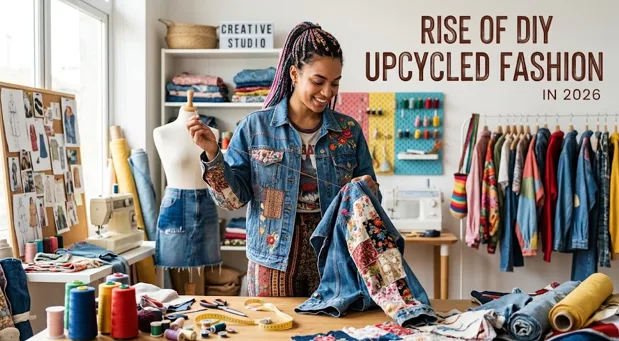
DIY recycled fashion design is shifting from being an underground trend to becoming a visible part of current fashion. In 2026, individuals have become more focused on recycling their old clothes instead of replacing them. Used jeans, old jackets, large t-shirts, fabric leftovers, old uniforms, and vintage accessories are all possible starting points for a unique DIY project.
Another aspect of the trend is that it falls under the topic of circular fashion design. The government of Canada defines the concept of the circular economy as follows:
Why Is DIY Upcycled Fashion Becoming More Popular in 2026?
The first thing is obvious: individuality counts. Clothing produced on an industrial scale makes it harder for people to create their own style because it cannot be individualized. It is different from upcycling since no two pieces of reconstructed clothes should look exactly alike.
The second thing is more pragmatical: there is an opportunity. Environment and Climate Change Canada state that 1.1 million tonnes of apparel intended for Canadians was dumped into landfills in 2021. These very landfills offer opportunities to make clothes more circular.
For people who try creating their own clothing, Canada custom patches provide additional means of transformation. It becomes possible to create an entirely personalized denim jacket with the help of patchwork and visible mending.
How Can Old Clothes Become Fashionable Again Instead of Looking Worn Out?
A successful upcycled project is not just about decorating an existing garment with any sort of decorations. This process should start with knowledge of the initial garment and its possibilities for change, fix, decoration, or modification.
The oversized T-shirt can be turned into a crop top. The jeans can become the skirt or bag. A damaged pocket is not an imperfection but a chance to create some kind of visible stitching.
The best results are reached when some elements of the garment remain useful and the purpose or style changes.
Which Upcycling Techniques Are Defining DIY Fashion in 2026?
Techniques such as patchwork, visible repair, applique, fabric painting, embroidery, reconstruction, distressing, and alterations have become significant within the DIY movement.
One of the techniques which is highly flexible is the patchwork, where the surplus fabric can be used for creating panels, pockets, sleeves or other decoration elements of clothes. However, the technique of visible mending follows a different way to achieve this goal.
The role of social media has been crucial in the development of these trends, as Goodwill Industries of Alberta singled out the upcycled patchwork clothing along with many other fashion trends popular on the thrift market in 2026.
Why Are Personal Stories Becoming Part of Upcycled Clothing?
An upcycled garment can bring a sense of emotional attachment to a piece of apparel that brand new clothes don’t have.
For instance, a jacket created using materials from an old piece of clothing belonging to a loved one, a set of jeans with emotionally significant patches sewn on it, or a shirt that was mended after years of use will always hold a story.
Such pieces of apparel represent not only fashion but memories of people and emotions.
How Does Upcycled Fashion Support the Circular Economy?
The major distinction between upcycling and recycling is that of the treatment of the material. The process of recycling usually involves breaking down the material into its fibres, while upcycling turns the old product into one of higher value.
This feature makes upcycling very convenient for individuals as it can be done at home and does not involve industrial processes.
According to a review of the state of upcycling in 2026, upcycling is defined as the process that preserves the textile structure of the material while turning the thrown away clothes into higher value products. It is also stated that labor and workmanship make upscaling hard to do on a big scale.
Upcycling vs Buying New vs Recycling
| Approach | What Happens to the Garment? | Main Advantage | Creative Potential |
| Buying New | Existing garment is replaced. | Convenience and variety. | Limited by what is available. |
| Recycling | Material is reused in some way. | Extracts value from existing materials. | Usually requires an industrial process. |
| Upcycling | Existing garment is remade or changed in some way. | Stretches the life of the product. | Very high. |
| Repair | Damaged garment is mended. | Increases useful life. | Moderate to high. |
| Resale | Garment is resold to a new owner. | Keeps the garment in use. | Dep |
How Can Beginners Start Upcycling Without Expensive Equipment?
The most convenient thing is to begin with clothes that are no longer used. For example, you may use denim jacket, cotton shirt or jeans to try your hand.
It is not necessary to start with something complicated – one may start with something minor, like fixing some buttons, putting on patches, embroidering or simply sewing torn spots.
Such step-by-step procedure will help you to learn more about clothes material behavior in case of stitching, cutting, pasting, washing and heat.
Why Are Patches Becoming So Important to Personalized Upcycled Style?
Patches provide one of the easiest solutions to alter the look of any current garment without having to completely remake it. Patches have the ability to cover up imperfections, emphasize interests, add color, or visually connect garments to each other.
Personalization through customization has a relationship with the culture in Canada’s big city of Toronto. One such way is the annual ReMode festival held in Toronto that concentrates on concepts like reuse, repair, repurpose, resale, and clothing exchange within the circular fashion movement.
For those who want more personalized patches, custom embroidered patches Toronto are one way to achieve a more unique look for individuals, groups, artists, and fashion companies.
What Will Make DIY Upcycled Fashion More Relevant in the Years Ahead?
This trend will no doubt emerge in relation to more general shifts in attitudes toward the ownership of clothing.
The Canadian circular textile projects are moving toward repairing, reusing, repurposing, reselling, and recycling clothes, and mapping out the infrastructure necessary to keep the textiles in use.
Meanwhile, YouTube videos and social media are making it easier to learn how to sew, embroider, alter, and reconstruct garments.
In this culture of fashion, creativity need not start from the act of purchasing something new. It can begin from a change of attitude toward an existing piece of clothing.
Frequently Asked Questions About DIY Upcycled Fashion
Is DIY upcycled fashion actually sustainable?
It can be a more resource-conscious approach when it extends the useful life of an existing garment and reduces the need to purchase something new. Its environmental benefits depend on factors such as the garment’s original lifespan, materials, additional supplies, and how long the redesigned item is ultimately used.
What is the easiest clothing item to upcycle?
Denim jackets, jeans, cotton shirts, and other sturdy garments are generally approachable starting points. Their durable fabrics can tolerate alterations, patches, embroidery, and repeated handling.
Does upcycling mean sewing?
Not necessarily. Upcycling can involve sewing, embroidery, patches, fabric paint, appliqué, cutting, dyeing, reconstruction, or combinations of several techniques.
Is upcycled clothing always more sustainable than buying secondhand?
Both approaches can extend the life of existing garments. Upcycling adds value by modifying an item, while secondhand purchasing allows an existing garment to continue being worn without necessarily requiring significant material changes.
Conclusion
The rise of DIY upcycled fashion in 2026 reflects a broader shift toward creativity, personalization, repair, and more thoughtful clothing consumption. It allows people to experiment with style while keeping existing garments useful for longer.
For those looking to personalize jackets, denim, uniforms, bags, or other apparel, CanadaPatches.com provides options for turning existing clothing into distinctive pieces through customized patchwork and embroidery. The idea is simple: instead of seeing an old garment as something finished, see it as material for something new.
Upcycling ultimately changes the question from “What should I buy next?” to “What can I create from what I already have?” That mindset is helping make fashion more personal, creative, and circular in 2026.