Key Features to Look for in the Best EMR for Plastic Surgery
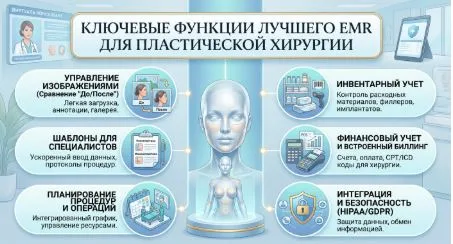
Running a successful plastic surgery practice or aesthetic clinic in today’s healthcare market requires a unique balance between medical precision, surgical skill, and high-level patient care management. Unlike general medical offices that primarily focus on routine disease management, insurance claims, and standard physical exams, plastic surgery practices navigate a completely distinct clinical landscape. They deal with elective cosmetic treatments, complex surgical procedures, injectable non-invasive therapies, retail skincare sales, and long-term client retention strategies.
Attempting to run a specialized aesthetic or surgical practice using traditional, generic Electronic Medical Record (EMR) software often leads to significant operational friction. Generic platforms lack the specialized tools required for cosmetic consultations – such as side-by-side before-and-after photo tracking, visual face-and-body injection mapping, customizable surgical package quoting, and streamlined patient scheduling. To build an efficient workflow that reduces administrative stress, keeps clinical records compliant, and elevates the client journey from initial consultation to recovery, practices need specialized digital management tools designed specifically for aesthetic medicine.
How Aesthetic Software Supports Modern Plastic Surgery Practices
Plastic surgeons and aesthetic care providers operate in an environment where visual outcome documentation and clinical precision go hand in hand. Every consultation, pre-operative planning session, and post-operative review relies heavily on capturing detailed clinical notes alongside clear visual evidence. Utilizing specialized aesthetic software transforms how plastic surgery teams manage these complex requirements, replacing fragmented third-party photography apps and paper charts with a single, secure digital ecosystem.
When a practice transitions from rigid, traditional medical record systems to purpose-built digital platforms, daily clinic workflows become noticeably smoother and more efficient. Surgical teams gain instant access to high-definition photo galleries, specialized consent templates, and surgical planning notes directly within the patient’s chart. This eliminates administrative bottlenecks, speeds up patient rooming, and ensures that every detail of a patient’s cosmetic journey is accurately recorded.
Key ways specialized digital solutions support modern plastic surgery practices include:
- Integrated Visual Documentation and PACS: High-resolution before-and-after photography is the cornerstone of aesthetic and reconstructive surgery. Advanced platforms allow providers to securely capture, organize, align, and compare patient images side by side directly within the electronic chart, eliminating the risk of unencrypted photos floating around on personal mobile devices.
- Customizable Surgical and Non-Surgical Charting Templates: Every plastic surgeon has distinct preferences for charting procedures like rhinoplasty, breast reconstruction, or blepharoplasty. Tailored charting templates enable clinicians to document operative notes, anesthesia details, and post-procedure care plans quickly and thoroughly.
- Precision Injection Mapping for Non-Invasive Procedures: Many plastic surgery clinics offer complementary cosmetic injectables like neurotoxins and dermal fillers. Dedicated charting tools provide interactive facial and anatomical diagrams where providers can log exact unit amounts, injection depths, and product batch lot numbers with pinpoint accuracy.
- Digital Patient Intake and Specialized Consent Management: Patients can securely complete comprehensive health histories and procedure-specific consent forms on their own smartphones or tablets before their appointment, significantly reducing waiting room times and paper clutter.
By investing in high-performing aesthetic software, plastic surgery practices establish an organized, paperless environment that frees up valuable clinical time. Surgeons and clinical staff can spend less time navigating clunky software menus and more time delivering exceptional patient care.
Why Aesthetic EMR Software Is Essential for Efficient Patient Management
In aesthetic medicine, the client journey extends far beyond a standard physical check-up. Patients investing in cosmetic surgery or aesthetic enhancements expect an organized, luxury-level experience from the moment they submit an inquiry online to their final post-operative follow-up. Relying on outdated or generic charting systems introduces friction, increases the risk of documentation errors, and creates unnecessary delays during patient visits.
Adopting specialized aesthetic EMR software provides surgical centers with the administrative structure required to deliver seamless, personalized care. From centralized communications to automated appointment reminders, a comprehensive record system ensures that every interaction is tracked and documented in real time.
Implementing a purpose-built aesthetic EMR software system enhances practice efficiency in several key areas:
- Centralized Patient Records and Multi-Treatment Histories: A unified dashboard presents the complete patient history at a glance, combining surgical notes, non-surgical aesthetic treatments, medical allergies, skincare purchases, and communication logs in one intuitive view.
- Streamlined Surgical Package Quoting and Invoicing: Cosmetic surgical consultations frequently involve multi-tiered pricing, including surgeon fees, facility rates, anesthesia costs, and post-operative garments. Purpose-built platforms allow staff to generate polished, easy-to-understand surgical quotes in seconds.
- Automated Multi-Channel Patient Communication: Automated SMS and email notifications remind patients of upcoming consultations, pre-operative preparation guidelines, and post-operative medication schedules, drastically reducing no-shows and improving treatment compliance.
- Enhanced Telehealth and Virtual Consultation Capabilities: Virtual consultation tools embedded within the electronic health record allow surgeons to conduct initial visual assessments and post-op check-ins remotely, expanding the practice’s geographic reach and saving time for busy patients.
Integrating dedicated aesthetic EMR software into your daily clinic routine ensures that clinical documentation is thorough, compliant, and effortlessly accessible. When administrative processes run smoothly behind the scenes, patient trust grows, leading to higher conversion rates and stronger word-of-mouth referrals.
Choosing the Right EMR for Medspa Operations and Patient Records
Many plastic surgery practices operate alongside or within an affiliated medical spa, offering non-surgical skin rejuvenation, laser therapies, and body contouring alongside traditional surgical operations. Managing both a surgical center and a high-volume medspa environment under one roof requires software that caters to two distinct operational speeds: detailed pre-op surgical planning on one side, and fast-paced, high-volume appointment turnover on the other.
Finding the ideal EMR for medspa and surgical operations requires selecting a system capable of bridging this gap. The platform must offer the clinical depth required for surgical safety while incorporating the retail point-of-sale, membership tracking, and online scheduling features necessary for daily medspa management.
Essential features to prioritize when evaluating an EMR for a medspa and plastic surgery environment include:
- Integrated Inventory Management and Auto-Deduction: High-value inventory – such as neurotoxins, dermal fillers, skincare products, and surgical consumables – represents a major expense. The software should automatically deduct inventory units from stock as providers complete charting notes, tracking lot numbers and expiration dates seamlessly.
- Membership and Package Tracking Modules: Medspas rely heavily on recurring revenue through monthly membership programs and multi-session treatment packages. An effective system manages recurring billing, tracks remaining package visits automatically, and applies member discounts at checkout.
- Flexible Online Booking and Self-Scheduling: Allowing clients to browse available aesthetic appointments, select preferred providers, and pay booking deposits online 24/7 keeps the appointment calendar full while reducing the administrative workload on front-desk staff.
- HIPAA-Compliant Cloud Storage and Role-Based Access: Cloud-based architecture ensures that patient charts, photos, and financial records are securely backed up and accessible from any authorized device, while role-based permissions protect sensitive patient data.
Choosing a multi-functional EMR for medspa and surgical settings eliminates the need to run separate software systems for different branches of your business. Unifying your surgical charts and medspa records into one database creates a cohesive client history and simplifies practice-wide reporting.
How EMR Billing Features Simplify Financial and Administrative Workflows
Financial management in plastic surgery and medical aesthetics can quickly become complicated. Practices frequently deal with a mix of elective, out-of-pocket cash payments, commercial insurance claims for reconstructive procedures, package deposits, gift cards, and retail skincare sales. Managing these diverse revenue streams using disconnected billing tools increases the risk of accounting discrepancies and delayed payments.
Robust EMR billing tools directly integrated into your clinical record software streamline the entire financial lifecycle of the practice. When clinical charting, surgical quoting, and payment processing share the same database, invoices are generated automatically as care is delivered, reducing manual entry errors and speeding up checkout times.
Key financial and administrative advantages provided by integrated EMR billing features include:
- Unified Point-of-Sale (POS) and Payment Processing: Front-desk teams can effortlessly process credit cards, touchless mobile payments, cash, gift cards, and patient financing options directly through the patient record, creating a smooth checkout experience.
- Automated Claims Generation for Reconstructive Procedures: For plastic surgeons offering reconstructive surgery, built-in billing modules generate accurate insurance claims with correct CPT and ICD-10 coding, minimizing claim rejections and accelerating insurance reimbursement.
- Integrated Deposit and Cancellation Fee Enforcement: To protect valuable surgical time and prevent last-minute cancellations, billing platforms can automatically collect non-refundable consultation fees or hold credit cards securely on file.
- Real-Time Financial Analytics and Practice Reporting: Comprehensive reporting dashboards give practice managers clear visibility into daily revenue, outstanding balances, provider commission tracking, sales tax calculations, and profit margins per procedure.
Relying on modern EMR billing functionality provides practice owners with total transparency over their business’s financial health. Streamlining payment collection and claim submission frees up administrative resources, allowing staff to focus on patient comfort rather than chasing unpaid invoices.
What to Look for in Health Spa Software for Better Practice Management
When managing a combined plastic surgery center and high-volume health spa, your software must effortlessly blend clinical precision with luxury client management. Look for key features like seamless online booking with deposit collection, integrated point-of-sale (POS) with gift card and membership tracking, and automated inventory auto-deduction for high-value retail and injectable consumables. Flexible multi-provider scheduling and automated multi-channel client engagement are equally critical to maintain high retention and minimize no-shows.
Selecting a specialized aesthetic and surgical EMR transforms practice operations. By unifying HIPAA-compliant photo tracking, precision charting, seamless quoting, and integrated billing into a single ecosystem, practice owners eliminate friction, safeguard margins, and elevate the overall patient experience.