Why Minecraft Bedrock’s Mobile Creator Ecosystem Is Entering a New Phase
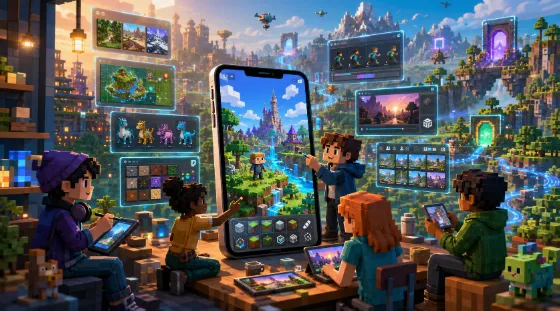
Minecraft has always been more than a finished game. Its lasting appeal comes from the gap between what the developers provide and what players imagine next. On mobile devices, that gap is now being filled by a mature network of map builders, add-on creators, texture artists, video producers, and independent publishers. Their work is turning Minecraft Bedrock from a portable version of a familiar sandbox into a platform with its own creative culture.
A Mobile Community That No Longer Feels Secondary
Bedrock players once had to translate advice written for the Java edition or search scattered forum threads for mobile-compatible resources. That experience is changing. Dedicated libraries such as MCPE Planet organize Bedrock-focused material around the way mobile users actually play: short sessions, touch controls, variable device power, simple package formats, and frequent version changes. The result is a more self-sufficient ecosystem rather than a smaller copy of the desktop community.
The distinction matters because Bedrock is not merely Minecraft on a different screen. Its cross-platform structure allows a player on a phone to share a world with friends using consoles or Windows PCs, while its add-on system follows different technical rules from Java mods. A useful mobile resource therefore has to answer practical questions about edition, version, file type, performance, and multiplayer behavior before a player ever opens a world.
Creation Is Becoming Easier to Discover
Community content only has value when the right audience can find it. A beautifully designed adventure map can disappear if its title is vague, its screenshots reveal little, or no one explains which game build it supports. Independent catalogs and editorial sites act as discovery layers. They group projects by purpose, describe the experience in plain language, and help players distinguish a visual pack from a behavior-changing add-on.
This role is increasingly important as creation tools become more accessible. More people can now experiment with custom entities, animations, interfaces, structures, and scripted encounters without building an entire game from scratch. Lower barriers produce more ideas, but they also produce more noise. Curation becomes the bridge between creative abundance and a playable evening.
Mobile Constraints Are Producing Better Design
Phones impose limits that can sharpen a creator’s decisions. Screen space is smaller, controls must remain readable under a player’s thumbs, and a pack that runs smoothly on one handset may overwhelm another. Strong Bedrock creators respond by prioritizing clear silhouettes, legible interfaces, efficient textures, focused mechanics, and worlds that communicate their rules quickly.
Those constraints are influencing the wider design language of community projects. A compact horror add-on may build tension through sound and behavior rather than photorealistic graphics. A city map may use landmarks and color to support navigation instead of relying on a complex minimap. A lightweight texture pack may improve combat visibility more effectively than a high-resolution pack that reduces frame rate. Mobile is not simply asking creators to make less; it is encouraging them to decide what matters most.
Trust Is Now Part of the Product
As the audience grows, presentation alone is not enough. Players want to know whether a project matches their edition, whether it requires experimental settings, whether multiplayer is supported, and whether installation will affect an existing world. Clear version notes, package details, creator attribution, and honest limitations are becoming basic expectations.
This is where community publishers can set themselves apart. The most useful pages do not promise that every pack will work on every device. They explain what was tested, state what remains uncertain, and make it easy to identify updates. That editorial discipline protects both sides: players waste less time, while creators receive feedback from people who are actually able to run their work.
A Creator Economy Built on Attention, Not Just Sales
The Bedrock ecosystem is often described through marketplaces and paid content, but much of its momentum still comes from free exchange. A creator publishes a map to build a reputation. A video maker turns it into a challenge. A community site helps a new audience discover it. A server owner adapts the idea for a group event. Value moves through attention, attribution, feedback, and collaboration even when no purchase takes place.
That pattern gives the mobile community unusual resilience. It does not depend on one trend or one distribution channel. When players tire of survival, they can move to roleplay, horror, parkour, visual customization, or multiplayer minigames without leaving the underlying platform. Each new format creates another entry point for creators and another reason for an old player to return.
What Comes Next
The next phase of Minecraft Bedrock will likely be defined less by the number of files available and more by how well the ecosystem explains them. Better compatibility information, stronger creator credits, clearer categories, and more thoughtful performance guidance can make mobile experimentation feel safe and intentional.
Minecraft’s longevity has never depended on a single update. It comes from millions of players repeatedly asking what else the same set of blocks can become. On mobile, the infrastructure around that question is finally catching up with the creativity behind it.