What Surveillance Really Tells Insurance Companies About Injury Claims
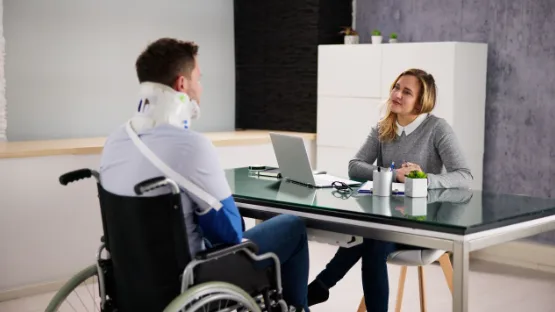
Insurance companies and attorneys routinely hire private investigators to conduct surveillance involving workers’ compensation and personal injury claims. After more than 26 years conducting surveillance investigations, I’ve learned that one of the biggest misconceptions about this work is that investigators are sent into the field to “catch” someone committing fraud. That’s not our job. Our job is much simpler: observe, document and accurately report what actually happens.
When an insurance carrier or attorney sends me an assignment, I don’t need a mountain of medical records or a detailed explanation of everything the claimant supposedly cannot do. Give me the basics: the claimant’s name and address, current photographs when available, vehicle information and any previous surveillance. Knowing every alleged physical restriction isn’t necessarily helpful to me in the field because I’m going to document the claimant’s activities regardless. If someone leaves home, we document their activities whenever legally and practically possible. If the person appears injured, we film it. If the person appears unrestricted, we film that too. The investigator shouldn’t decide beforehand what the surveillance is supposed to prove.
For those unfamiliar with the process, insurance carriers commonly hire private investigators to investigate questionable or potentially exaggerated claims. Surveillance can provide an independent record of someone’s activities that can later be compared with medical records, statements, testimony and other evidence. But there is an important distinction that is often overlooked: damaging surveillance video doesn’t automatically mean someone has committed fraud.
Years ago, we conducted surveillance on a workers’ compensation claimant who said he could no longer work. During surveillance, we obtained video of him mowing his lawn. At first glance, that’s exactly the type of footage people associate with workers’ compensation fraud, and the attorney handling the matter understandably thought the video was significant. However, when the Special Investigation Unit examined the claim more closely, there was a problem. The claimant apparently had never made a sufficiently precise statement saying that he couldn’t mow his lawn or perform that particular type of activity. He hadn’t been pinned down during testimony with a representation that directly contradicted what our video showed.
The footage was still valuable. It could potentially help evaluate the extent of his alleged limitations and contribute to resolving the claim. But useful evidence and proof of fraud aren’t necessarily the same thing. When evaluating potential workers’ compensation fraud, investigators and SIU professionals often look at what I refer to as MILK: Materiality, Intent, Lie and Knowledge. In practical terms, there needs to be evidence supporting the conclusion that a claimant knowingly made a material false statement with the intent of obtaining benefits. A video camera can’t establish all of that by itself.
Surveillance can also document something entirely different. In June 2026, we were retained to surveil a woman who had been employed by a local school district and was out on a work-related injury. During surveillance, we observed her leave her apartment using a walker and travel approximately two blocks to a nearby park. Once there, she continued using the walker while looking at her phone and performing what appeared to be some type of workout or rehabilitation routine. She appeared to struggle with the activity.
We documented it. We didn’t decide that her activity was inconsistent with her injury, nor did we stop recording because what we observed wasn’t the dramatic “gotcha” footage people sometimes imagine surveillance is supposed to produce. We simply documented what occurred. As far as we know, she remains out on her claim. Additional surveillance is anticipated approximately six months later, which may provide another objective snapshot of her physical abilities and whether her mobility has improved.
That’s one of the real values of professional surveillance investigations. Surveillance provides objective documentation of activity at a particular point in time. When conducted over multiple periods, it can also show changes in activity and physical ability that may be useful when evaluating a claim.
Good surveillance isn’t about proving the client right. An investigator may obtain footage that seriously challenges a claimant’s statements. We may also obtain footage showing someone struggling with exactly the limitations they reported. Both observations matter. Insurance carriers, attorneys and SIU professionals can compare surveillance with statements, medical information, deposition testimony and other evidence when evaluating a claim.
The investigator’s responsibility is different. Point the camera at what happens, document it accurately and report what you actually saw. Sometimes that’s less dramatic than “catching fraud,” but in the real world of insurance and workers’ compensation investigations, it’s considerably more useful.