Puri Tourism Is Changing: The Rise of Short Itineraries and Experience-Based Travel
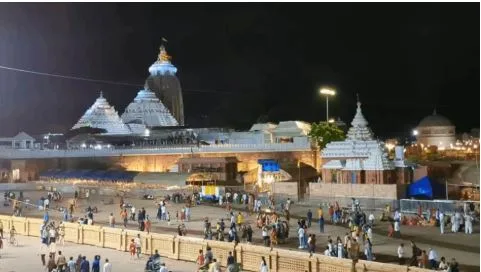
PURI, Odisha: There was a time when a visit to Puri could be summed up in a few familiar stops — the Jagannath Temple, a walk along the beach and the journey back home.
Today, that picture looks a little different.
For many visitors, Puri is becoming a place where a short break can include a temple visit, a traditional meal, an evening by the sea, a craft village and a heritage excursion — all without turning the trip into a long holiday.
It is a change worth watching.
Odisha recorded 113.8 lakh tourist visits in 2024–25, up from 100.1 lakh the previous year, according to the Odisha Economic Survey 2025–26. The survey also points to heritage walks, eco-tourism projects and cultural festivals as contributors to the state’s tourism growth.
The figures cover Odisha as a whole and do not establish that all visitors to Puri are choosing shorter holidays. But they underline a larger opportunity for the coastal city: Puri can offer considerably more than a single-purpose pilgrimage trip.
A Trip to Puri Is No Longer Just About Checking Places Off a List
The pressure to cover more places in less time has shaped holiday planning for years. But short travel does not necessarily have to mean rushed travel.
For someone with only a weekend, Puri offers an unusual advantage. The city itself provides a mix of religion, coastline, food and local life, while several well-known attractions are within reach for a day excursion.
That makes it possible to plan a trip around what a visitor actually wants to experience, rather than simply counting the number of attractions visited.
A pilgrim may keep the Jagannath Temple at the centre of the journey. A family might combine the temple with Puri Beach and Konark. A repeat visitor may choose to spend more time exploring local food or traditional crafts.
The destination can accommodate all three.
The Jagannath Temple Still Defines Puri — And That Is Unlikely to Change
Any conversation about the future of Puri tourism has to begin with Lord Jagannath.
The Jagannath Temple remains the spiritual and cultural heart of the city. Odisha Tourism itself describes Puri as a destination synonymous with Lord Jagannath, while also highlighting its beaches, temples and art-and-craft attractions.
The emerging travel pattern, therefore, is not about replacing pilgrimage with leisure.
It is about adding more to the journey.
A visitor may arrive in Puri primarily for darshan but discover that there is time for an evening on the beach. Another may return for a second visit and decide to explore places missed during the first trip.
That is where the city’s tourism story becomes more interesting.
What Happens After the Temple Visit Is Becoming Part of the Experience
The strongest tourism destinations often give visitors something to do after they have seen the attraction that brought them there.
Puri has that advantage.
Once the religious part of the journey is complete, visitors can turn towards the coast, local markets, traditional food or nearby cultural attractions.
This is where experience-based travel becomes relevant.
Instead of rushing from one landmark to another, a traveller might spend time watching an artisan paint, sit down for a local meal or simply stay by the sea as the evening sets in.
None of these experiences is particularly complicated. That is precisely their appeal.
They allow visitors to experience Puri as a living city rather than as a collection of tourist spots.
Raghurajpur Offers Something a Typical Sightseeing Trip Cannot
About 12 kilometres from Puri, Raghurajpur offers a very different experience from the city’s temple and beach.
The heritage crafts village is best known for Pattachitra, Odisha’s traditional cloth-based painting tradition. Odisha Tourism describes the village as a major centre for the art and notes that its homes are closely associated with artisan work.
For a traveller, the appeal is not simply buying a painting.
It is seeing the craft where it is made and, where possible, speaking with the people who have kept the tradition alive.
That is the difference between adding another location to an itinerary and adding another layer to the journey.
For short trips, those small encounters can often be more memorable than another hurried stop at a landmark.
Why Konark Fits So Easily Into a Puri Holiday
Then comes Konark.
The Sun Temple, a UNESCO World Heritage Site, is one of Odisha’s most recognised heritage landmarks. Its proximity to Puri makes it a natural addition to a short coastal Odisha itinerary.
Odisha Tourism itself promotes Puri and Konark together in its travel itineraries, showing how the two destinations can form part of the same journey.
For visitors with limited time, that matters.
A traveller does not necessarily need to plan a lengthy Odisha circuit to experience both the spiritual character of Puri and the architectural heritage of Konark.
A carefully planned short trip can bring the two together.
Puri Beach Gives the City a Completely Different Mood
There is another side of Puri that requires no complicated planning at all.
The beach.
After the noise and movement around the temple area, the coastline offers visitors a chance to slow down. An early morning walk, an evening beside the water, local snacks or simply watching the city move around the shore can become part of the holiday.
Odisha Tourism lists Puri Beach among the city’s principal attractions and describes the wider destination as one where spirituality can be combined with leisure and adventure.
That combination gives Puri a useful advantage.
It can satisfy a visitor who has come for faith and another who has come looking for a break by the sea.
Short Trips Could Also Change What Travellers Expect From Tour Operators
When travellers have only a day or two, planning becomes more important.
They want to know what can realistically be covered, how much time will be spent travelling and which places are actually worth including.
That creates room for local travel companies to move beyond standard sightseeing packages and offer shorter, better-planned and more experience-focused journeys.
Businesses such as Mypuritour Holidays operate within this wider Puri travel market, helping visitors organise tours and sightseeing around Puri and nearby destinations.
But there is an important distinction between a short itinerary and a rushed itinerary.
Trying to fit too many attractions into two days can leave visitors spending more time in vehicles than experiencing the places they came to see.
A good short trip should do the opposite: remove unnecessary travel and leave more room for the destination itself.
The Wider Odisha Tourism Story Is Also Changing
Puri is not changing in isolation.
Odisha is increasingly presenting itself through a wider tourism mix that includes heritage, culture, beaches, crafts, nature and adventure alongside its major pilgrimage destinations.
The state’s official tourism platform already promotes combinations involving Puri, Konark, Raghurajpur and Chilika, demonstrating how these experiences can be linked within broader travel circuits.
That gives Puri an important role.
The city can work as the main destination for a short break, but it can also serve as a base from which visitors explore other parts of coastal Odisha.
What This Could Mean for the Future of Puri Tourism
The next phase of Puri tourism may not be about choosing between pilgrimage and leisure.
It may be about bringing them together.
The Jagannath Temple will continue to draw pilgrims. The beach will continue to attract leisure travellers. Raghurajpur will continue to represent Odisha’s craft traditions, while Konark will remain a major heritage attraction.
The opportunity lies in connecting these experiences without making visitors feel that they are following a rigid checklist.
Travel to Puri, a meaningful trip may eventually be less about asking, “How many places can I see?” and more about asking, “What do I want to take away from this visit?”
It could be a spiritual experience.
It could be a conversation with an artisan.
It could be an evening by the sea.
Or it could simply be the pleasure of slowing down in a city that has been receiving pilgrims and travellers for centuries.
That is perhaps the most interesting part of Puri’s changing tourism story.
The city does not need to become something completely new. It simply needs to let visitors discover more of what has already been there.