How Micro-Tours Are Reshaping Travel as Southeast Asian Cities Pivot Toward High-Value Tourism
For years, Southeast Asia’s tourism story was largely built around volume: more arrivals, more hotel rooms and more flights.
That model is beginning to evolve.
Across Southeast Asian cities, tourism strategies are increasingly shifting toward higher-value, lower-impact travel over simply maximising visitor numbers. One of the clearest expressions of that change is the rise of the micro-tour: compact, highly curated experiences designed to fit into a few hours while giving travellers a deeper connection to a destination.
From Sightseeing to Participation
The appeal of micro-tours lies partly in their flexibility. Travellers no longer have to commit an entire day to an organised excursion. A two- or three-hour experience can fit between a business meeting and dinner, during a long weekend, or into the first morning of an early arrival.
But convenience is only part of the equation.
Micro-tours also respond to a growing demand for experiences that feel personal. Rather than moving quickly between major attractions, visitors can explore a neighbourhood, meet independent businesses or learn about local food.
That distinction matters as destinations compete for travellers who are willing to spend more in exchange for experiences that feel distinctive.
The Shift Beyond the Landmark Checklist
Cities have an advantage that resort destinations often lack: density.
A relatively small geographic area can contain architecture, markets, restaurants, museums, parks, religious sites and residential neighbourhoods. That makes it possible to build compelling experiences without lengthy transfers or resource-intensive logistics.
Singapore offers a particularly interesting example.
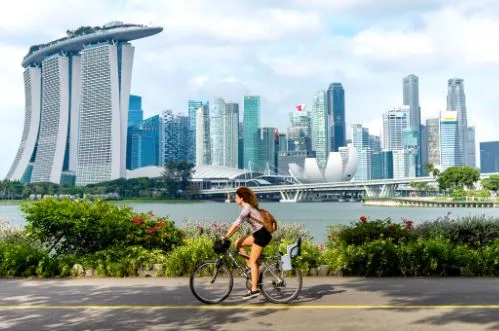
Its compact urban environment allows travellers to move between very different landscapes, from historic enclaves and waterfront areas to trendy art districts, within a short distance. A guided bicycle tour, for example, can turn that compactness into an advantage, allowing visitors to cover more ground while experiencing the city at street level.
Bangkok also illustrates why the micro-tour model is particularly relevant to Southeast Asia’s major urban destinations.
The city already has an extraordinary concentration of established attractions, from temples and palaces to markets, shopping districts and renowned street-food areas. But its scale and density also create an opportunity to move travellers beyond the familiar highlights.
Short, specialised experiences can connect visitors with Bangkok’s neighbourhoods, food traditions, waterways, creative communities and everyday urban life without requiring a full-day excursion.
For a destination as busy as Bangkok, this approach can also help distribute tourism activity. Instead of funnelling every visitor toward the same handful of attractions, micro-tours can introduce smaller districts and independent businesses to international travelers.
The Rise of the “Small Moment”
Micro-tours reflect a broader change in how people travel. The traditional vacation itinerary was often built around a checklist: arrive, see the landmark, take the photograph and move on.
Today’s traveller is increasingly interested in the story behind the place.
That might mean learning why a particular neighbourhood developed around a historic trade route, tasting dishes with a local guide, discovering street art with an artist, or cycling through areas that rarely appear in conventional sightseeing itineraries.
These experiences command a premium when travellers believe they are gaining access to local knowledge, expertise or perspectives they could not easily obtain on their own.
The High-Value Tourism Pivot
For Southeast Asian cities, the economics are compelling.
Micro-tours also help cities spread visitor activity geographically. Instead of concentrating tourists around a handful of landmark attractions, carefully designed experiences can introduce travellers to less-visited districts and encourage spending beyond traditional tourism zones.
This is particularly relevant for dense Southeast Asian tourist destinations such as Bangkok and Bali, where congestion, infrastructure pressure and overtourism have become increasingly important considerations.
The result is a tourism model that seeks value per visitor rather than visitor numbers alone.
A More Sustainable Urban Tourism Model?
Micro-tours are not automatically sustainable. Large numbers of small groups can still overwhelm residential areas, popular attractions or fragile cultural sites.
But the format gives destinations more tools for managing tourism.
More importantly, the model encourages a different relationship between visitor and destination. Instead of treating the city as a backdrop for sightseeing, micro-tourism makes local communities, businesses and stories part of the experience.
That could become increasingly important as Southeast Asian destinations seek to balance tourism growth with liveability.
As Southeast Asia continues its pivot toward high-value tourism, the future may belong not only to the landmark attraction or luxury hotel, but also to the small group quietly discovering the city one street, story and neighbourhood at a time.