Alternative Assets: What Classic Cars and Historic Vessels Tell Us About Store-of-Value Investing
The conversation about store-of-value assets tends to cycle through the same categories: gold, real estate, art, and more recently, Bitcoin. Each has its defenders and its critics, and each has a track record that illustrates both the appeal and the limitation of treating any single asset class as a reliable long-term store of value. What this conversation consistently underweights is a category that has demonstrated remarkably consistent appreciation across multiple economic cycles — collectible vehicles and maritime assets — and the growing market infrastructure that has made these assets increasingly accessible to serious investors.
Understanding what drives value in these categories tells you something useful about store-of-value investing more broadly — and specifically about the relationship between scarcity, documentation, and long-term price appreciation.
Why Scarcity Works Differently in the Collector Vehicle Market
Gold is scarce because there is a finite amount of it in the earth’s crust, and the cost of extraction sets a floor on its price. Bitcoin is scarce because its supply is algorithmically capped. Real estate is scarce because land is finite. In each case, the scarcity is structural and permanent.
The scarcity of collector vehicles works differently and, in some respects, more powerfully. The 1970 Chevrolet Chevelle LS6 — widely regarded as the most powerful production muscle car of its era — was produced in limited numbers and has been subject to fifty years of attrition through accidents, neglect, restoration errors, and cannibalisation for parts. Every year, the authenticated population of original, numbers-matching examples shrinks. Unlike gold, no additional supply can be produced. Unlike art, the original cannot be digitally reproduced in a form that satisfies the same market. The scarcity of a specific, authenticated classic vehicle is absolute and permanently increasing.
The auction market has priced this correctly. Original Hemi Cuda convertibles now trade at over $3 million. Numbers-matching LS6 Chevelles have sold in the high six figures. First-generation Ford Mustangs with documented history consistently outperform their unverified equivalents by significant multiples.
Documentation and the Premium It Commands
What separates the top-tier muscle car market from the mid-market is not primarily condition — it is documentation. A correctly restored vehicle with a build sheet, factory paperwork, and an unbroken ownership history trades at a significant premium over an equally well-restored car without those records. The documentation does not make the car faster or more comfortable to drive. It makes the car’s identity verifiable — and verifiability is what the serious collector market prices.
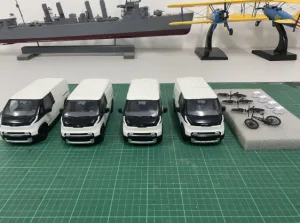
This same dynamic explains why the market for handcrafted scale model cars built from verified reference photographs of specific vehicles has grown alongside the collector car market itself. A correctly built scale replica of a specific vehicle — documenting its configuration, colour, and period accuracy — is itself a form of verifiable documentation. For collectors who own significant vehicles, a commissioned replica provides a permanent three-dimensional record of the vehicle at a specific point in its history, built to the standard that the collector market demands from anything associated with a significant asset.
The Maritime Collector Market — An Underappreciated Store of Value
The collector vehicle conversation focuses predominantly on automobiles, but the maritime collector market has demonstrated comparable value preservation characteristics with significantly less mainstream attention. Historically significant vessels — correctly documented, with authenticated operational histories and period-accurate configurations — command prices in the collector market that have tracked well against comparable financial assets across multi-decade holding periods.
The maritime market has several structural advantages as a collector asset category. The universe of historically significant vessels is smaller than the universe of historically significant automobiles, creating more concentrated scarcity. Documentation requirements are often more rigorous, given the regulatory and commercial record-keeping obligations that vessels carry throughout their operational lives. And the institutional buyer base — maritime museums, naval heritage organisations, shipping companies marking significant fleet milestones — provides a demand floor that the automobile collector market lacks.
For maritime professionals and collectors who want to document their connection to specific vessels — whether as an adjunct to ownership of the original or as a record of a vessel no longer in their possession — handcrafted model ships built to the documented configuration of the specific vessel provide the same function as a commissioned replica in the automotive collector market: a verifiable, accurate, permanent record that documents what the asset actually was at a specific point in its history.
What These Markets Tell Us About Store-of-Value Investing
The collector vehicle and maritime markets illustrate a principle that applies across every store-of-value asset class: the premium goes to the documented, the specific, and the irreplaceable. Generic gold is worth spot price. Specific, authenticated gold coins from historically significant minting events trade at multiples of spot. Generic real estate appreciates with the market. Specific properties with documented historical significance, architectural pedigree, or scarcity of location command premiums that compound over time.
In the collector vehicle and maritime markets, the equivalent of spot price is a correctly restored example of a common type with no particular documentation. The equivalent of the numismatic premium is the numbers-matching, fully documented, low-survival example of a historically significant vehicle or vessel — something that exists in a shrinking population, can be fully verified, and represents a specific moment in the history of a category that the market values.
Investors who have understood this dynamic in collector vehicles and maritime assets have generated returns that compare favourably with gold and real estate across thirty-year holding periods for the most significant examples. The category requires knowledge to navigate correctly, as all alternative asset classes do. But the underlying store-of-value logic — finite supply, increasing documentation premium, institutional demand floor — is as sound as in any asset class that long-term investors track seriously.